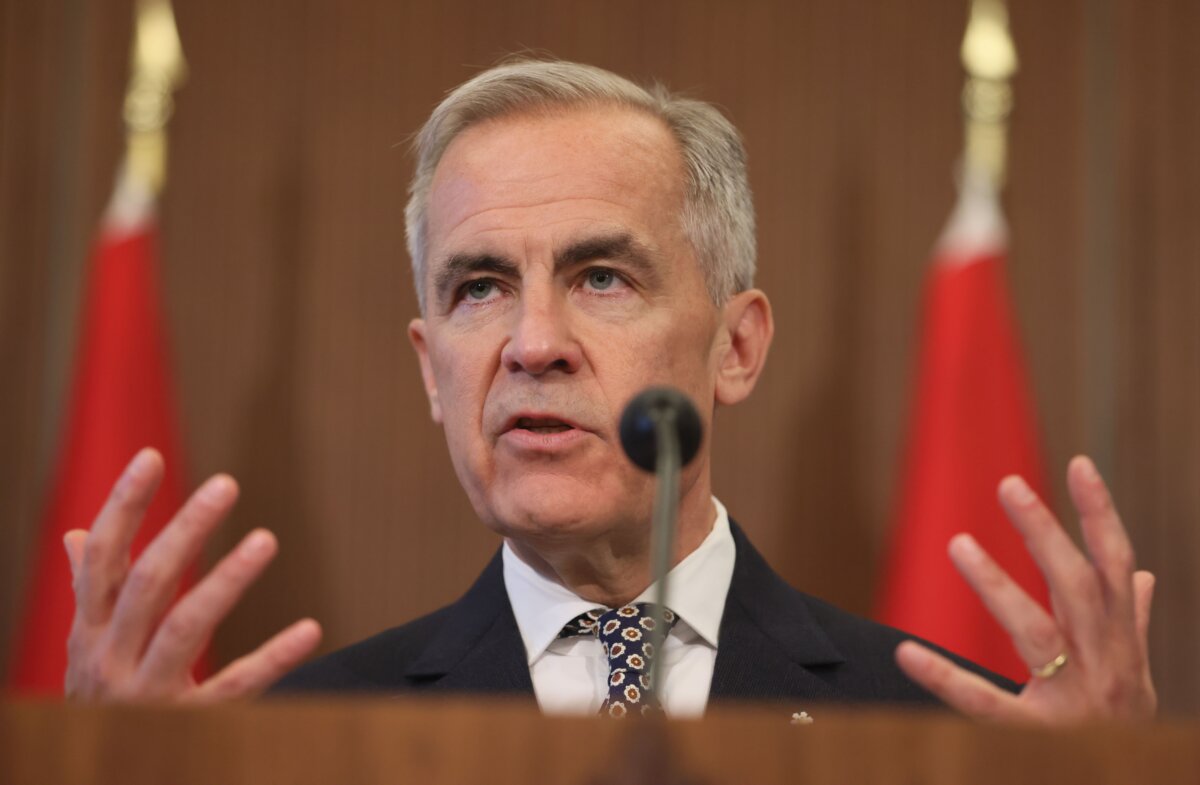

Prime Minister Mark Carney said he will hold summits with indigenous leaders as a first step after the Liberals’ major projects bill was adopted, in a bid to address the concerns of stakeholders around the approval of projects.
Speaking to reporters on June 20 shortly after Bill C-5 passed, Carney said full-day summits will be held with First Nations on July 17 in Ottawa, to be followed by meetings with Inuit leadership in “late July,” and with Metis leadership “soon thereafter.”
Several indigenous groups have raised concerns that Bill C-5 could potentially weaken existing requirements related to indigenous consultation and environmental protections.
Bill C-5 aims to remove federal impediments to interprovincial trade barriers, while also speeding up the approval and development of major projects that align with national interests, following consultations with the provinces, territories, and indigenous stakeholders.
“These projects will build our national economy, and through indigenous equity and resource management, these projects will be built with indigenous nations and communities. This is not an aspiration, it is the plan embedded in the bill itself,” Carney told reporters.
Carney said the legislation will also create a major projects office that will include an indigenous advisory council made up of First Nations, Inuit and Metis membership. He said the office will have the goal of ensuring the approval of projects honours Section 35 rights in the Constitution Act of 1982, which recognizes and affirms the Aboriginal and treaty rights of the indigenous peoples of Canada.
The prime minister noted that the government had consultations regarding Bill C-5 with over 125 different indigenous organizations. When asked by reporters if indigenous groups would have the power to veto projects, he responded that projects will be built “in partnership” and that the government will be working with First Nations to build them in a “positive” way.
When asked how soon he would name projects of national significance to be approved, Carney did not outline a specific timeline. “I can say with a high degree of confidence, we have more potential nation-building projects than the country can build at any one time,” he added.
The prime minister previously said that following a meeting with the premiers on June 2, the federal government would be refining its list of projects to be approved over the summer.
The Assembly of First Nations has said Bill C-5’s fast-tracking of federal approvals for major projects would diminish the capacity for proper consultation with First Nations and provide them with “minimal opportunity” to influence decisions that impact them.
Meanwhile, the Chiefs of Ontario have said Bill C-5 was being rushed through Parliament and was a “betrayal” of reconciliation, while the British Columbia Assembly of First Nations said the bill violates Canada’s constitutional obligations and commitments to the UN Declaration on the Rights of Indigenous Peoples Act.
Conservative MP and House Leader Andrew Scheer said the government had been “completely unclear” about what would happen with projects if there is no consensus among indigenous groups around the projects.
“That’s something that Conservatives are concerned about. We need to make sure that we have a path forward, that there’s robust consultations, but that it’s actually possible to get a ‘yes,’” he said.
Scheer said while the Conservatives voted in favour of Bill C-5, he characterized the legislation as giving the Liberal government the ability to “get around their own barriers to project development.” He noted that many policies introduced over the past 10 years that had “devastated” the energy sector remain in place, citing the industrial carbon tax and West coast tanker ban.
Scheer added that there is “a lot of skepticism” in the Canadian energy sector about whether or not Bill C-5 “will actually lead to results.”
 Friends Read Free
Copy
Facebook
Tweet
Friends Read Free
Copy
Facebook
Tweet