
Prime Minister Mark Carney suggested that a trade deal with the United States may ultimately still include tariffs on Canada, as the two countries attempt to work out a deal before the Aug. 1 target date.
Speaking to reporters ahead of a cabinet meeting in Ottawa on July 15, Carney told reporters that there is “not a lot of evidence right now” that any countries can achieve an agreement with the United States that does not involve tariffs.
Carney said that Canada currently has “almost free trade” with the country, despite higher tariffs on some industries like steel, aluminum, and auto exports, and potential tariffs on copper and pharmaceuticals.
“So we need to stabilize the situation for Canada,” Carney said, adding that the tariffs in effect for Canada are among the lowest in the world.
U.S. President Donald Trump has levied a series of tariffs against Canada, including 50 percent tariffs on steel and aluminum, 25 percent tariffs on cars and auto parts, and 10 percent tariffs on oil and potash. Trump has also imposed 25 percent tariffs on all goods not covered under the United States-Mexico-Canada Agreement, which he said on July 10 would increase to 35 percent at the end of the month.
Trump has also promised to implement 50 percent tariffs on copper imports, as well as tariffs of up to 200 percent on pharmaceuticals from foreign countries.
In Trump’s July 10 letter to Carney, he also said the U.S. would raise tariffs further if Canada retaliated. Canada had imposed counter-tariffs on the United States earlier in the year, but has since removed some of those counter-measures.
The letter also mentioned fentanyl coming into the United States from Canada, saying the initial tariffs were imposed on Canada earlier in the year in order to stop the drugs. Ottawa has since implemented several measures to crack down on fentanyl, such as $1.3 billion for border security, appointing a “fentanyl czar,” and listing drug cartels as terrorist organizations.
Additionally, the letter mentions Canada’s “extraordinary tariffs” on American dairy farmers. Canada has a supply management system to ensure stable prices for Canadian dairy, egg, and poultry farmers, and Carney has said the system is off the table in trade negotiations with the United States.
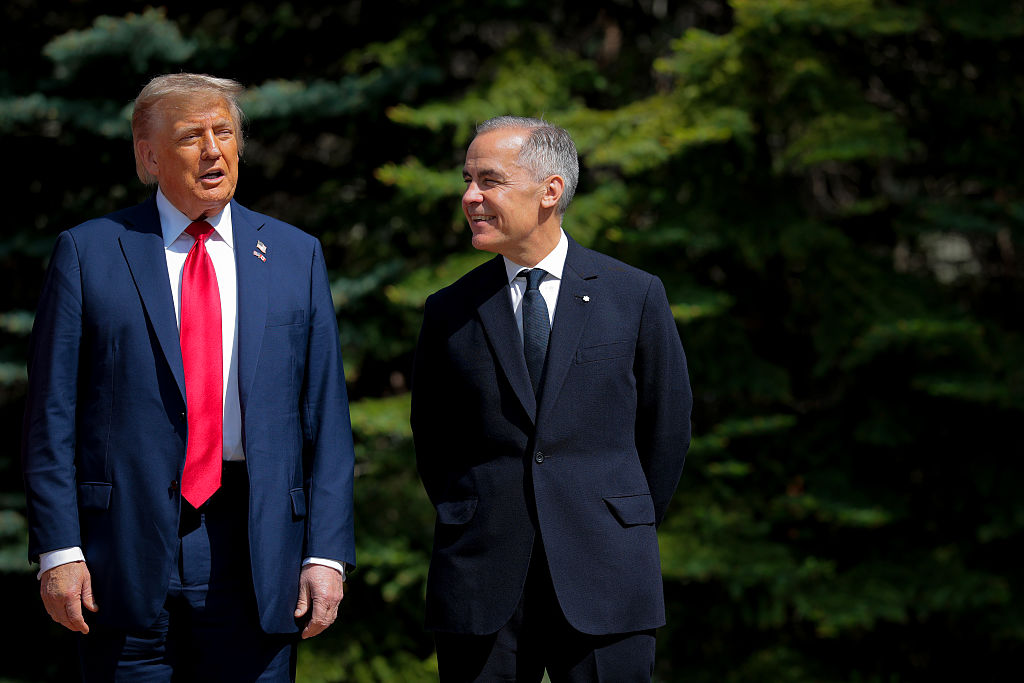
Following the letter, Carney pushed back the Canadian government’s self-imposed deadline for a trade deal from July 21 to Aug. 1. Carney and Trump had agreed on June 16 at the G7 summit in Alberta to reach a deal within 30 days.
The Trump administration had also cancelled trade talks with Canada on June 27 because of its plan to impose a Digital Services Tax that would impact U.S. tech companies. Days later, Ottawa announced it would do away with the tax, and talks resumed.
Conservative Leader Pierre Poilievre said on social media on July 15 that Carney was “now conceding” that U.S. tariffs on Canada will be part of an eventual deal.
“Another unilateral concession from a man who said he would never back down to the U.S. President,” he added.
 Friends Read Free
Copy
Facebook
Tweet
Friends Read Free
Copy
Facebook
Tweet