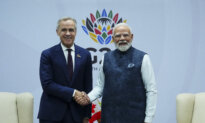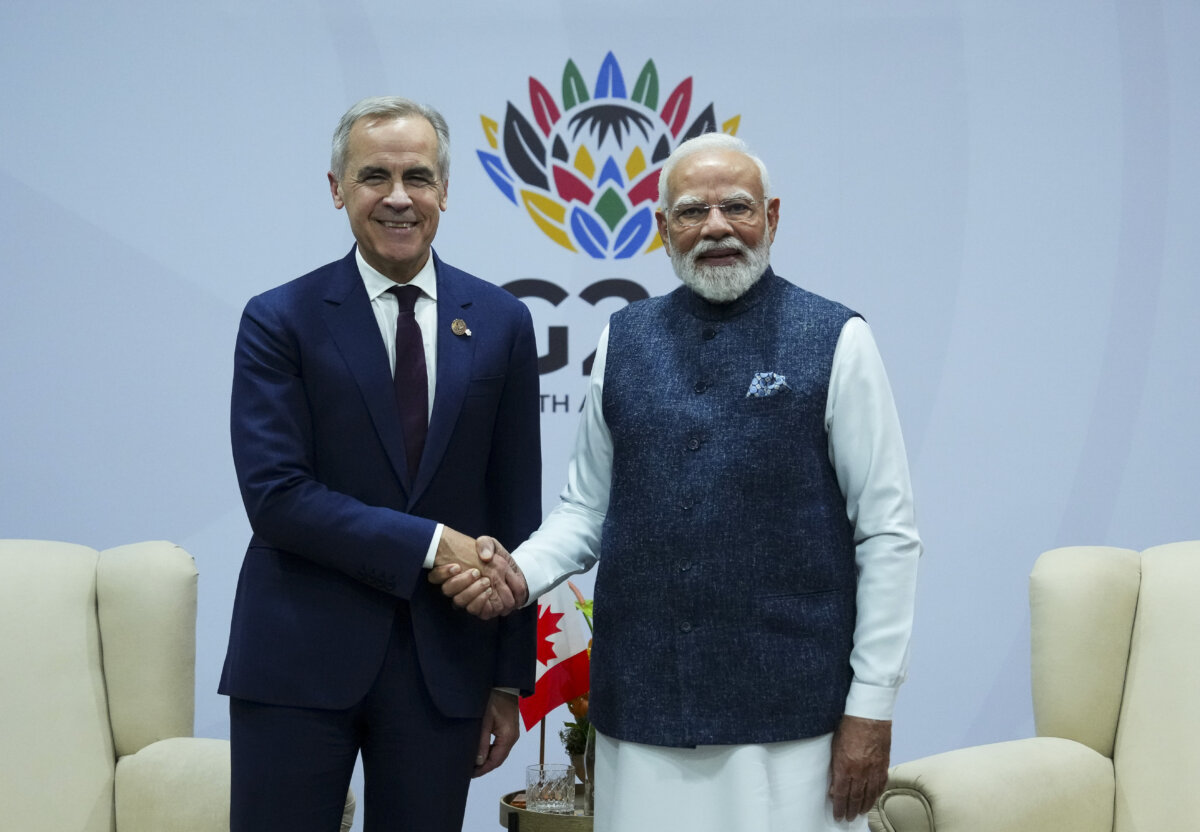

Prime Minister Mark Carney and Indian Prime Minister Narendra Modi spoke ahead of Modi’s planned visit to Canada in December, emphasizing continued collaboration on trade, energy, and security.
The two leaders spoke by phone on Oct. 13 and reaffirmed their commitment to conclude negotiations on a Comprehensive Economic Partnership Agreement (CEPA) at the earliest opportunity and increase two-way trade to $70 billion by 2030, according to a statement from Carney’s office.
In 2025, two-way goods and services trade between Canada and India amounted to $30.4 billion.
Canada and India formally launched CEPA negotiations in March, aiming to conclude talks by the end of 2026. As of September, officials had completed four rounds of negotiations and were continuing discussions to resolve outstanding differences, according to Global Affairs Canada.
Carney and Modi also welcomed the ongoing Team Canada Trade Mission to India, led by International Trade Minister Maninder Sidhu, and Foreign Affairs Minister Anita Anand’s visit to New Delhi this week to advance cooperation on trade, energy, and people-to-people ties.
Sidhu is being joined by almost 300 delegates representing businesses and exporters from across Canada. Sidhu said in a media statement that he is leading the largest Canadian trade delegation to India in more than 30 years.
The renewed economic engagement marks a shift after a period of strained diplomatic relations between Canada and India.
Canada and India have held trade discussions since 2010, but talks stalled in 2023 after then-prime minister Justin Trudeau alleged Indian government involvement in the killing of Canadian Sikh activist Hardeep Singh Nijjar in Surrey, B.C.
India denied the allegation, while relations deteriorated further in October 2024 when both countries expelled six diplomats amid Canadian allegations of Indian involvement in criminal activity.
The two countries began restoring diplomatic relations in 2025, with both governments reinstating their high commissioners in August after a prolonged diplomatic dispute. Carney and Modi subsequently agreed in November to increase diplomatic staffing levels and strengthen economic ties.
Carney, who made resetting relations with India a priority after he became prime minister in 2025, visited Mumbai and New Delhi in March 2026. It was the first visit by a Canadian prime minister in eight years.
The leaders agreed in November 2025 to launch CEPA negotiations, while the formal terms of reference were signed in March.
During the visit, Carney met with Modi and announced several agreements, including a $2.6 billion deal for Saskatoon-based Cameco to supply India with about 22 million pounds of uranium and 10 commercial agreements worth more than $5.5 billion.
During their Oct. 13 phone call, the leaders “welcomed the increased engagement” between the two countries during the past year, including in finance, defence and security, people-to-people ties, and artificial intelligence, Carney’s office said.
It also said the two leaders discussed the effects of geopolitical instability in the Indo-Pacific region and the need for trusted partners in energy and agriculture. The statement added that Carney thanked Modi for “seeking a peaceful resolution” to the war in Ukraine.
The leaders also welcomed a bilateral security dialogue held in India last week as part of ongoing security and law enforcement engagement between the countries’ national security advisers.
In a separate statement, Modi described his conversation with Carney as “warm and productive” and said they agreed to pursue closer cooperation in trade, energy, technology, security, and people-to-people ties.
 Friends Read Free
Copy
Facebook
Tweet
Friends Read Free
Copy
Facebook
Tweet