
Canadian opposition parties have stressed the importance of the prime minister maintaining regular talks with the U.S. president, after Prime Minister Mark Carney dismissed a reporter’s question about when he last spoke with U.S. President Donald Trump.
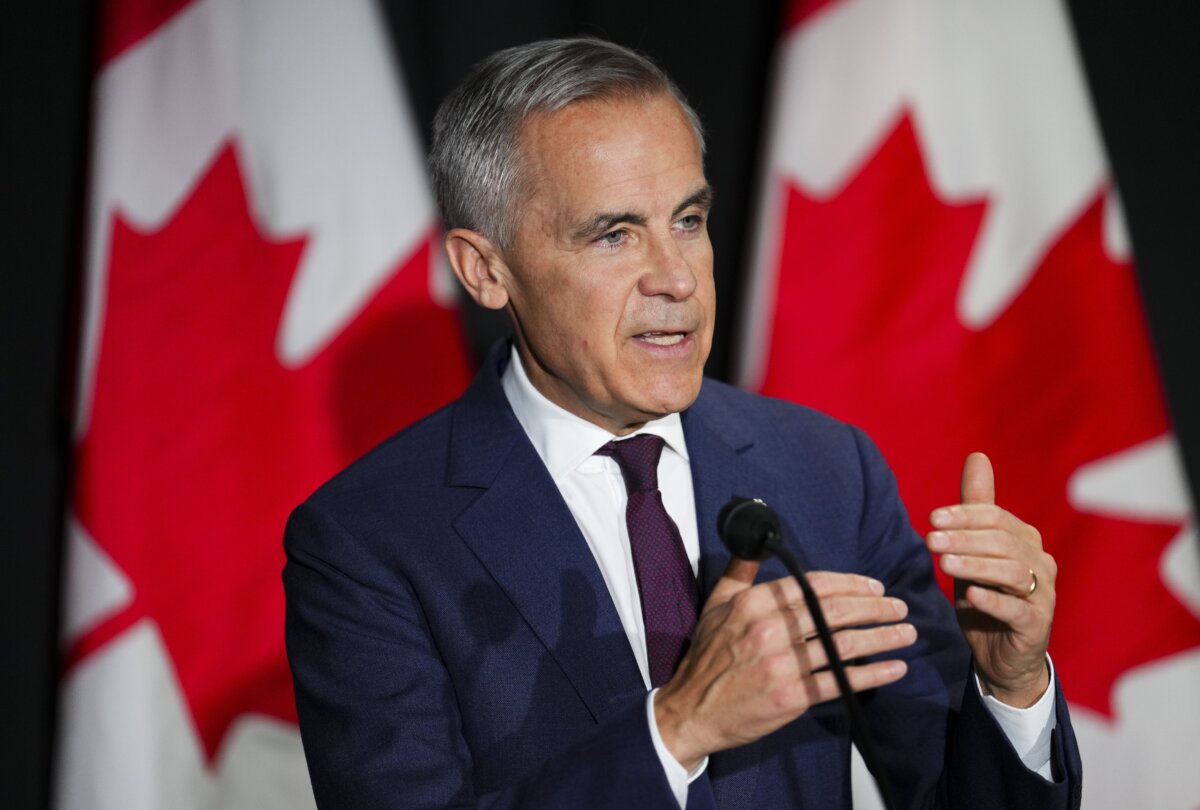
Carney made the comment while attending the G20 Leaders’ Summit in Johannesburg, South Africa, on Nov. 23, while responding to a reporter’s question on the timing of his last conversation with Trump.
“Who cares? I mean, it’s a detail. I spoke to him,” Carney replied. “I’ll speak to him again when it matters.”
The prime minister told the reporter in French that he would likely speak with Trump again within the next two weeks, before switching back to English to say, “I look forward to speaking to the president soon, but I don’t have a burning issue to speak with the president about right now.”
“When America wants to come back and have the discussions on the trade side, we will have those discussions,” Carney added.
During question period on Nov. 24, Conservative Leader Pierre Poilievre accused Carney of sending a message to aluminum and forestry workers hurt by U.S. tariffs that he “doesn’t care.” Government House Leader Steve MacKinnon responded by saying, “of course the prime minister cares about the well–being of Canadians, of workers and industries, and that is why we are carrying out constructive negotiations with the U.S.”
Bloc Québécois Leader Yves-François Blanchet said on X the same day that Carney’s comment on talks with the Trump would not help to restore Canada’s “necessary relationship” with the United States. Blanchet said Canada should not be “naive” by building relationships with the “least reputable countries,” citing China and the United Arab Emirates. He said Ottawa should instead restore relations with the United States.
“We won’t replace the 75 percent to 80 percent of our exports that go to the United States in a few months, not even in a few years. This disdain from the prime minister could prove to be very costly and clumsy. Error in judgment,” he added.
While Carney and Trump had two meetings at the White House in May and October, and the two traded praise at both meetings, relations between Ottawa and Washington appears to have soured in recent weeks.
Trump abruptly announced on Oct. 23 that trade negotiations with Canada were “terminated” due to an anti-tariff ad campaign sponsored by the Ontario government that featured former U.S. President Ronald Reagan.
Trump then announced on Oct. 26 that he would raise tariffs on Canada by an additional 10 percent because Ontario did not immediately pull the ads. The U.S. president said the advertisement was “fraudulent” and misrepresented Reagan’s stance on tariffs, and said the ad was aimed at interfering with a U.S. Supreme Court hearing on Trump’s tariffs.
The U.S. president acknowledged on Oct. 31 that Carney had called to apologize to him over the ad, and said he had a “very good relationship” with the prime minister, but said he still had no plans to resume trade negotiations with Canada.
Carney previously said that he regularly exchanges text messages with Trump in addition to speaking with him over the phone.
During a speech at the Chamber of Commerce of Metropolitan Montréal on Nov. 14, Carney said it was a “privilege to have meetings all around the world, except with one country,” but did not specify which country.
Carney has repeatedly noted that Canada currently has a lower overall U.S. tariff rate than many other countries due to exemptions under the United States-Mexico-Canada Trade Agreement.
The Conservative Party said in a statement that Carney had failed to meet his promise of negotiating a “win” for Canada, and that U.S. tariffs had caused thousands of Canadian job losses. The party noted that U.S. tariffs on Canada are higher than when Carney took office back in March.
“Carney’s flippant attitude in South Africa matches his results for Canadians,” the party said.
 Friends Read Free
Copy
Facebook
Tweet
Friends Read Free
Copy
Facebook
Tweet