

Chile is facing a presidential run-off between a member of the Communist Party and a conservative candidate.
Jeannette Jara, 51, the communist former labor minister and candidate of Chile’s governing coalition, achieved 26.8 percent of the ballot with almost all votes counted.
José Antonio Kast, 59, a Catholic former lawmaker opposed to same-sex marriage and abortion, achieved close to 24 percent of the vote after standing on a platform to restore law and order to the nation, which has seen a recent surge in organized crime and illegal immigration.
With both frontrunners failing to pass the required 50 percent threshold to secure victory in the first round, a showdown between the political left and right has been set up for December’s run-off.
Kast Expected to Benefit
After the result became known, Kast urged the different factions of the political right to unite in support of him, framing the run-off as an existential struggle for the future of Chile. He is expected to benefit in the second round from a large percentage of votes that went to three eliminated conservative candidates, who made similar pledges around border control.
“It will be the most important election of our generation, a true referendum between two models of society—the current one that has led Chile to destruction, stagnation, violence, and our model, which promotes freedom, hope, and progress,” he told a crowd of supporters.
In the capital city of Santiago, Jara told her supporters, “This is a great country. Don’t let fear freeze your hearts.”
Kast, who has expressed admiration for Brazil’s former President Jair Bolsonaro as well as U.S. President Donald Trump, has pledged to deport tens of thousands of undocumented migrants and to construct hundreds of kilometers of ditches and walls along Chile’s northern border with Bolivia to prevent people from entering the country illegally, with particular attention to those moving from Venezuela.
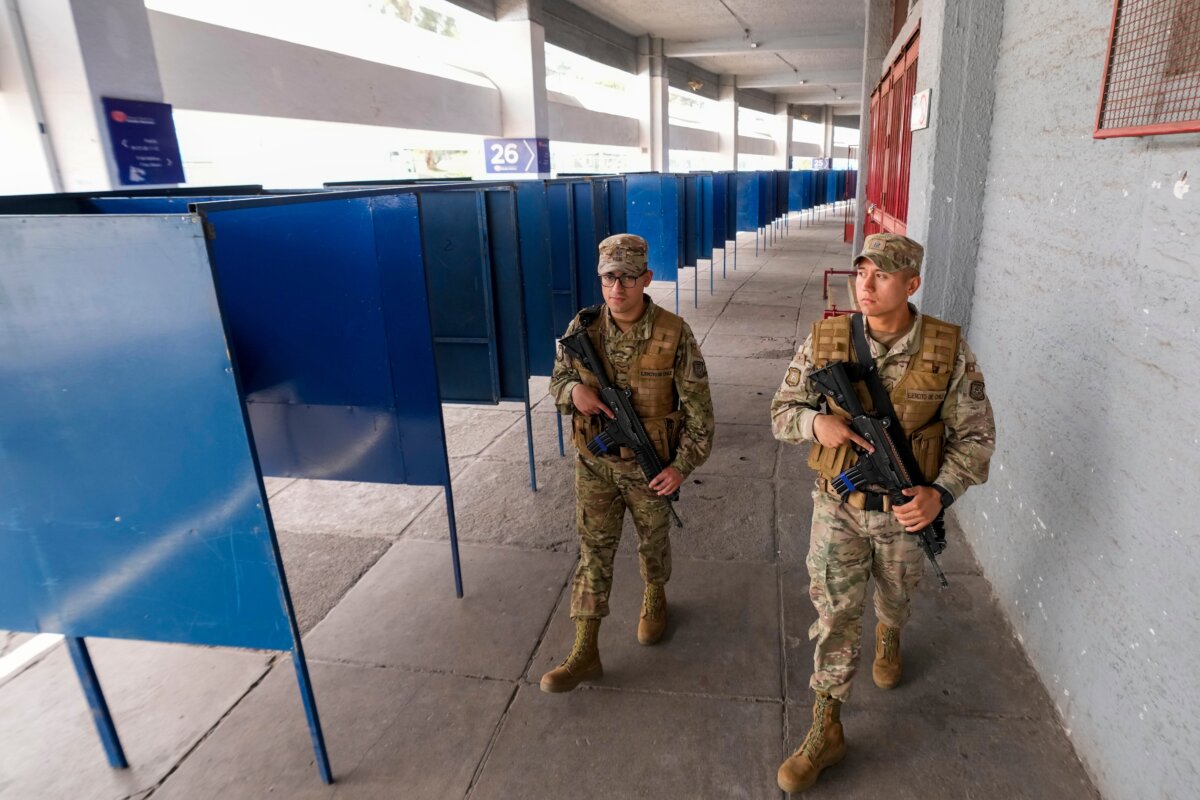
Many of those who voted for Kast have expressed their support for taking back control of the country’s borders.
“We want change, and that change today is about security,” said José Hernández, who owns an agricultural company, after voting for Kast.
Border Control
Jara also stressed the importance of national security, promoting plans to deport foreigners convicted of drug trafficking, crack down on money laundering, and tighten up security along Chile’s borders, but she is not in favor of building walls, according to Chilean media.
Chile is the world’s southernmost country, bordering Peru to the north, Bolivia to the north-east, Argentina to the east and the Drake Passage to the south.
Jara faced criticism early on in her campaign for referring to communist Cuba as a democracy. Chile’s Communist Party, of which she has been a member since the age of 14, according to Spanish newspaper El País, supports the authoritarian governments in Cuba and Venezuela.
The third- and fourth-placed candidates were Franco Parisi, a right-leaning economist with a large social media following, and Johannes Kaiser, a libertarian former YouTuber who was elected as a lawmaker in 2021.
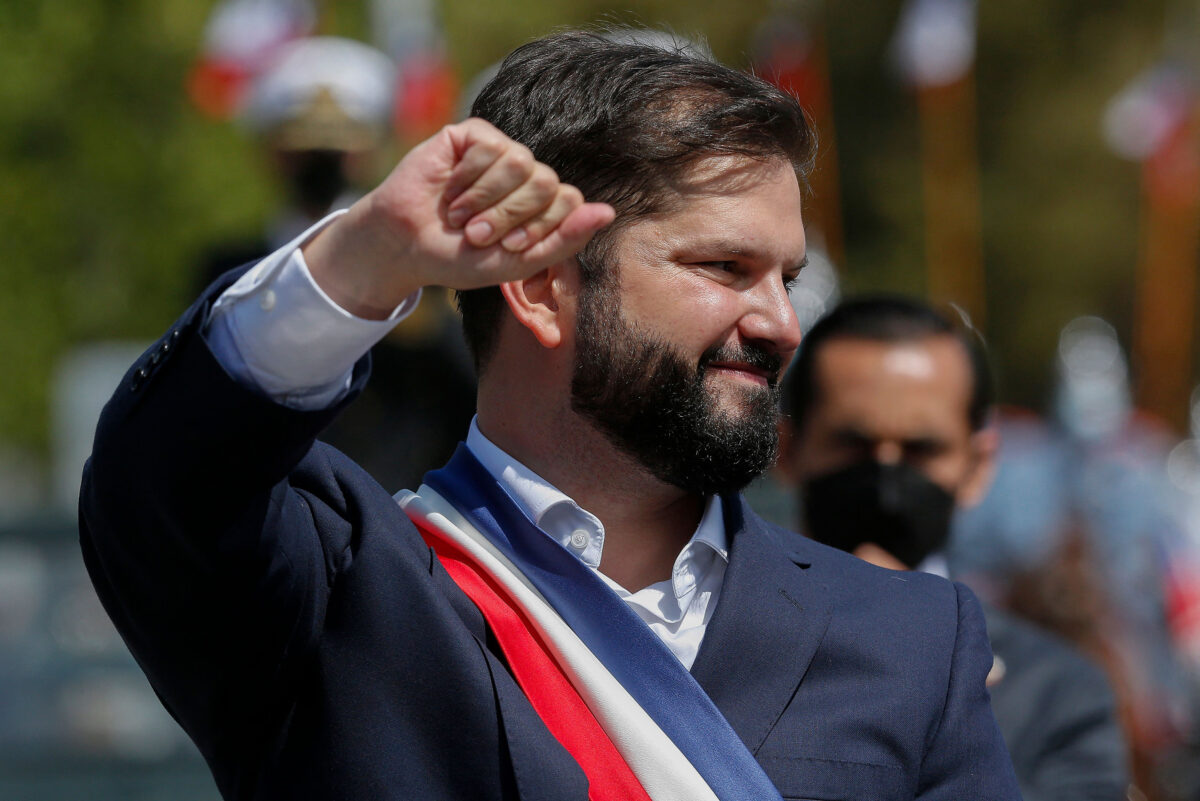
Left-wing President Gabriel Boric, whose time in office ends in March, cannot run again as Chile’s constitution does not allow reelection to consecutive terms.
Boric came to power in 2021, elected on a pledge to “bury neoliberalism” following mass unrest over inequality, but has been criticized by allies and rivals for failing to deliver the promised social changes.
Chile is one of Latin America’s most prosperous nations, but has recently suffered economic woes, with growth stagnant and unemployment rising to more than 8.5 percent, according to Statista.
Chileans Rejected Radical Reforms
The country retained its dictatorship-era constitution after a government-backed charter that would have introduced sweeping social and economic changes to Chile failed to pass. Many considered the charter to be too radical.
Some of Jara’s policies as labor minister were popular among Chileans for bolstering workers’ rights. She raised the minimum wage, boosted pensions, and shortened the working week from 45 to 40 hours.
Kast’s policies focus more on shrinking the state and spending perceived as wasteful, echoing the promises of the United States’ Department Of Government Efficiency (DOGE) and President Javier Milei in neighboring Argentina.
Kast has pledged a $6 billion government spending reduction over 18 months, appealing to voters concerned about wasteful spending and the negative effects of government red tape on businesses.
Like other Latin American countries, Chile has a history of dictatorship, having been ruled over from 1973 to 1990 by General Augusto Pinochet, who led a right-wing military dictatorship, in contrast to the left-wing authoritarian regimes common elsewhere in the region at the time.
The second round of voting will take place on Dec. 14, with some analysts predicting both candidates will now move toward the center to widen their appeal.
“We will definitely see Jara and Kast after today being even more moderate, talking about things that voters care about and trying to compete for the center,” said Rodolfo Disi, a political scientist at Chile’s Adolfo Ibáñez University.
The Associated Press contributed to this report
 Friends Read Free
Copy
Facebook
Tweet
Friends Read Free
Copy
Facebook
Tweet