

In just two years, Jair Bolsonaro has gone from being president of Brazil to facing a trial for charges of orchestrating an attempted coup, being placed under house arrest, and being banned from social media.
Prosecutors accuse the former military officer of leading a plot to overturn the 2022 election results, an allegation that he denies.
The case marks the first time that a former Brazilian president has been charged with attempting a coup.
It has drawn international attention, with U.S. President Donald Trump—one of Bolsonaro’s allies—calling it a “witch hunt.”
The coming days could be decisive for the 70-year-old, as Brazil’s Supreme Federal Court rules on his guilt or innocence and whether he could face up to 30 years in prison.
Here is what we know so far and what to expect in the days ahead.
Why Is Bolsonaro on Trial?
Bolsonaro became president of Brazil in 2019 and held the office until 2022, after losing in a tight race against current President Luiz Inácio Lula da Silva, known locally as “Lula.”
Following his defeat, Bolsonaro alleged that the outcome had been affected by the manipulation of electronic ballot boxes by his opposition.
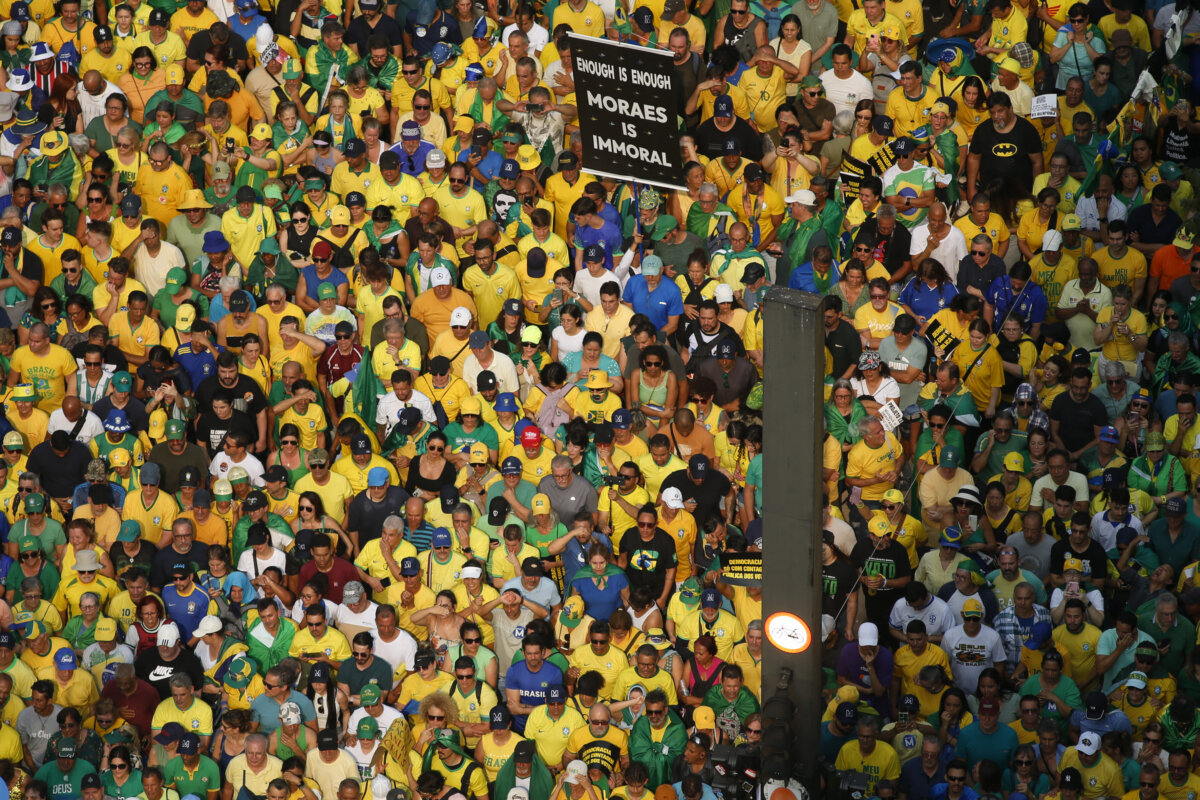
On Jan. 8, 2023, Bolsonaro’s supporters attacked government buildings. The next day, Bolsonaro condemned these attacks and denied responsibility.
However, in November 2024, officials charged Bolsonaro and others with attempting to overturn the rule of law and an attempted coup d’état.
These were not the only legal challenges that he has faced.
In June 2023, the Brazilian Superior Electoral Court convicted him of fraud and counts related to the Jan. 8 incidents, and he was declared ineligible to run again until 2030.
In October 2023, the same court convicted Bolsonaro of abuse of power for his use of Brazil’s Independence Day to promote his candidacy, a violation of Brazilian law.
What Was He Charged With?
Bolsonaro is charged with attempting to stage a coup, attempting violent abolition of the democratic rule of law, involvement in an armed criminal organization, aggravated damage to federal property, and damage to listed heritage.
He has denied the charges.
The attempted coup charge alone could result in a 12-year prison sentence, while the charges of leading an armed criminal organization and attempting to overthrow the democratic rule of law each carries a maximum sentence of eight years.
The remaining charges carry a maximum of three years’ imprisonment each.
If found guilty of all charges and given the maximum penalty for each, Bolsonaro could be sent to prison for more than 30 years.
Bolsonaro is alleged to be at the center of the coup plot but is also standing trial alongside seven of his allies who are facing the same charges.
They include Alexandre Ramagem, former director of the Brazilian Intelligence Agency; Almir Garnier, a retired navy commander; Anderson Torres, a former minister of justice and former secretary of security of the Federal District; and Augusto Heleno, former minister of the Institutional Security Office.
Also standing trial are Paulo Sérgio Nogueira, former minister of defense; Walter Braga Netto, a former minister during Bolsonaro’s presidency and candidate for vice president on the 2022 ticket; and Mauro Cesar Cid, Bolsonaro’s former aide-de-camp.
How Has Trump Gotten Involved?
The case has drawn international attention in part because of Bolsonaro’s close ties to Trump, earning him the nickname “Trump of the Tropics” during the period in which Trump’s first presidency overlapped with the start of Bolsonaro’s.
Trump has denounced the trial as politically motivated, vowing to impose 50 percent tariffs on Brazilian imports and citing the case against Bolsonaro as evidence of strained U.S.–Brazil relations.
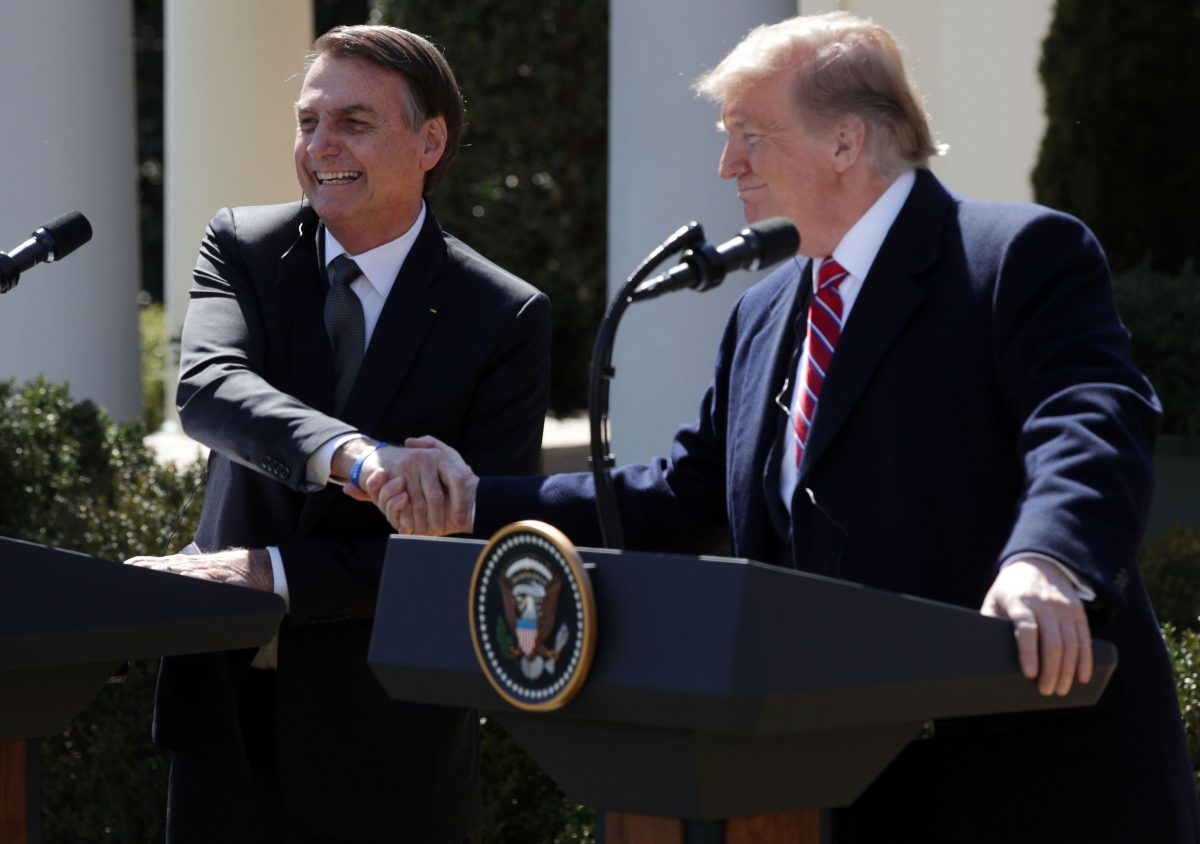
Trump has compared the situation with Bolsonaro to what he experienced when seeking to return as president of the United States.
He wrote on Truth Social on July 7: “This is nothing more, or less, than an attack on a Political Opponent—Something I know much about!
“I will be watching very closely the WITCH HUNT of Jair Bolsonaro, his family, and thousands of his supporters.”
What Comes Next in the Trial?
The Supreme Federal Court is holding five nonconsecutive sessions over two weeks to reach verdicts for the eight defendants. The sessions began on Sept. 2 and will conclude on Sept. 12.
The sessions opened with Attorney General Paulo Gonet alleging that the defendants had developed and implemented a plan to attack democratic institutions to prevent the transfer of power following the 2022 elections, according to a summary of the day’s proceedings on the Supreme Federal Court’s website.
The sessions for the first week wrapped up on Sept. 3 with oral arguments from Bolsonaro’s defense attorneys, who alleged that there was no attempt to abolish the democratic rule of law and that the former president did not initiate any protocols to declare a state of defense or siege.
The panel of judges consists of five members, with a conviction or acquittal decided by a three-vote majority.
Conceivably, the vote could take place on Sept. 12.
Agência Brasil, a government-run public news agency, stated that according to the rules, a member of the court can request more time to analyze the case, suspending the trial for up to 90 days.
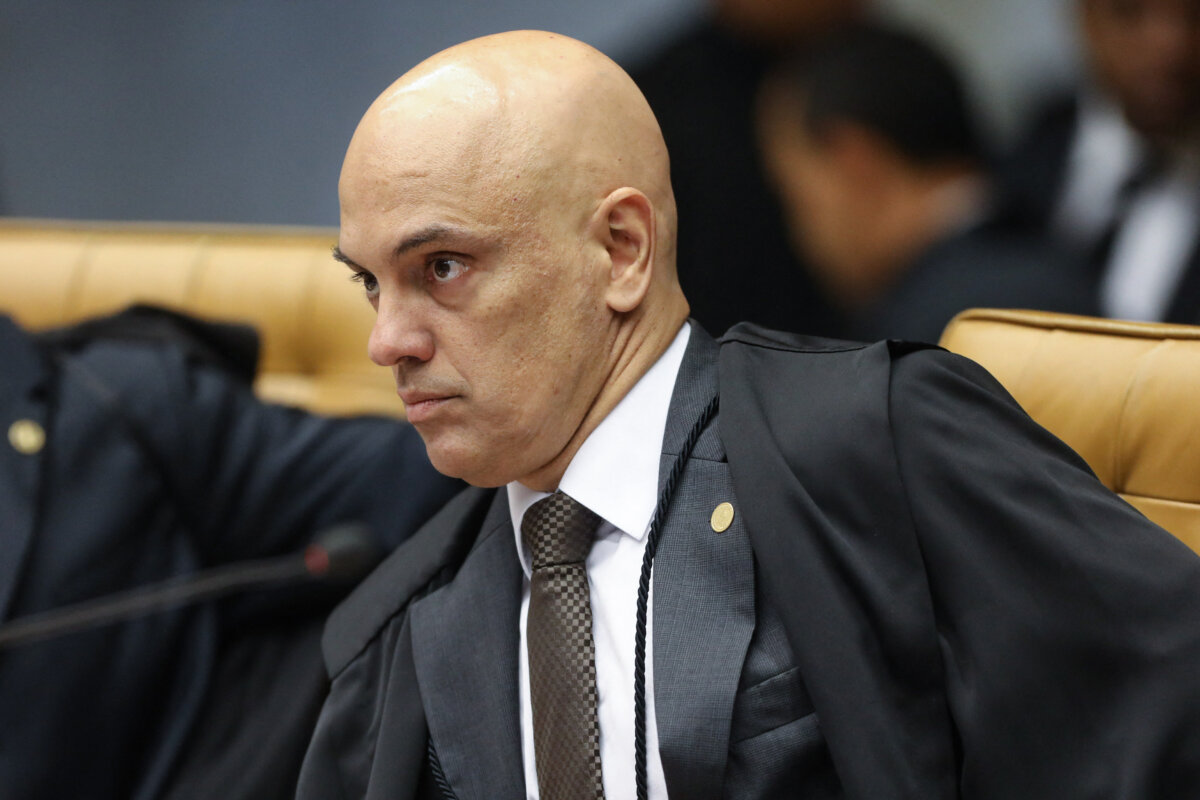
The panel is chaired by Supreme Court Justice Alexandre de Moraes, who this summer was sanctioned by the U.S. Department of State over alleged serious human rights abuses, with officials accusing him of targeting political opponents.
The department said in a statement on July 30 that the charges included violations of freedom of expression and “arbitrary detention involving flagrant denials of fair trial guarantees.”
Secretary of State Marco Rubio said in the statement at the time that de Moraes had “abused his authority by engaging in a targeted and politically motivated effort designed to silence political critics through the issuance of secret orders compelling online platforms, including U.S. social media companies, to ban the accounts of individuals for posting protected speech.”
In August 2024, de Moraes ordered Brazilian telecommunications providers to block access to X over court‑mandated removals of accounts that he accused of spreading misinformation.
The social media platform shut down operations in Brazil the following month, saying authorities threatened to jail its legal representative.
In October 2024, de Moraes authorized the reinstatement of X after the company complied with the previous judicial orders and met other legal requirements.
What Happens if He Is Convicted?
According to Agência Brasil, if Bolsonaro is convicted, he will not be imprisoned immediately. His sentence would begin only after an appeal was heard and the conviction upheld.
As a former army officer who served between 1973 and 1988, Bolsonaro is entitled to be detained in a special facility rather than in a regular prison.
Because all of those standing trial in his group are former army, navy, and federal police, they each have a right to special incarceration terms.
However, Cid signed a plea bargain with the Federal Police and would not serve any prison time.
Savannah Hulsey Pointer, Joseph Lord, and Owen Evans contributed to this report.
 Friends Read Free
Copy
Facebook
Tweet
Friends Read Free
Copy
Facebook
Tweet