
China has intensified its trade clash with Europe by slapping anti-dumping duties of up to 62.4 percent on European Union pork, in a move widely seen as retaliation for Brussels’s tariffs on Chinese electric vehicles (EVs).
The Chinese Commerce Ministry stated on Sept. 5 that it had reached a preliminary finding that EU pork and pig by-products are being dumped on the Chinese market, causing “material injury” to domestic producers. Provisional duties ranging from 15.6 percent to 62.4 percent will take effect on Sept. 10, with the investigation now extended to mid-December.
Beijing opened the pork probe in June 2024, just days after the EU imposed provisional tariffs on China-made EVs. After an eight-month investigation, the European Commission had concluded that Chinese EVs benefit from “unfair subsidization” and pose “a threat of economic injury” to European manufacturers. The following month, China hit European brandy imports—particularly French cognac—with anti-dumping duties, although major producers were later exempted.
The trade fight has unfolded against a broader backdrop of rising global protectionism. Brussels’s EV tariffs followed a U.S. decision in May 2024 to quadruple duties on Chinese EVs to 100 percent. Beijing, for its part, has pushed Brussels to accept a price-commitment scheme from Chinese producers in lieu of tariffs, but talks have stalled.
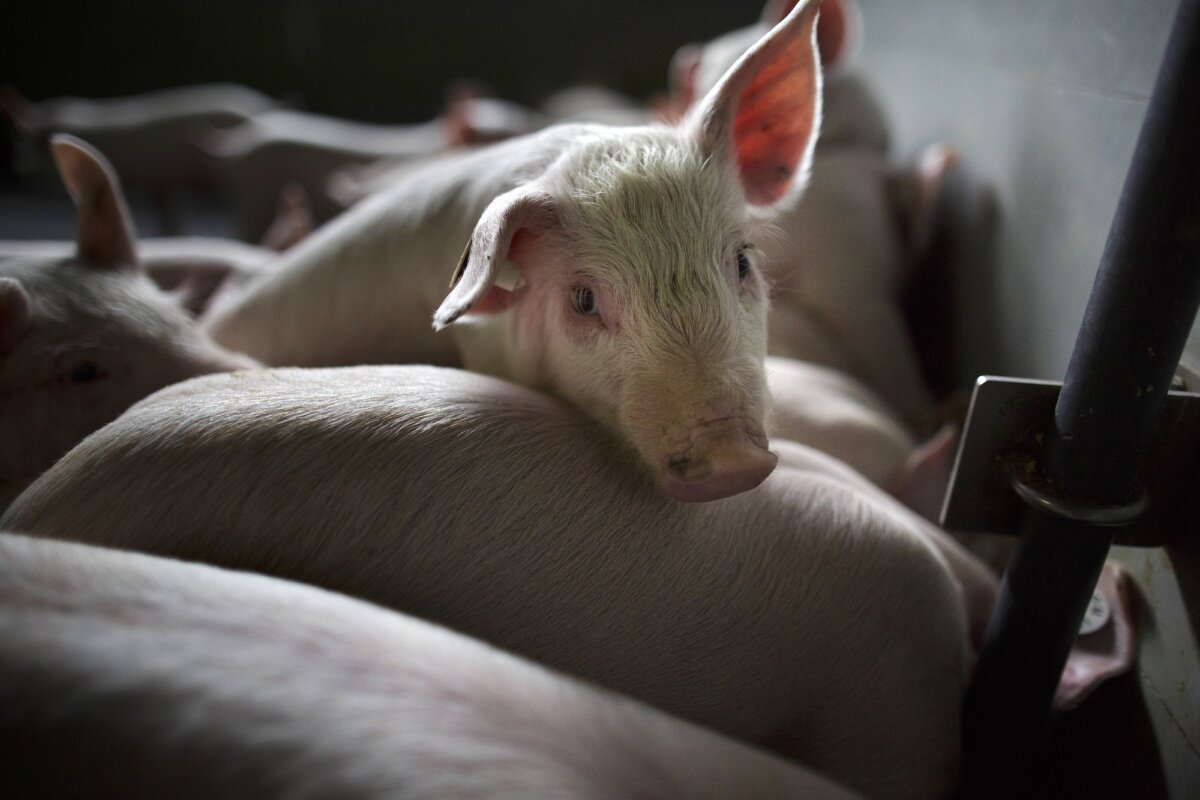
The Chinese Commerce Ministry stated on Sept. 5 that the pork investigation covers a wide range of products, from fresh and frozen cuts to intestines and other offal. Spain, the Netherlands, and Denmark are among the hardest-hit exporters. A significant share of EU pork shipped to China consists of offal such as pig ears, noses, and feet—highly prized in Chinese cuisine but with few alternative markets.
The European Commission criticized the move, saying the investigation was “based on questionable allegations and insufficient evidence.”
A spokesperson said, “We will take all the necessary steps to defend our producers and industry.”
Anne Richard, director of French pork industry group Inaporc, called the announcement “worrying news,” warning of potential fallout for prices in Europe. The decision is preliminary and could still change when the probe concludes in December. China has, in past cases, extended such investigations even after tariffs were imposed, such as with Canadian canola.
China was the EU’s top pork buyer in 2020, when exports jumped to $7.9 billion amid a domestic supply crunch caused by swine disease. However, by 2023, sales had slumped to just $2.6 billion, with Spain accounting for almost half.
The clash also ties into China’s high-stakes green energy ambitions. A decade ago, Beijing designated EVs as a strategic industry. Top leaders reiterated their focus on the sector at high-level meetings in 2024, calling it central to the “new productive forces.” With domestic demand weakening, Beijing has leaned more heavily on exports, fueling friction with its biggest trading partners.
Dorothy Li and Reuters contributed to this report.
 Friends Read Free
Copy
Facebook
Tweet
Friends Read Free
Copy
Facebook
Tweet