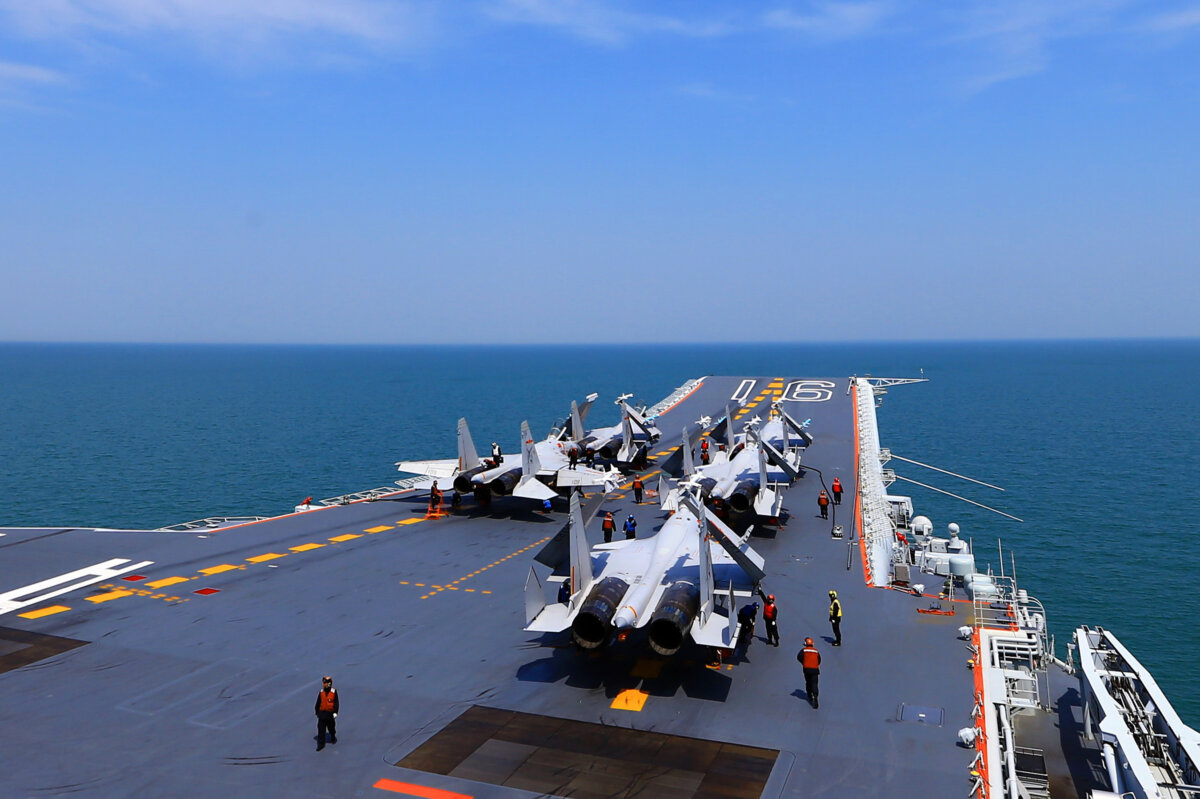

A recent military aircraft encounter between Australia and China indicates that the Yellow Sea could become a major flashpoint in the Indo-Pacific, as Beijing turns the strategic waters into a testing ground for gray-zone operations, experts warn.
The Australian Department of Defense said on March 6 that a Chinese military helicopter intercepted one of its aircraft over international waters in the Yellow Sea on March 4.
While an Australian naval helicopter was conducting routine operations to enforce United Nations Security Council sanctions against North Korea, a Chinese Army-Navy helicopter accelerated and rolled toward it, a move the department said “required evasive action to maintain safe flight.”
Although no injuries were reported during the encounter, “this was an unsafe and unprofessional maneuver that posed a risk to our aircraft and its personnel,” the statement said.
China’s defense ministry subsequently rejected the statement on March 6, claiming its response was “legitimate” to ensure “national security.”
Illegal Expansion
Lin Ting-hui, former deputy secretary-general at the Taiwanese Society of International Law, refuted the Chinese narrative, saying Beijing falsely equates lawful military operations in international airspace with violations of its territorial sovereignty.
-

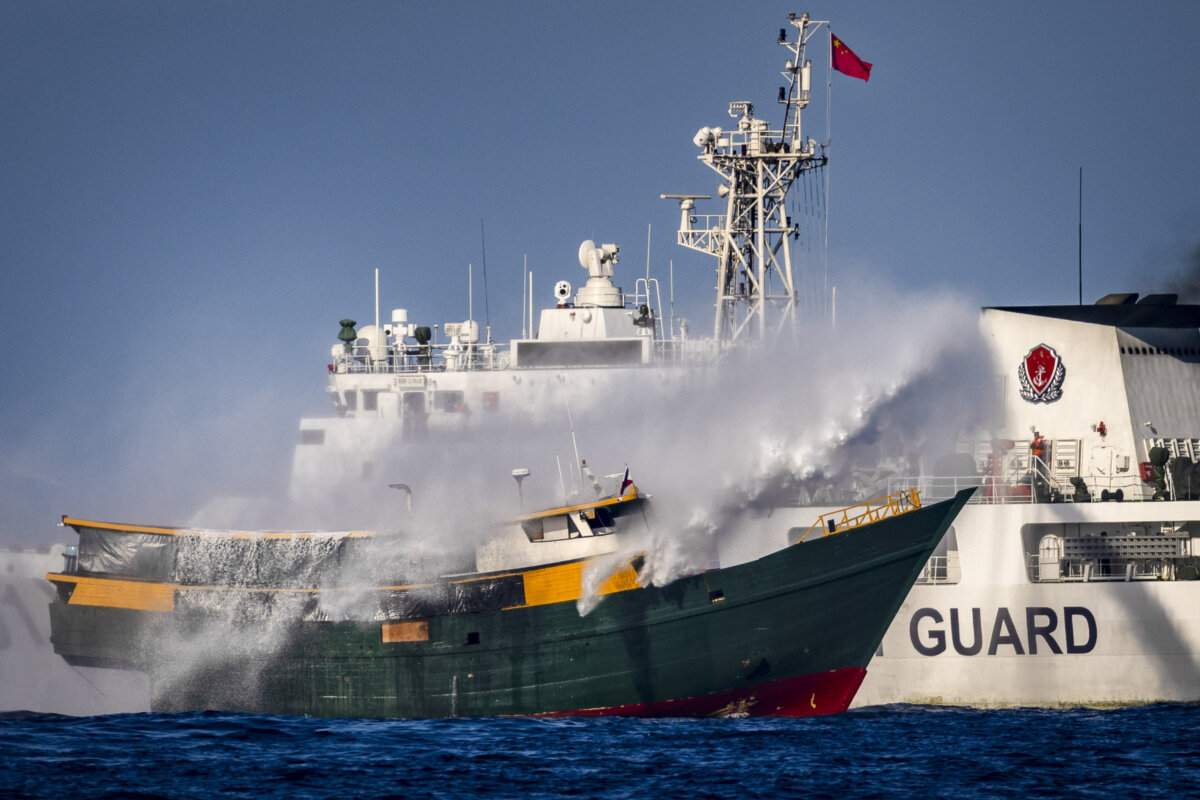
“The law of the sea only prohibits violating sovereignty, but it does not forbid conducting military activities in exclusive economic zones that retain high seas freedoms, meaning China’s stance is fundamentally legally untenable,” Lin told The Epoch Times.
Lin said Beijing opposes the Australian activities because such operations undermine the Chinese strategy of “anti-access,” which enables the Chinese Communist Party (CCP) to carry out illegal expansion in the region.
China’s anti-access/area-denial (A2/AD) strategy is a combination of missiles, submarines, sensors, and air defenses, designed specifically to block and disrupt the United States and its allies across air, sea, space, and cyber domains.
“Beijing routinely frames such operations as ‘extraterritorial interference’ to obscure the illegality of its own aggressive territorial behavior, despite such operations being fully consistent with international law,” Lin said.
John Blaxland, professor of International Security and Intelligence Studies at the Australian National University, noted that China signed the U.N. Convention on the Law of the Sea (UNCLOS) but refuses to apply the framework to its coastal waters, enforcing its sweeping maritime claims instead.
“China is eager to get Australia to desist from conducting such transits, understanding that a de facto acknowledgement of a claim, or at least a failure to challenge that claim, over time, lends support to the claimant’s position,” Blaxland told The Epoch Times.
Blaxland said the pattern extends beyond the Yellow Sea into the South China Sea—where Beijing has repeatedly engaged in provocative incidents and clashed with Southeast Asian claimants.
Canberra, however, places much value in continuing such operations to ensure free transit remains “legally feasible and practically viable into the future,” he added.
The Next Flashpoint
Beyond the recent interception of the Australian aircraft, Beijing has continuously escalated its presence in the Yellow Sea. In November, it conducted military exercises widely seen as targeting Japan, and in February engaged in a standoff with the U.S. Forces Korea (USFK).
-
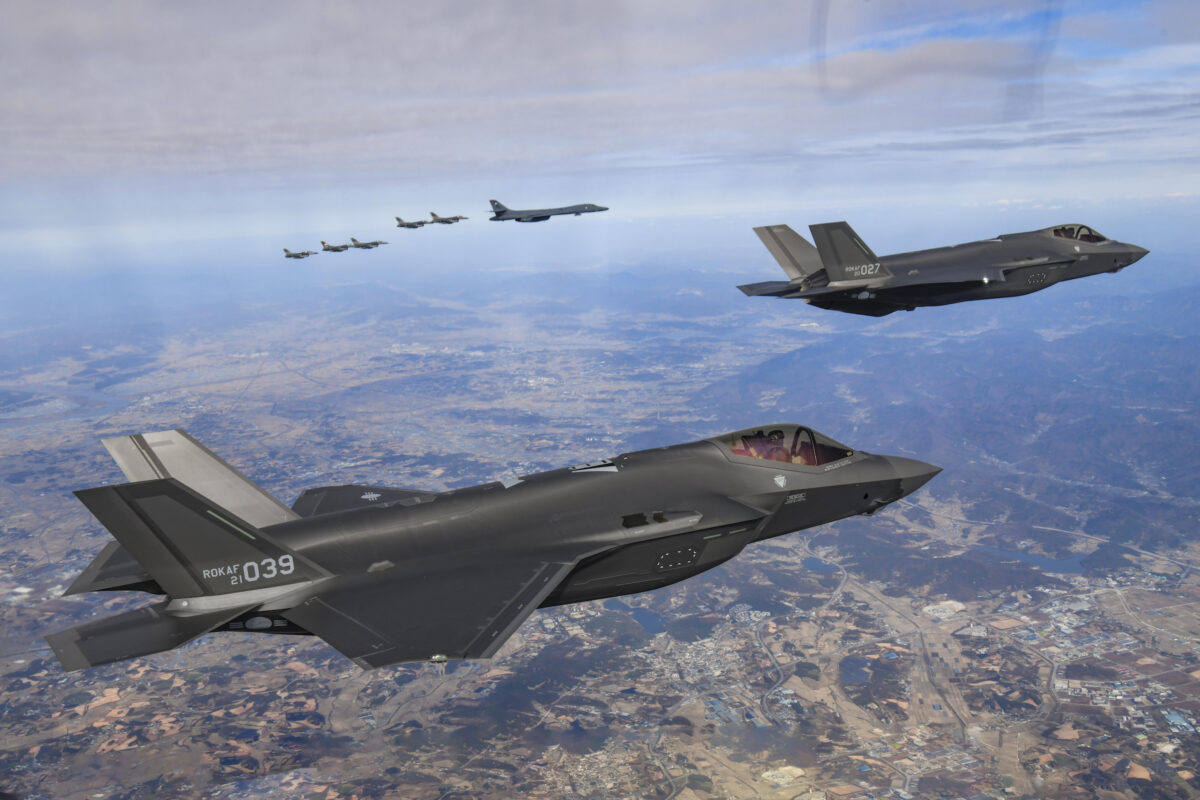
Lin said the Yellow Sea has become a testing ground for Beijing’s gray-zone operations—aggressive and coercive actions designed to intimidate opponents while remaining below the threshold of warfare—making China’s growing military assertiveness highly alarming to neighboring countries, particularly South Korea.
“Amid unresolved territorial disputes between the two nations, Seoul remains highly cautious of Beijing’s growing footprint in the Yellow Sea, marked by the rapid proliferation of dual-use maritime facilities and artificial structures,” he said.
Lin said that as Washington consecutively sanctions the “axis of evil” or “CRINK” countries, which include Russia, Iran, and North Korea, the USFK will likely increase its activities in the Yellow Sea to deter China, a fellow axis threat whose regional posturing leaves the Korean Peninsula highly volatile.
“Following the U.S. strike that killed Iranian Supreme Leader Ali Khamenei, Beijing is wary of Washington potentially executing a long-distance strike against its own leadership, forcing China to concentrate its forces in the north to defend the capital,” he said.
Blaxland said these escalating scenarios indicate the Yellow Sea could become another major flashpoint along with the East China Sea, the South China Sea, and the Taiwan Strait in the Indo-Pacific.
“Australia’s actions are seen as aimed at bolstering the deterrent effect to help ensure they don’t actually erupt,” he said.
More Clashes Ahead?
Lin said deep-rooted geopolitical divides make future air or sea conflicts highly likely regardless of Canberra’s attempts to improve ties with Beijing, given Australia’s pivotal role in key U.S.-led defense coalitions, including AUKUS, the Quad, and the Five Eyes alliance.
-
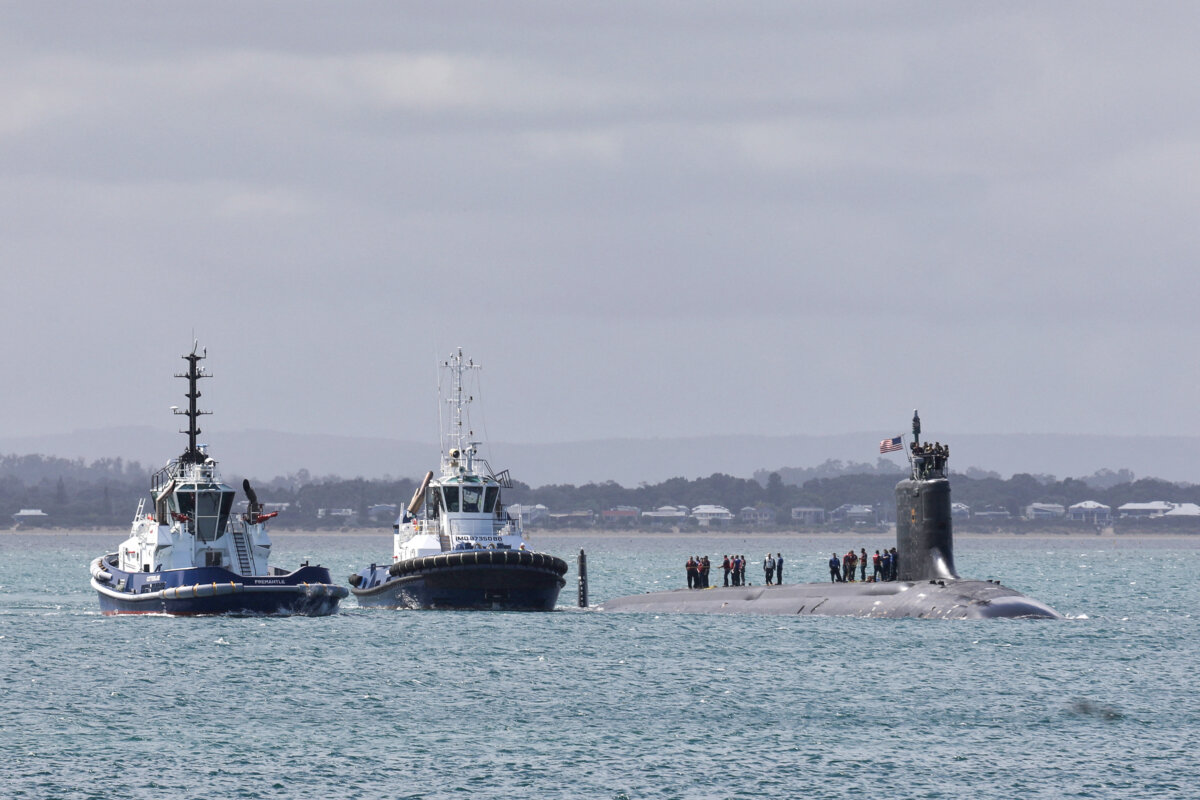
AUKUS is a trilateral security pact between Australia, the United Kingdom, and the United States. The Quad is a multilateral security framework involving the United States, Australia, India, and Japan; and the Five Eyes is an intelligence-sharing alliance among the United States, Australia, the U.K., Canada, and New Zealand.
“Beijing views Australia as an integral part of the Western alliance and is unlikely to lower its guard, meaning minor military frictions will emerge,” Lin said.
“Such scenarios could involve interference with pilots or freedom of navigation at sea, potentially escalating into collisions or mid-air confrontations.”
Blaxland said that as Australia acts in the Yellow Sea in a way consistent with U.N.-agreed principles, endorsed by neighboring and partner nations, the future of relations between Canberra and Beijing “is up to China.”
“Australia has no appetite for deliberately provoking China. China, on the other hand, has a growing track record of provocation against Australia. They have a choice to make,” said Blaxland.
 Friends Read Free
Copy
Facebook
Tweet
Friends Read Free
Copy
Facebook
Tweet