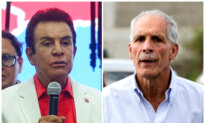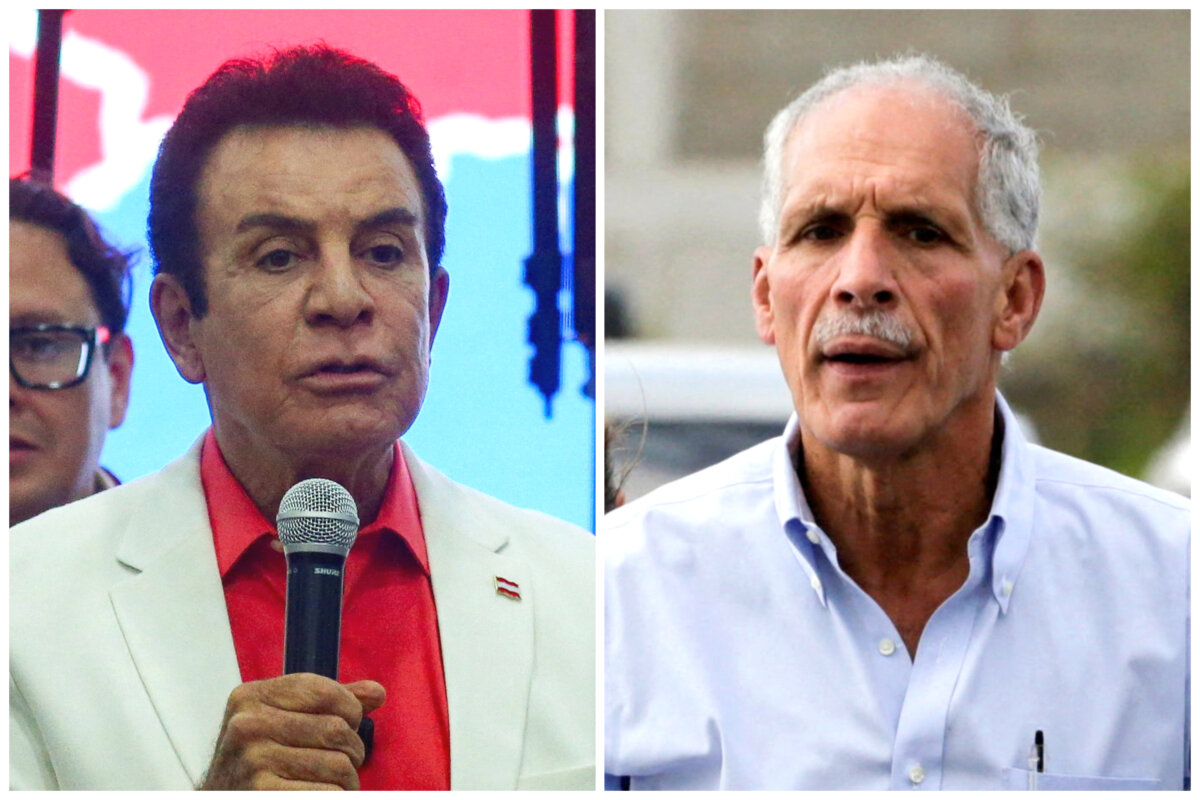


Margins in the high-stakes Honduras presidential election have narrowed as center-right Liberal Party candidate Salvador Nasralla has closed the gap on Nasry Asfura, the Conservative National Party candidate backed by U.S. President Donald Trump.
The election was held on Nov. 30, with initial exit polling showing an advantage for Nasralla. As the count continued into Dec. 1, Asfura took the lead.
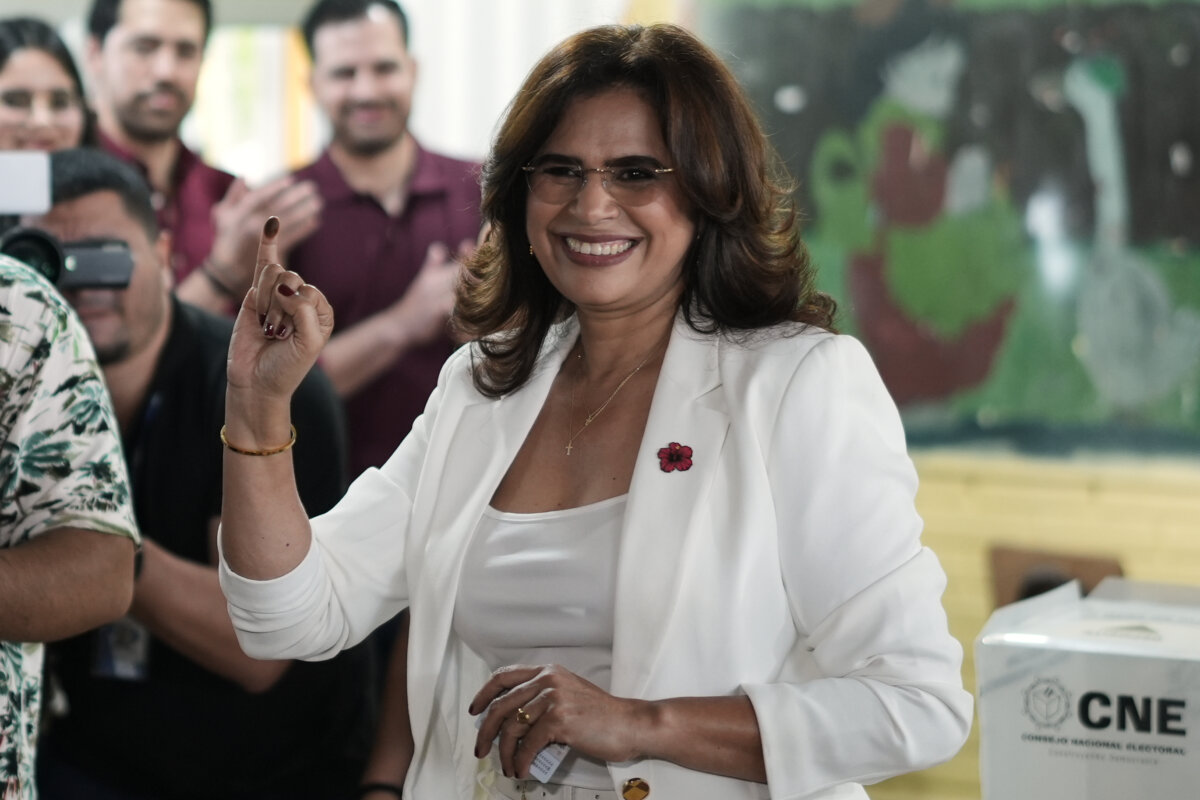
According to the most recent count by authorities, Asfura leads Nasralla by just 515 votes, with both holding around 40 percent of the vote. Rixi Moncada, of the ruling LIBRE Party, was in third with 19 percent of the vote.
It was not clear how many votes had been counted due to problems with the electoral portal.
In a post on Truth Social, Trump accused Honduran authorities of trying to “change the results of their presidential election.
“If they do, there will be hell to pay!” Trump wrote.
“The people of Honduras voted in overwhelming numbers on November 30th. The National Electoral Commission, the official body charged with counting the Votes, abruptly stopped counting at midnight on November 30th,” the U.S. president added.
“It is imperative that the Commission finish counting the Votes. Hundreds of thousands of Hondurans must have their Votes counted. Democracy must prevail!”
In the run-up to the Nov. 30 election, Trump threw his support behind Asfura, nicknamed “Tito,” in a series of social media posts. Trump said he could work with him to tackle drug trafficking and referred to aid money given to Honduras by the United States.
A recent congressional review noted that between fiscal years 2015 and 2024, U.S. agencies gave almost $1.6 billion in foreign assistance to Honduras overall.
Trump said in a Nov. 28 post on Truth Social that “if [Asfura] doesn’t win, the United States will not be throwing good money after bad.”
“Tito will be a Great President, and the United States will work closely with him in order to ensure the success, with all of its potential, of Honduras!” the U.S. president wrote, adding “Make Honduras Great Again!” in capital letters.
About 73 percent of Hondurans were classed as living in poverty, while about 54 percent of the population was classed as being in extreme poverty, according to 2022 figures from the Organisation for Economic Co-operation and Development.
On Nov. 28, Trump announced plans to grant a pardon to former Honduran President Juan Orlando Hernández, currently serving a 45-year prison sentence in the United States for drug trafficking and firearms offenses. Hernández, who served two terms between 2014 and 2022, was a politician for the National Party.
Argentine President Javier Milei also expressed support for Asfura on social media.
“My full support goes to Tito Asfura, who is the candidate who best represents the opposition to the left-wing tyrants who destroyed Honduras,” Milei said in a Nov. 28 post on X. “We are closely monitoring the electoral process in Honduras to ensure that the popular will and freedom in the region are respected.”
Both Asfura, a former mayor of the capital city Tegucigalpa, and Nasralla have said they would consider resuming diplomatic relations with Taiwan, after ties were severed in 2023.
Questions Over Election Integrity
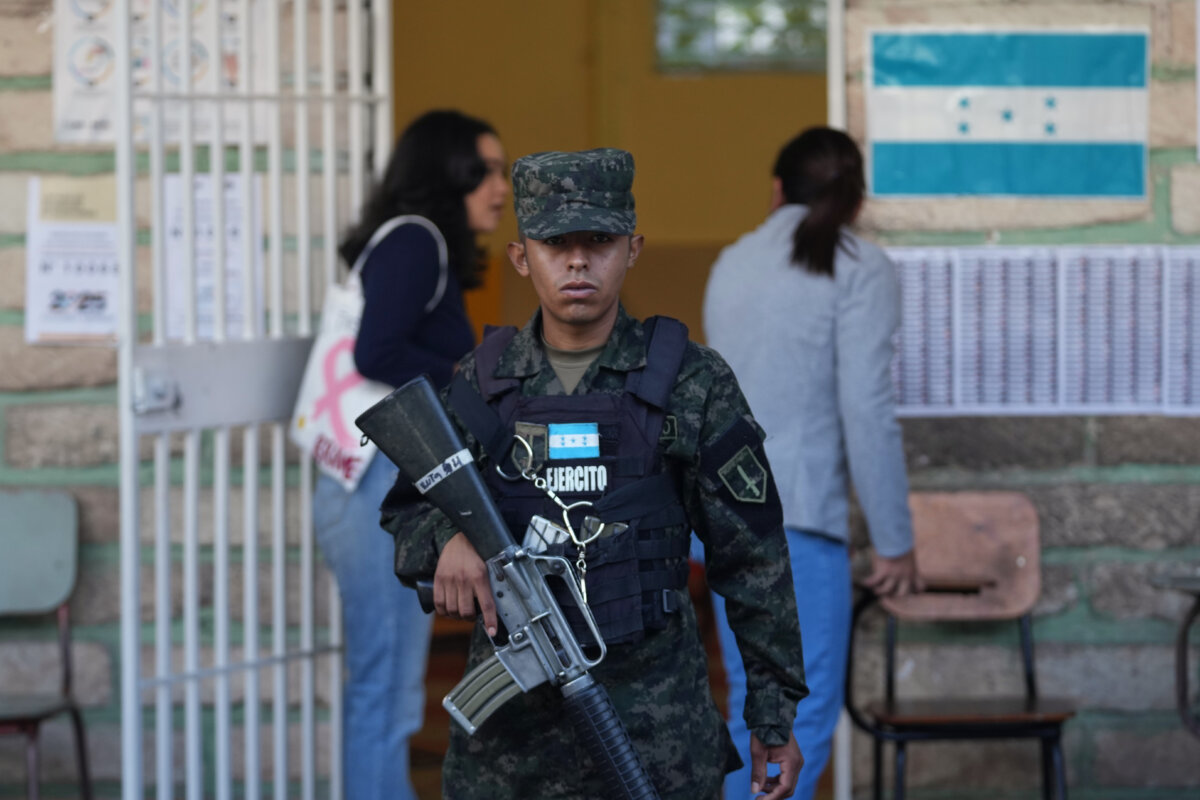
The Nov. 30 election took place during a tense political climate with suggestions of vote-rigging. Moncada has implied that she would not recognize the official results, while the Organization of American States expressed concerns in early November about the electoral process.
Some citizens and electoral observers criticized officials for turning away people who were still waiting to vote.
Outgoing President Xiomara Castro reposted a message from her husband, former President Manuel Zelaya, urging vigilance until the final count, and with all of the presidential ballots tallied.
Most polls predicted a virtual tie between the three candidates in the build-up to election day.
The vote will see 128 members of the National Congress of Honduras, hundreds of mayors, and thousands of other public officials being chosen along with the president, who will govern the country between 2026 and 2030.
U.S. Deputy Secretary of State Christopher Landau said in a Nov. 12 post on X that the United States would respond “swiftly and decisively to anyone who undermines the integrity of the democratic process in Honduras.”
Honduras witnessed a coup in 2009 when an alliance of military figures, politicians, and businessmen overthrew Manuel Zelaya, husband of the outgoing president.
In 2021, Hondurans voted overwhelmingly for Castro, ending more than a century of rule by the National and Liberal parties.
The office of Honduras’s attorney general has accused the opposition parties of planning to commit voter fraud, which they deny.
Claims That Recordings Were AI
Prosecutors have opened an investigation into audio recordings in which a high-ranking National Party politician appeared to discuss plans with an unidentified military officer to influence the election. The scandal over the recordings played a major role in Moncada’s campaign.
The National Party said the recordings were created using artificial intelligence.
The Honduran military has been criticized for asking the National Election Council to provide it with copies of the tally sheets on election day, which violates the country’s election laws.
These tensions contributed to a growing public distrust of the electoral authorities and the electoral process in general.
Castro, the first woman to govern Honduras, increased public investment and social spending during her term. Poverty has decreased but remains high, with the economy growing only slightly.
Although the country’s homicide rate has fallen to its lowest level in recent history, crime and violence remain a serious problem in the Central American country.
Human rights groups have criticized Castro for keeping a prolonged state of emergency in parts of the country and for continuing to rely on the military for policing in a continuation of the approach taken by her predecessor.
Human Rights Watch concluded in a 2024 report that Castro had “largely failed to deliver on her promise to strengthen human rights and democratic institutions in Honduras.”
The Associated Press and Reuters contributed to this report.
 Friends Read Free
Copy
Facebook
Tweet
Friends Read Free
Copy
Facebook
Tweet