
The Conservative Party will introduce a motion in the House of Commons calling for the government to review how health benefits are given to asylum seekers and restrict who is given access to such services. The party says many refugee claimants whose requests are denied continue to get government health benefits.
The motion also calls for the federal government to immediately expel foreign nationals who are convicted of serious crimes in Canada.
“We can’t allow foreign criminals to take advantage of our system; false refugee claims to overwhelm the services that you pay for,” Conservative Leader Pierre Poilievre said in a video posted to X on Feb. 23.
The motion cited a Feb. 12 report by the parliamentary budget officer (PBO) that found the cost of the Interim Federal Health Program (IFHP) has more than quadrupled since the 2020 fiscal year, rising from $211 million to $896 million in 2024–25. The report projects that the cost of the program will reach $1.5 billion annually in 2028–29.
The federal government provides medical services to asylum seekers, refugees, and other protected persons through the IFHP, such as medical treatments, hospital visits, and coverage for services like urgent dental procedures and vision care, and prescription drugs.
The PBO report said around 624,000 people were beneficiaries of the IFHP in 2024–25, up from about 200,000 people in 2020–21. The majority of the beneficiaries are asylum claimants. In 2024–25, the annual cost associated with an eligible beneficiary in the asylum claimant was $1,645, while for overseas resettled refugees it was $347.
According to data from Immigration, Refugee and Citizenship Canada, asylum claims fell by about a third in 2025 compared to 2024, from about 190,000 claims to around 108,000.
Poilievre noted in the video that 6 million Canadians are struggling to access a family doctor and it takes an average of 30 weeks for Canadians to see medical specialists.
The Tory leader said the motion would call for a “review and a cutback” in benefits to asylum claimants, ensuring that “non-citizens and non-permanent residents do not get superior health benefits than Canadians.” The motion also calls for asylum claimants who have been rejected to receive life-saving emergency care but not “special care.”
The measure also calls for judges to allow for deportation of non-citizen foreign nationals who commit violent crimes in Canada. The country’s laws allow for foreign nationals and permanent residents convicted of crimes with maximum sentences of 10 years to be deported, as well as for people sentenced to more than six months in prison.
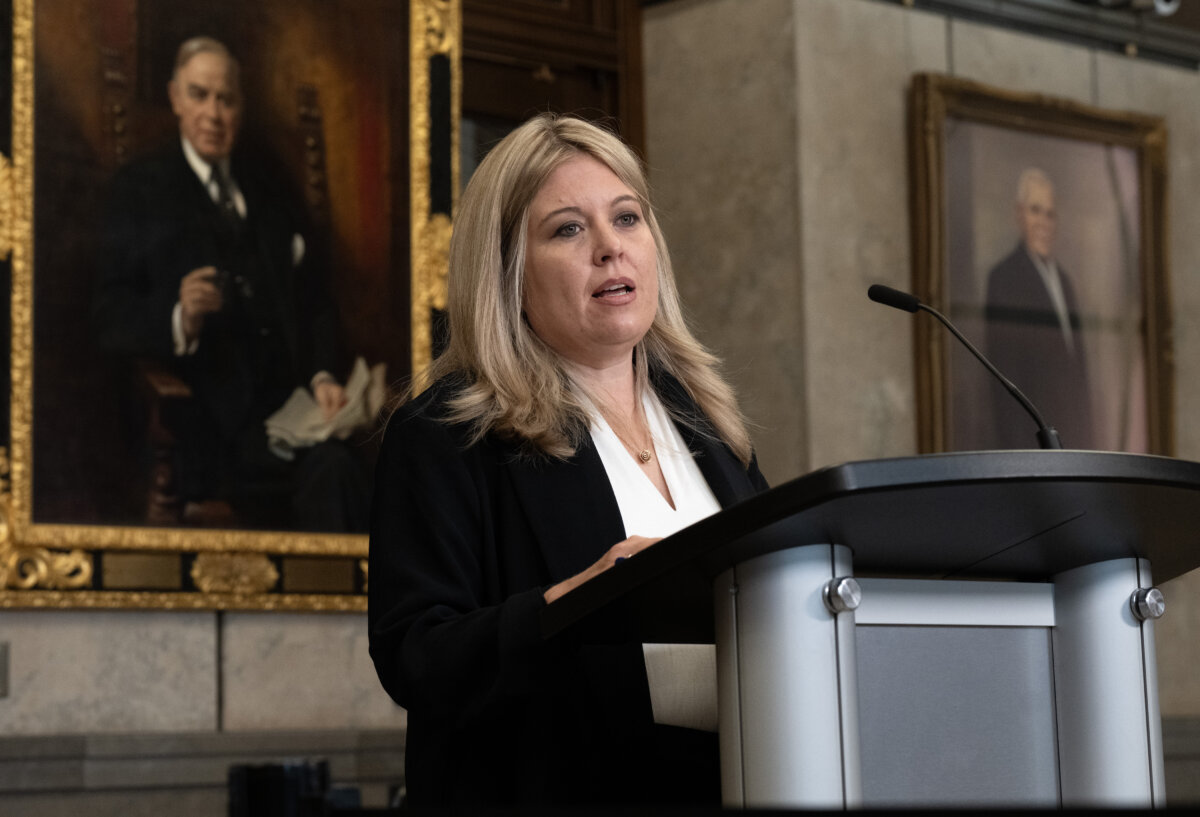
During debate in question period on Feb. 23, Conservative MP Michelle Rempel Garner, who serves as her party’s immigration critic, said billions of dollars had been spent on hotels and welfare for “false refugee claimants, all while Canadians struggle to access health care.” She questioned whether the Liberals would vote in favour of the Tories’ motion.
Immigration Minister Lena Diab said the government has already made changes to the IFHP that will reduce costs, and introduced Bill C-12 that aims to improve the asylum claim process will further “curb the misuse of asylum.”
“We will control costs, and we will truly protect those that are vulnerable in line with our international and humanitarian obligations,” Diab said. When Rempel Garner again asked if Liberal MPs would support the Conservatives’ motion, Diab said the government is “already curbing the misuse.”
On Feb. 18, Diab also said the Liberal government was “regaining control of and restoring stability” to Canada’s immigration system, while ensuring the system supports Canada’s economy and “social fabric.” While Canada’s population increased by more than 3 million people from 2020 to 2025 due to the arrival of more permanent residents, non-permanent residents, and international students, Ottawa began lowering its target immigration levels in 2024.
Ottawa did so through measures like reducing the number of temporary residents from 6.5 percent of Canada’s population to 5 percent over the next three years. Budget 2025 also stated that Canada would aim to admit 385,000 temporary residents next year and 370,000 in the following two years, while the 2024 immigration plan said Canada would welcome more than 516,000 temporary residents for 2025.
 Friends Read Free
Copy
Facebook
Tweet
Friends Read Free
Copy
Facebook
Tweet