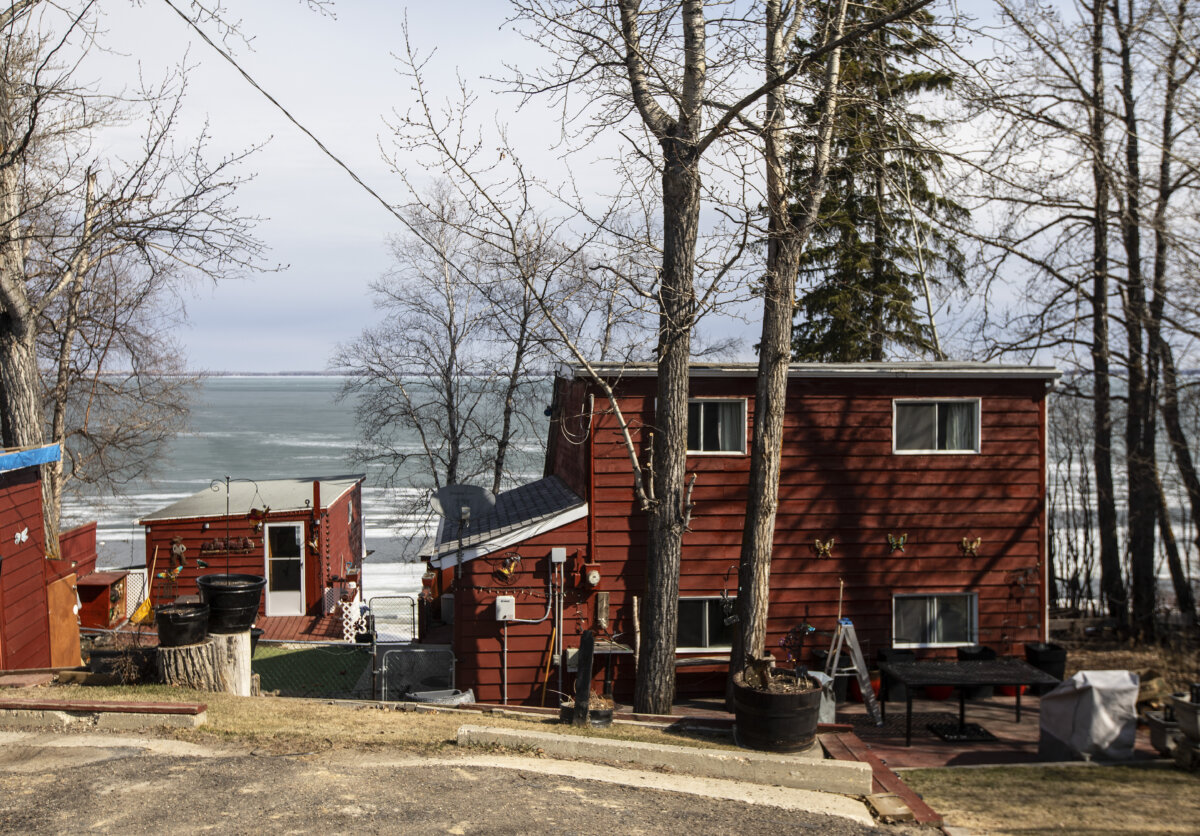

Young Canadians are investing in recreational properties as both a practical pathway to homeownership and as a crucial aspect of their long-term financial planning, a new survey suggests.
A Leger survey conducted for Re/Max Canada found that 45 percent of potential buyers intend to purchase a recreational property as a means to enter the larger housing market.
That number is even higher among young Canadians. Fifty-four percent of survey participants in the 18-to-34 age group said they plan to include a recreational property in their financial portfolio, notably higher than the 30 percent of respondents aged 35 or older.
Roughly 10 percent of Canadians are currently searching for a recreational property, the survey found.
“What we’re seeing is a more thoughtful, strategic buyer emerge in the recreational market,” Re/Max Canada president Don Kottick said in a press release. “Recreational properties are no longer viewed solely as discretionary purchases, but instead as a foothold into homeownership with long-term value potential.”
The current market conditions are aiding in this transition, he noted.
An analysis conducted by Re/Max across 21 recreational markets nationwide indicates that more than half are projected to continue as buyer’s markets in 2026, while one-third are anticipated to be balanced. At the same time, the national average price is forecasted to rise by 1.5 percent for the rest of the year.
“After years of dramatic swings, Canada’s housing market is finding its footing, and that stability is extending into the recreational segment,” Kottick said. “Prices are stabilizing, inventory is improving, and days on market are returning to more normal levels. Buyers have more choice and time, while sellers are seeing steady demand for well–priced homes.”
A Re/Max analysis categorized several Ontario cottage country areas as buyer’s markets. Grand Bend, Haliburton, Orillia, Niagara-on-the-Lake, North Bay, and Simcoe County were all designated as buyer friendly.
All three vacation home areas in B.C.—Osoyoos, Penticton, and Summerland—were also listed as being buyers’ markets as were the Laurentians in Quebec, northern Nova Scotia, and Charlottetown, P.E.I.
The survey also suggests that Canadian recreational homebuyers are seeking properties that provide year-round living capabilities rather than seasonal options.
Sixty-one percent of respondents surveyed by Re/Max expressed a preference for a property that has been recently renovated and 59 percent said they would use the property all year long, not just in the warmer seasons.
“It’s no longer just about having a place to escape,” Kottick said. “Buyers want properties that are ready from day one and flexible enough to support everything from weekend use to full-time living.”
Buyers looking for recreational properties could have more to choose from this year. The survey found that 28 percent of current owners are hoping to sell their recreational properties due to the decline of remote work as more return-to-office mandates are enforced.
The resurgence of in-office work is also making some prospective buyers leery. The survey indicates that 14 percent of Canadians without a recreational property expressed hesitation in making a purchase due to return-to-office mandates.
 Friends Read Free
Copy
Facebook
Tweet
Friends Read Free
Copy
Facebook
Tweet