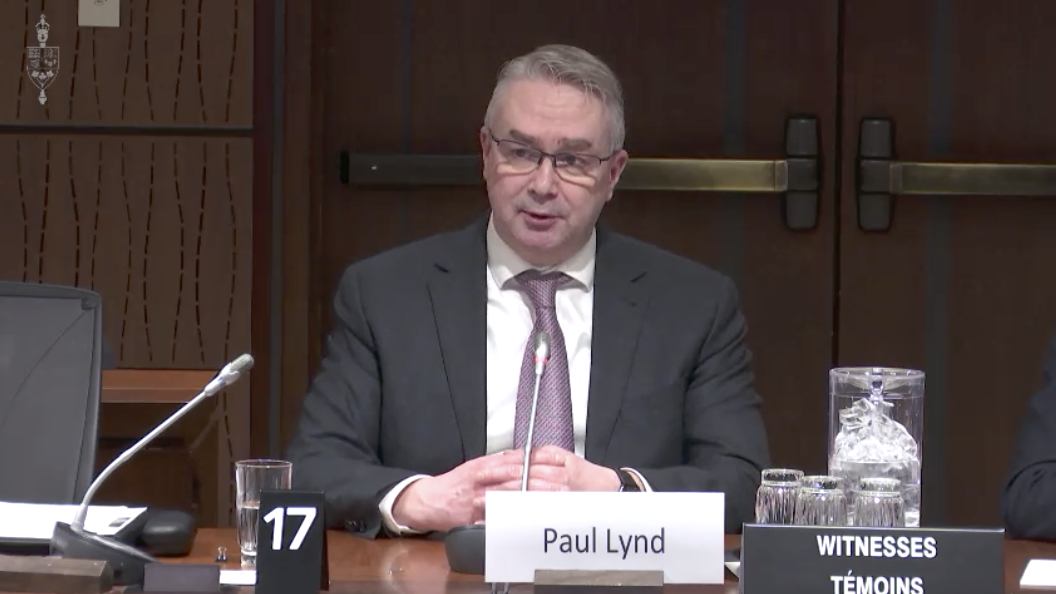

Although China is not an Arctic country like Russia, its activities in the region are raising greater concern for the Canadian Security Intelligence Service, according to a senior official.
Paul Lynd, an assistant director with the Canadian Security Intelligence Service (CSIS), told MPs on Feb. 12 that though Russia maintains a “tremendous interest and focus” on the Arctic, China poses the greatest threat in the region.
“[Russia is] of less concern than say, the activities of China and other hostile state actors at this time,” Lynd said. He specified that Russia does pose a military threat in the Arctic, which falls more under the purview of National Defence, and that the threat from China involves foreign interference and economic security.
“It’s a primary threat,” Lynd said about China in the Arctic.
Lynd, who holds the rank of an assistant deputy minister, is the CSIS executive in charge of overseeing all of the agency’s collection activities and operations, whether in Canada or abroad. He was appearing before the House of Commons foreign affairs committee, which is currently conducting a study on Canada’s Arctic strategy.
Lynd said concerns about Chinese activities in Canada’s Arctic relate to the use of underhanded means to acquire assets. The CSIS official specifically noted how China is currently attempting to dominate the critical minerals sector.
“The concern we have would be with clandestine or deceptive investment practices or economic engagement in certain market sectors in the Arctic,” he said. Lynd also underlined the threat of foreign interference in the economy through the attempted manipulation of Canada’s economic policies.
CSIS monitors economic security and advises the government when a review under the Investment Canada Act is triggered by a proposed foreign takeover.
Ottawa blocked the sale of TMAC Resources’ gold mine in Hope Bay, Nunavut, to Chinese company Shandong Gold Mining in 2020, citing national security concerns.
Lynd called the Investment Canada Act a “fantastic tool” to provide advice to the government on security matters, while noting it’s not a catch-all approach.
“We know hostile state actors are looking to exploit and work around areas that would prevent them from triggering a notification under the Investment Canada Act,” he said.
Other means used by foreign countries to gain an advantage in the Arctic involves dual-use research.
CSIS director general of outreach René Ouellette, appearing at the committee alongside Lynd, said research on climate change in the region can be used to collect intelligence.
“Those sensors are collecting information about different things that are related to that legitimate research, but also collecting information about other kinds of movements in the region as well that could be of use to a military or an intelligence capacity of a foreign country,” he said.
Arctic Focus
The Arctic region has been the subject of heightened geopolitical debate recently, after U.S. President Donald Trump declared his country needs to acquire Greenland for national security.
The sparsely populated and semi-autonomous territory belonging to Denmark stands at a strategic location between Russia and North America.
Tensions over Greenland abated after Trump said in late January he would not take the territory by force and that an arrangement was being worked on to grant the United States full access to Greenland. Days later, U.S. Secretary of State Marco Rubio said technical discussions on Arctic security between Denmark, Greenland, and the United States had begun.
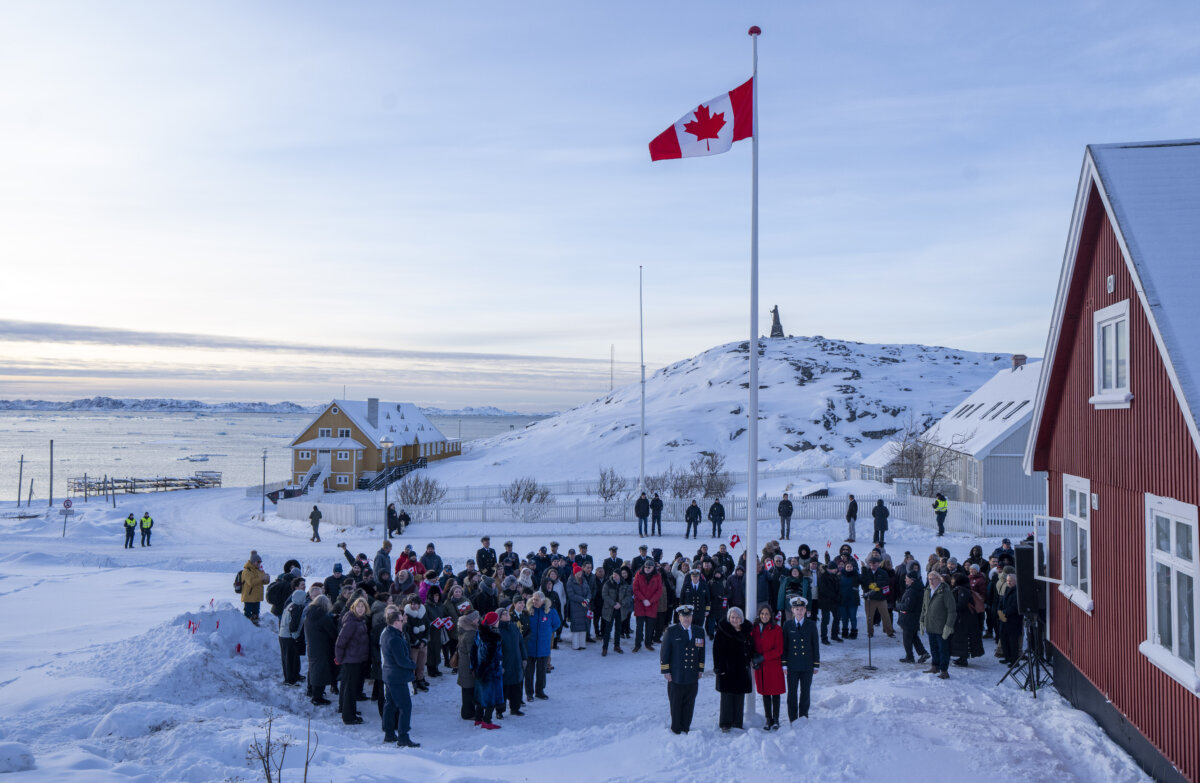
Meanwhile, Ottawa has supported Denmark’s sovereignty and opened a consulate in Greenland earlier this month.
Lynd was asked during the committee hearing whether increased attention on Greenland is changing the way CSIS looks at the threat environment in the Arctic.
“The prime minister’s been public that we stand strongly with Denmark and Greenland and the right for them to determine their own sovereignty,” Lynd answered. He added that CSIS remains aware of the issue but that its efforts are focused on threats directed at Canada and against Canadian interests.
While the Arctic is an area of interest for CSIS, Lynd noted operational challenges to collecting intelligence in the Arctic given the agency does not have a permanent presence. Every provincial capital except that of Prince Edward Island has a CSIS office, but none are situated in the territories.
Nonetheless, the CSIS official said the agency is sending personnel as often as possible to the area. Lynd also said CSIS has made use of new authorities it received through legislation in recent years to share more information with other government entities about threats.
“We’ll continue to share the information on these threats with local communities and territorial governments, which will help contribute to mitigating the threat,” he said regarding threats posed by China.
Lynd’s testimony comes a few weeks after Ottawa entered in a new strategic partnership with China, which aims for increased cooperation on resource development and law enforcement matters.
Asked about any concerns stemming from the recent engagement with Beijing, Lynd spoke about risk management and said there’s nothing that is “zero risk.”
“CSIS will continue to provide the government with economic security considerations and advice on national security so it can it can weigh those different inputs and make informed decisions,” he said.
 Friends Read Free
Copy
Facebook
Tweet
Friends Read Free
Copy
Facebook
Tweet