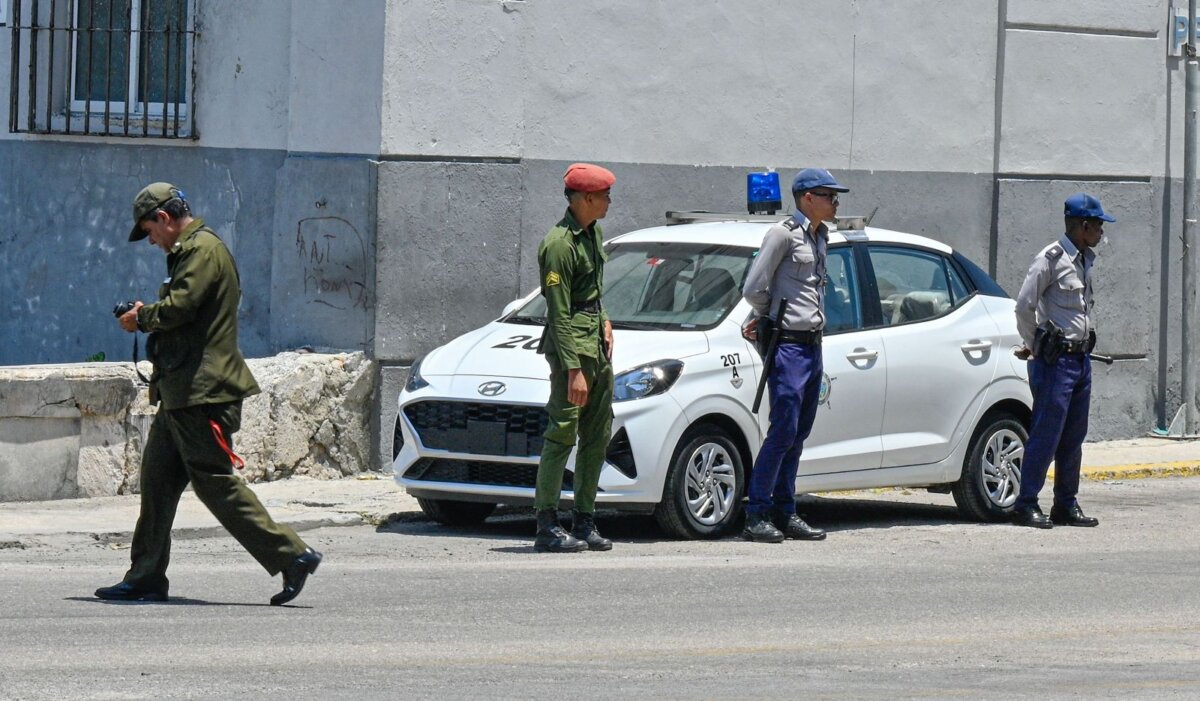

Cuban authorities announced Thursday that they plan to release 51 people from prison in the coming days, portraying the decision as a gesture linked to the communist regime’s relationship with the Vatican.
“In the spirit of goodwill and the close and fluid relations between the Cuban state and the Vatican, with which communication has historically been maintained regarding the review and release of prisoners, the Cuban government has decided to release 51 people sentenced to imprisonment in the coming days,” the nation’s Foreign Ministry said in a statement. “All have served a significant portion of their sentences and have maintained good conduct in prison.”
The ministry did not identify who would be released.
The announcement comes ahead of Holy Week religious observances, a celebratory period for the world’s Catholics, including those in Cuba.
Since 2010, Cuban authorities have pardoned 9,905 inmates, according to the ministry. An additional 10,000 have benefited from various legal provisions in the last three years. The authorities have called the action a standard practice within the nation’s criminal justice code.
As of early 2026, there are 1,214 political prisoners in Cuba, according to Prisoners Defenders.
Ties between Havana and the Vatican have led to reviews and releases in the past.
Cuba announced in January 2025 that it would free 553 prisoners (many understood to be political prisoners) after discussions with the Catholic Church, coming after the Biden administration took Cuba off the state-sponsored terror list to support the Vatican-brokered agreement. The Cuban authorities tied the gesture to the 2025 Jubilee Year (Holy Year) and relations with Pope Francis and the Vatican, not directly to the Biden administration’s measures.
President Donald Trump, who took office in late January 2025, reversed the Biden administration’s measures and reinstated Cuba on the terrorism list and added sanctions. It was reported in early March that year that Cuban authorities indicated that the prisoners had been released.
On Cuba’s Independence Day on May 20 last year, U.S. lawmakers, including Cuban American leaders, called for an end to communist rule over the island and the liberation of remaining political prisoners.
The recent ouster of Venezuelan leader Nicolás Maduro in early this year gave hope to Cuban Americans that their homeland might follow suit.
In Miami, the Cuban exile community held demonstrations, displaying signs such as “Free Cuba,” connecting the end of Maduro’s reign to renewed pressure on the regime in Havana.
Trump said on Monday that Cuba faces severe humanitarian challenges and suggested the possibility of a U.S. takeover, which he described as potentially friendly or not.
Speaking at a news conference at Trump National Doral Miami, the president noted that U.S. Secretary of State Marco Rubio is handling the matter. “He’s dealing [with it], and it may be a friendly takeover, it may not be a friendly takeover,” Trump said.
“Wouldn’t really matter because they’re really down to … as they say, fumes,” he said, adding that Cuba is critically weakened and has “no energy, they have no money.”
Trump has urged the Cuban regime to strike a deal with his administration since early this year, and has increased pressure after Maduro’s capture.
The loss of Venezuelan oil and financial support has worsened Cuba’s already dire economic crisis, which has gripped the island for nearly a year and a half. Catastrophic fuel shortages have driven frequent blackouts and disrupted transportation. Large-scale shortages of food and medicine have also affected the nation’s nearly 11 million residents.
Cuba has been under communist rule since Cuban leader Fidel Castro’s 1959 revolution. For decades, Havana’s leaders have resisted calls for change from the United States and Cuba’s population of exiles who have fled in the years since Castro’s takeover.
Troy Meyers and Jacob Burg contributed to this report
 Friends Read Free
Copy
Facebook
Tweet
Friends Read Free
Copy
Facebook
Tweet