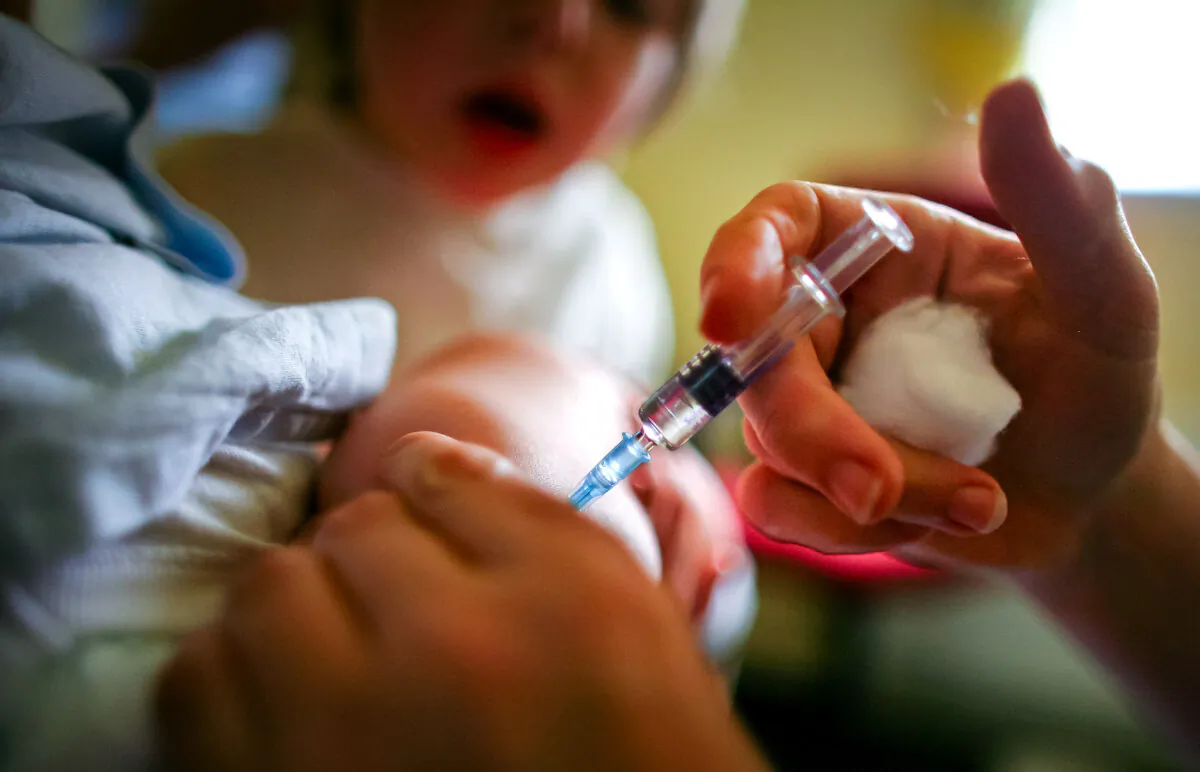

More than half of parents whose children are partially vaccinated believe vaccines are “unsafe,” according to a 2025 survey conducted by Australia’s National Centre for Immunisation Research and Surveillance (NCIRS).
Lack of trust in vaccine information from doctors and nurses, and not prioritising vaccination over other things were also barriers to vaccine uptake among the same cohort, the survey of 2,012 parents of children under 5 years of age found.
Additionally, almost nine in 10 parents of unvaccinated children believed vaccines were unsafe, while only 4.7 percent of parents whose children were fully vaccinated had negative beliefs about vaccine safety.
“The data from the survey show a significant reduction in parents’ acceptance of routine childhood vaccines in 2025 compared to 2024,” researchers said in a non-peer-reviewed preprint study.
Childhood vaccination rates in Australia have declined every year since the COVID-19 pandemic, dropping from 94.8 percent in 2020 to 91.6 percent in 2024.
Trust Overtakes Access as Main Barrier
Of the 2,012 parents surveyed, 93.7 percent reported their children were up-to-date with their vaccinations, 4.1 percent were partially vaccinated, and 2.2 percent were unvaccinated.
According to the survey, the proportion of parents who said they did not believe vaccines were safe increased from 6.0 percent in 2024 to 8.3 percent in 2025.
Those who said they did not trust vaccine information from a doctor or nurse rose from 6.4 percent to 8.8 percent.
Of the fully unvaccinated, 84.3 percent of parents believed vaccines do not protect others in the community. Additionally, 82.4 percent said they do not intend to give their child all recommended vaccines.
“The magnitude of the prevalence difference for acceptance barriers among parents of partially vaccinated compared to up-to-date children has significantly increased in the 17-month interval between surveys,” researchers said.
At the same time, fewer parents cited access problems. Those who could not afford vaccination costs fell from 11.0 percent to 8.6 percent. Difficulty travelling to appointments dropped from 5.2 percent to 2.9 percent.
Feeling distressed about vaccinating—still the most commonly reported barrier at 32.0 percent in 2025—fell from 60.2 percent in 2024.
The U.S. Effect
The study also points to a growing international dimension—particularly messaging from the United States.
According to the study, some parents wrote that they had seen more vaccine misinformation over the past year, especially from the U.S.. Others reported hearing media claims linking vaccines and autism, which coincided with public statements from members of the U.S. administration during the survey period.
Other U.S. policy and funding changes in 2025, along with the promotion of vitamin A during measles outbreaks, were also cited as potentially undermining trust.
Vaccination coverage trends in both countries reflect a similar slide. In the United States, coverage for the diphtheria, tetanus and pertussis vaccine among kindergarteners fell from 93.6 percent in 2020 to 92.1 percent in 2024.
While U.S. policy shifts may influence global discourse, the NCIRS said it is monitoring the social and behavioural drivers of vaccination to better understand and address declining coverage.
“The loss of confidence in vaccines has been recognised by the Australian government, which has prioritised addressing misinformation and increasing awareness, knowledge and trust in vaccines along with improving access in the National Immunisation Strategy 2025-30,” researchers said.
AMA Warns Of Outbreak Risk
In December 2025, the Australian Medical Association (AMA) released a report warning that even modest drops in immunisation coverage can create gaps large enough for serious diseases to return.
AMA President Dr. Danielle McMullen said misinformation, vaccine fatigue, and “anti-science sentiment” since the COVID-19 pandemic had eroded public trust.
“Immunisation is the most successful and cost-effective health intervention globally, preventing between two and three million deaths a year,” McMullen said.
“We are seeing increasing global conversations about vaccine hesitancy, and it is putting lives at risk.”
She warned that lower vaccination rates increase pressure on hospitals and threaten decades of public health progress.
For parents uncertain about vaccination, McMullen urged direct engagement with trusted health professionals.
“A simple conversation with your GP can protect your family, strengthen your community, and save lives.”
 Friends Read Free
Copy
Facebook
Tweet
Friends Read Free
Copy
Facebook
Tweet