
A series of aftershocks hit the northern Pacific Ocean along the coast of Russia’s Kamchatka Peninsula following an 8.8 magnitude earthquake that triggered tsunami warnings across the Pacific, according to a federal agency.
The earthquake, which hit on July 30 at 8:25 a.m. Japan time with a depth of 13 miles, is believed to have been one of the most powerful in recorded history and the strongest one recorded since the devastating earthquake that struck Japan in March 2011. It was centered about 75 miles from the Russian city of Petropavlovsk-Kamchatsky.
According to data from the U.S. Geological Survey (USGS), dozens of earthquakes in the magnitude range of 4 to 5 have struck around the coast of the Kamchatka Peninsula, located in the Russian Far East, since the evening of July 29.
The largest was a 6.9 magnitude aftershock that struck about 40 minutes after the initial 8.8 quake, while a 6.3 magnitude tremor was registered just seven minutes after that aftershock, as shown on a map from the USGS.
Several people were injured, but none seriously, and no major damage has been reported so far. Authorities warned that the risk from the 8.8 magnitude quake could last for hours, and millions of people potentially in the path of the waves were initially told to move away from the shore or seek high ground.
The danger appears to be lessening in some places, with authorities downgrading their warnings in Hawaii, Japan, and parts of Russia. Across the Pacific, much of the West Coast—spanning California, Oregon, Washington state, and the Canadian province of British Columbia—is under an advisory.
Maj. Gen. Stephen Logan, adjutant general of the Hawaii State Department of Defense, said an advisory means that there is the potential for strong currents and dangerous waves, as well as flooding on beaches or in harbors.
The Japan Meteorological Agency downgraded its tsunami alert to an advisory on the Pacific coast south of Fukushima, with the alert still in place farther north. The U.N. International Atomic Energy Agency stated in an update that it has detected no safety issues on nuclear power plants along the Japanese coast, coming years after the Japanese Fukushima Daiichi power plant was severely damaged and decommissioned in the 2011 earthquake.
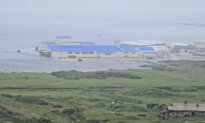
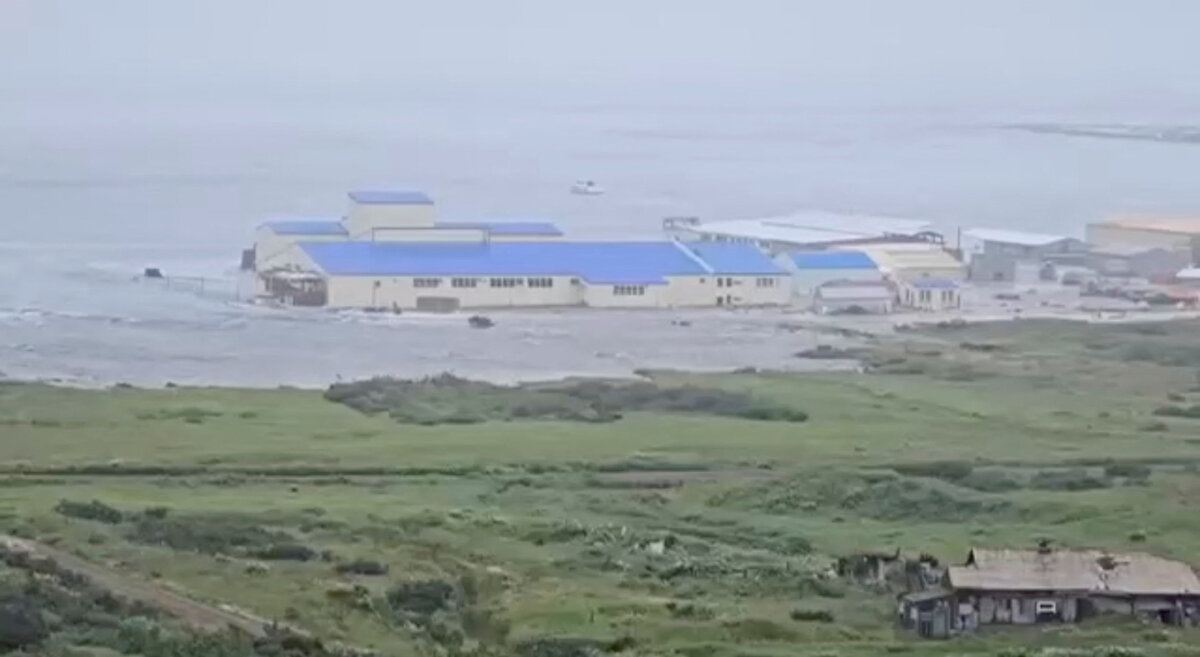
Video footage emerged showing significant waves sweeping past buildings in Severo-Kurilsk, a town in Russia’s Kuril Islands, while officials told state-run media outlet RT that waves flooded and washed away a processing plant and local port in the town. A roughly 13-foot wave was reported in Kamchatka’s Elizovsky district, officials also said.
The entire Pacific coast of Russia is located on the “Ring of Fire,” a tectonic belt that spans most of the Pacific Ocean. The region contains most of the world’s volcanoes and records 90 percent of the world’s earthquakes, according to the USGS.
The July 30 earthquake occurred just weeks after a 7.3 magnitude tremor struck in a remote area along the Alaskan coast, which also triggered a tsunami warning.
The Russian earthquake could be classified as a “great earthquake,” which is 8.0 magnitude or greater, with one occurring every one to two years on average, according to Michigan Technological University.
The Associated Press contributed to this report.
 Friends Read Free
Copy
Facebook
Tweet
Friends Read Free
Copy
Facebook
Tweet