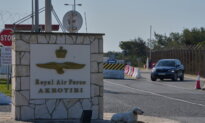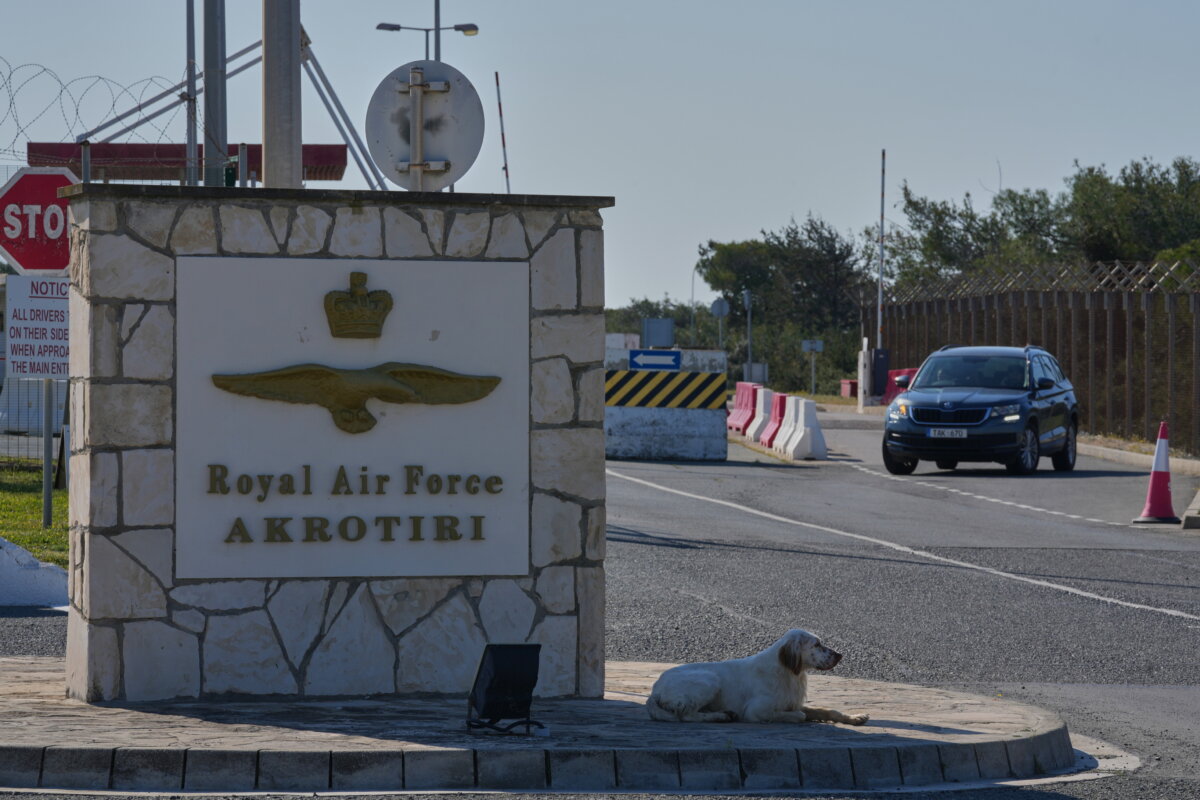

A Shahed-type unmanned aerial vehicle crashed into the British Royal Air Force Akrotiri base in Cyprus shortly after midnight on March 2, Cypriot President Nikos Christodoulides said, as tensions continued across the Middle East.
Christodoulides said in a March 2 post on X that the drone struck military facilities at the base at 12:03 a.m., causing limited damage but no casualties.
Cypriot authorities responded immediately to the incident and remained on high alert, he said, adding that he convened the National Security Council to assess the situation and had remained in contact with European and international leaders regarding developments.
“We are in a region of particular geopolitical instability with many challenges and problems, which is going through an unprecedented crisis,” Christodoulides said. “I want to be clear: Our country does not participate in any way and does not intend to be part of any military operation.”
RAF Akrotiri is one of the UK’s most important military installations overseas and plays a key role in British operations across the Middle East.
According to the UK Royal Air Force, the base hosts the Cyprus Operations Support Unit, which provides joint support to British Forces Cyprus and helps coordinate operations to protect the UK’s strategic interests in the region.
In an emailed statement to The Epoch Times on March 2, a UK Defense Ministry spokesperson said the incident occurred at about midnight local time and described the situation as ongoing.
“Our force protection in the region is at the highest level and the base has responded to defend our people. This is a live situation and further information will be provided in due course,” the spokesperson said.
The ministry confirmed that there were no casualties from the incident. The defense ministry said the UK regularly reviews the security of its overseas bases, including the Sovereign Base Areas in Cyprus.
The ministry also said additional capabilities had recently been deployed to the island as part of efforts to maintain regional security and stability in the Middle East.
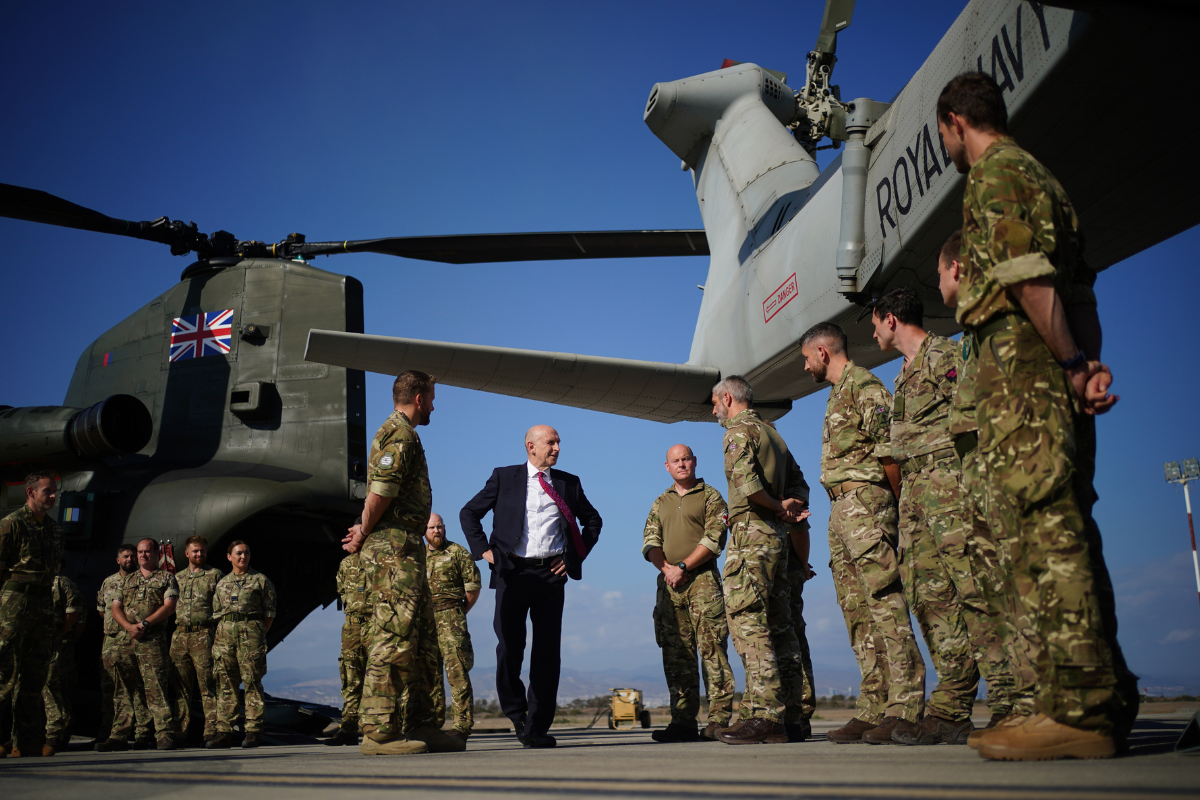
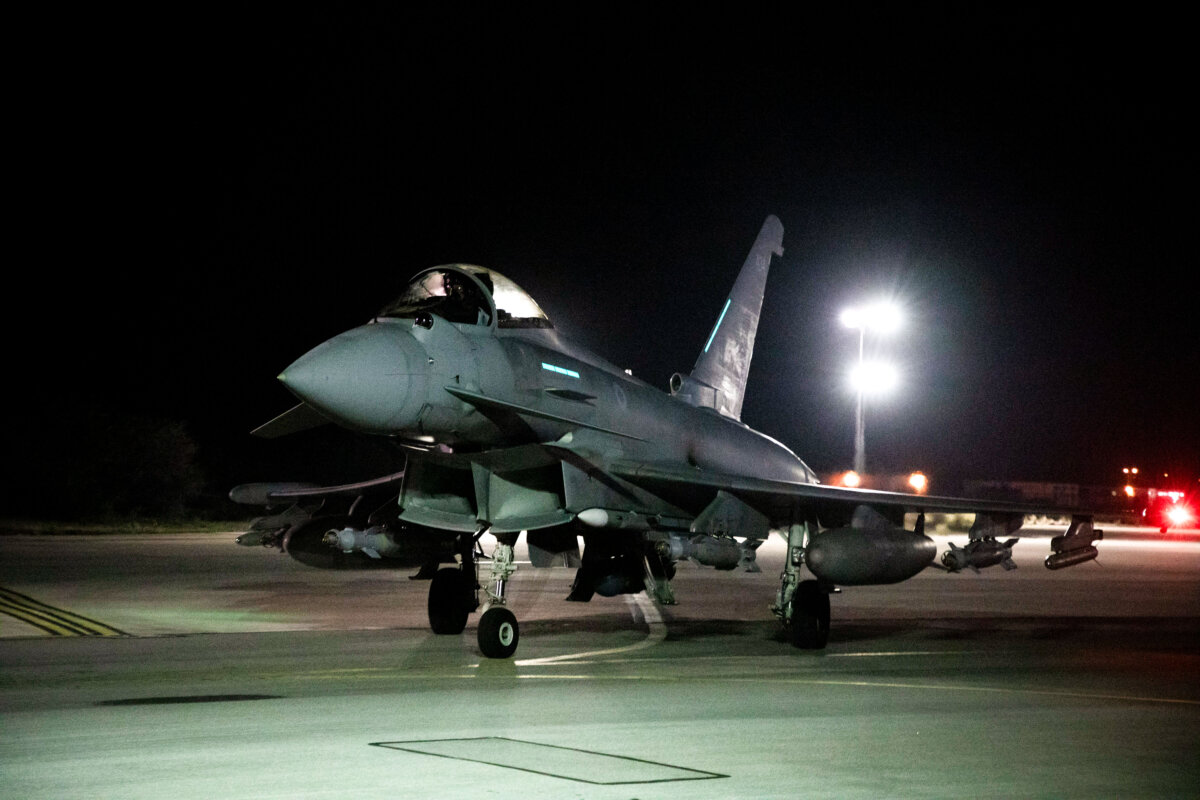
Those capabilities are focused on defensive operations and include radar systems, counter-drone technology, F-35 fighter jets, and ground-based air defense systems designed to detect and defeat airborne threats.
Greece announced on March 2 plans to send two frigates and two F-16 fighter jets to Cyprus amid security threat escalation.
The decision came after a phone call between Greek Prime Minister Kyriakos Mitsotakis and Christodoulides, according to Greek Defense Minister Nikos Dendias.
“Greece, throughout the current crisis, will contribute in every possible way to the defense of the Republic of Cyprus, so that threats and illegal actions on its territory can be addressed,” Dendias stated. “The Frigate “KIMON” is being immediately sent to the Republic of Cyprus, along with a second Greek Frigate, which will carry the “CENTAVROS” system, as well as a pair of F -16 fighter jets being sent to the Republic of Cyprus to contribute to its defense against the threats it faces.”
UK Agrees to US Request on Bases
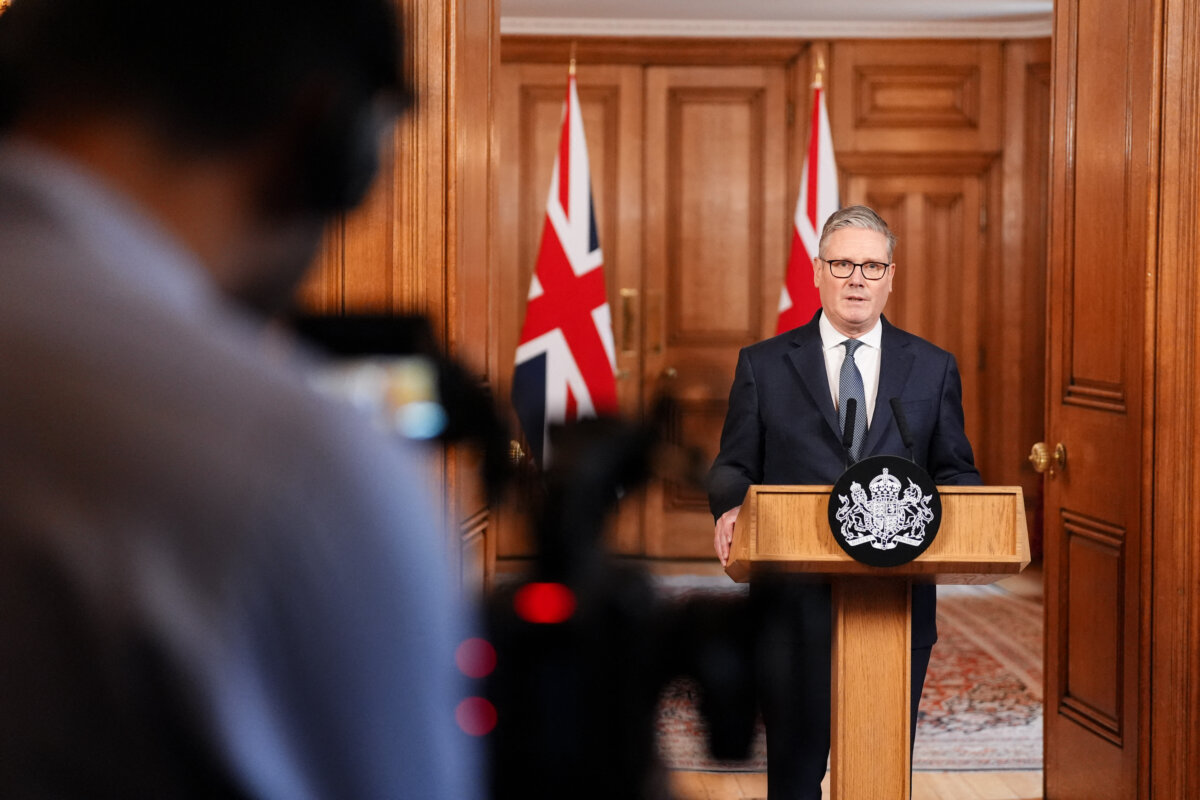
The drone incident occurred hours after British Prime Minister Keir Starmer said the UK had agreed to a request from the United States to allow the use of British military bases for defensive strikes.
In a March 1 statement, Starmer said Iran had launched attacks across the region targeting countries that had not previously taken part in hostilities.
“They’ve hit airports and hotels where British citizens are staying. This is clearly a dangerous situation,” he said.
Starmer said the United States had requested permission to use British bases to strike Iranian missile launchers and storage depots in order to stop further attacks.
“We have taken the decision to accept this request—to prevent Iran firing missiles across the region, killing innocent civilians, putting British lives at risk, and hitting countries that have not been involved,” Starmer stated. “The basis of our decision is the collective self-defence of longstanding friends and allies, and protecting British lives.”
He said the action is in accordance with international law.
“We are not joining these strikes, but we will continue with our defensive actions in the region,” Starmer said.
He added that the UK had already deployed jets to help intercept Iranian attacks as part of coordinated defensive operations.
“Our partners in the Gulf have asked us to do more to defend them, and it is my duty to protect British lives,” Starmer said.
The broader conflict began on Jan. 28, when Israel and the United States launched a large-scale attack against Iran’s leadership and military infrastructure.
The strikes killed several senior Iranian figures, including Iranian leader Ayatollah Ali Khamenei.
Iran responded by launching ballistic missiles and drones targeting U.S. assets and allied countries across the Middle East. Attacks have been reported in Israel, Bahrain, Kuwait, Qatar, the United Arab Emirates, and Jordan.
Cypriot government spokesperson Konstantinos Letymbiotis said on March 1 that Starmer assured Christodoulides during a telephone call that Cyprus itself was not a target.
Political Debate in the UK
The decision to allow U.S. forces to use British bases has sparked political debate in the UK.
Liberal Democrat leader Ed Davey called for Parliament to vote on the decision to allow the United States to use British bases.
“No matter how the Prime Minister tries to redefine offensive as defensive, this is a slippery slope,” Davey said in a March 1 post on X.
Davey said the prime minister should present the legal basis for the decision and allow lawmakers to vote on the issue.
Green Party deputy leader Zack Polanski criticized the move, saying in a March 2 post on X that the government had entered “another illegal war in the Middle East.”
Reform UK leader Nigel Farage offered a different view, saying the decision was “better late than never” and describing Starmer in a March 1 post on X as “a follower, not a leader.”
Conservative Party leader Kemi Badenoch criticized the government’s response in a March 2 post on X, saying Starmer had delayed clarifying Britain’s position on the conflict.
“We knew on Saturday that our allies in Canada and Australia had backed the action taken by the United States and Israel,” Badenoch said. “Yet Keir Starmer still couldn’t tell the British people where our country stood or whether the UK would allow the use of our own airbases. It took Iranian missiles hitting allies in the Middle East and a UK base in Cyprus before Starmer finally approved the use of our bases.”
Meanwhile, UK authorities are working to support citizens across the Middle East as the conflict intensifies.
Foreign Secretary Yvette Cooper said in a March 2 interview with Sky News that protecting British nationals remained a priority and that the government was considering multiple options, including evacuation operations.
“Of course, we want people to get safely home as swiftly as possible,” she said.
 Friends Read Free
Copy
Facebook
Tweet
Friends Read Free
Copy
Facebook
Tweet