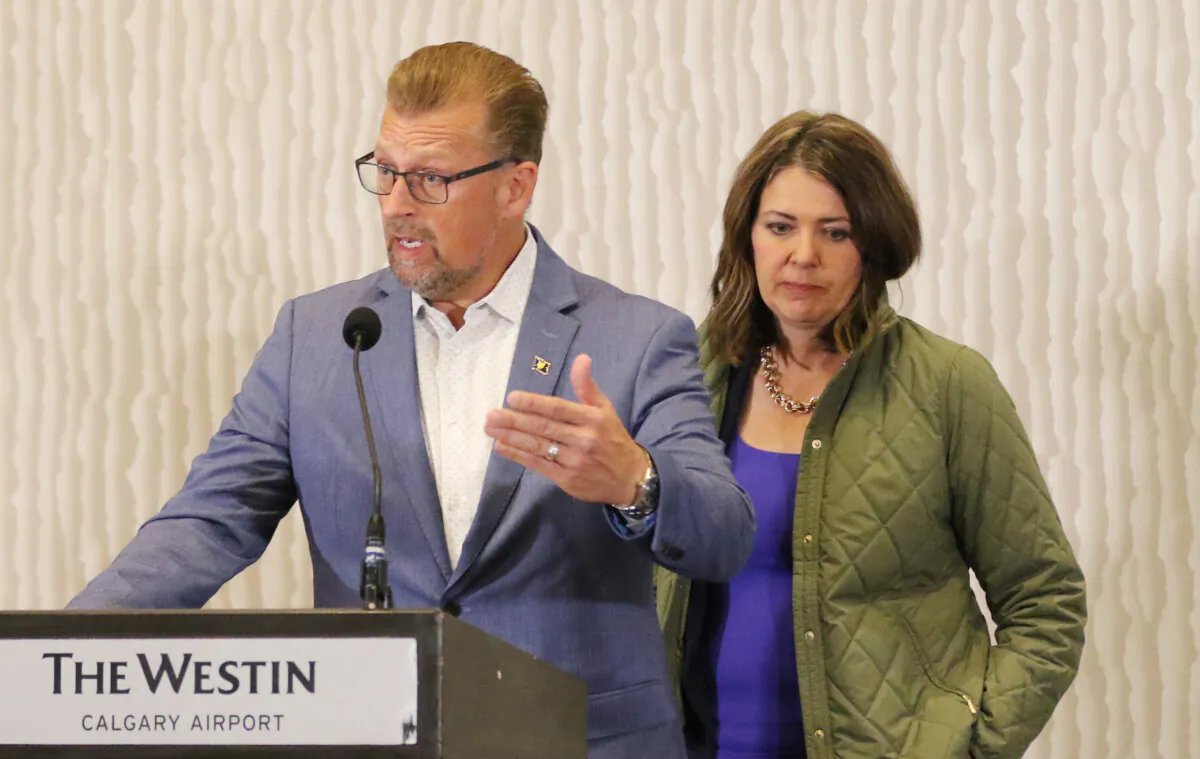

Alberta’s Deputy Premier and Public Safety Minister Mike Ellis says the province is committed to upholding freedom of speech after the Edmonton Police Service released a controversial video encouraging the public to report online hate.
The video was posted on social media on Aug. 2 but was removed from the police force’s X account later that day after drawing criticism from free speech advocates and some MPs, who argued that some or all of the examples shown did not meet the legal threshold for criminal hate speech.
However, the video remains available on the police force’s Facebook and Instagram accounts as of publication time.
“We are committed to supporting and respecting everyone’s right to free speech. We have duty to uphold these rights and freedoms, regardless of an individual’s religious or political beliefs,” Ellis said in a social media statement on Aug. 4, without directly mentioning the Edmonton police video.
“Alberta’s government does not condone hate speech or violence, but we believe law enforcement should be focused on stopping violent crime, not policing opinions or ‘hurt feelings.'”
Ellis, whose public safety department oversees security agencies, said the province will be in touch with provincial and municipal police agencies to ensure that “Albertans’ policing priorities continue to be cracking down on violent crime, theft, illegal drugs and vandalism.”
Alberta Premier Danielle Smith also said that the province will ensure police forces remain focused on violent and other crimes, not “people’s free speech.”
“Free Speech is a foundational Alberta value. We don’t believe in policing unpopular or religious-based statements even if they are controversial. That’s a slippery slope other countries have fallen into and we can’t go down that road,” Smith said.
The Epoch Times contacted the Edmonton police for comment but did not hear back.
Video
Edmonton police’s now-deleted Aug. 2 X post said: “Online hate isn’t ‘just a comment.’ It hurts real people and harms real communities. Hate has no home here.” It went on to say “If you see hate, report hate” and offered a dedicated link for people to do so online.
The backlash centred on video examples offered by police—such as comments regarding deportation and telling some immigrants to “go back home.”
Free speech advocates argued the police service failed to distinguish between constitutionally protected political expression that some may find offensive and criminal hate speech. They argued the campaign appeared to target hurt feelings and controversial opinions rather than conduct amounting to a criminal offence.
Canadian Constitution Foundation (CCF) interim litigation director Josh Dehaas described the police force’s post as “very disturbing to me as a free speech lawyer.”
“Nothing referenced below comes anywhere close to being illegal speech and you have no business reporting it to police,” he said in an Aug. 1 X post. “More importantly, police have no business taking reports on it.”
Two Tory MPs weighed in on the Edmonton Police Service’s online hate speech campaign, which also includes advertising on city buses that encourage the public to call the police with online hate speech tips.
Ontario MP and lawyer Roman Baber posted a screen shot of the police video along with his thoughts on the campaign.
“No Edmonton police, you have no jurisdiction to limit online speech unless a criminal law is broken,” he wrote on X. “The criminal offence of ‘Hate Speech’ is limited to the definition articulated by the Supreme Court almost 40 years ago. Not what others find offensive!”
Fellow Conservative MP Andrew Lawton expressed similar criticism.
“Some of these posts call for violence and could meet criminal threshold, but I struggle to see how most of these sample hate posts would be illegal (which is different from offensive, hurtful, uncivil, etc.),” Lawton wrote. “This is precisely the chilling effect I warned about with Bill C-9.”
Combatting Hate Act
Bill C-9, known as the Combatting Hate Act, came into force on July 18, amending the Criminal Code to strengthen protections against hate-motivated crimes.
Justice Minister Sean Fraser said the new legislation was required to handle a rising wave of hate crimes, citing police data indicating Jewish, Muslim, and other communities were increasingly being targeted.
“We’ve seen synagogues struck by gunfire, places of worship vandalized or burned, and people being targeted in their own communities. That is unacceptable,” he said in a June press release. “We cannot allow that kind of hate to become normal in Canada. These changes will help people worship and gather safely in their own communities, while supporting law enforcement with clearer tools to respond.”
Critics, however, have characterized the law as overly broad and a threat to constitutional freedoms.
Rights groups such as the CCF argued Bill C-9 would expand state control over speech and could suppress unpopular but legally protected expression.
The Conservative Party had also voiced concern about the legislation. Baber was one of the MPs to lead opposition to the bill, and commented extensively on the legislation during its parliamentary debate.
He repeatedly criticized Bill C-9, saying it could be used by the government to restrict free speech and criminalize everyday expression, rather than effectively stopping violence.
Premier Smith has also expressed opposition to the legislation, calling it “terrifying and chilling” during a speech in March.
Smith said Alberta would not enforce laws targeting lawful speech and suggested provincial authorities would not be allowed to use policing resources to monitor or prosecute Albertans under the federal Combatting Hate Act.
Smith has not commented publicly on the Edmonton Police Service campaign but Public Safety Minister Mike Ellis’ office said the United Conservative Party (UCP) government is currently looking into the matter and “will consider whether any further action is needed.”
“We are committed to supporting and respecting everyone’s right to free speech,” press secretary Arthur C. Green said in an emailed statement.
“Alberta’s government does not condone hate speech or violence, but we believe law enforcement should be focused on stopping violent crime, not policing opinions or ‘hurt feelings’.”
 Friends Read Free
Copy
Facebook
Tweet
Friends Read Free
Copy
Facebook
Tweet