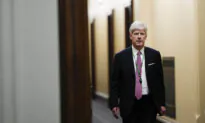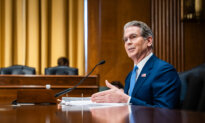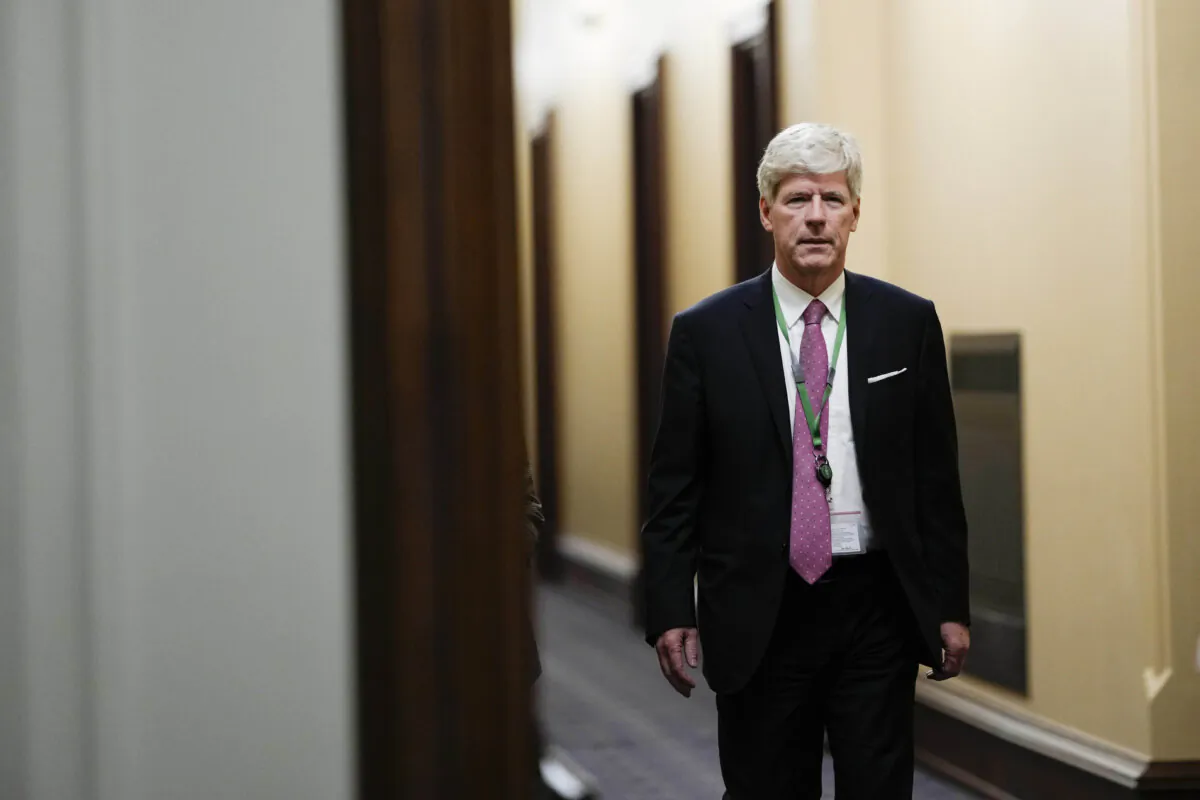
Canada’s Minister of Energy and Natural Resources Tim Hodgson says that Canada needs the “same spirit” that mobilized the country’s workforce and industrial base during and after World War II in order to rebuild the nation’s economy today.
Delivering a keynote speech at the Toronto Region Board of Trade on June 25, Hodgson said he wants all Canadians to “stand side-by-side” as Canada moves forward on major projects of national importance in resources, energy, and infrastructure.
Hodgson, who previously worked with Prime Minister Mark Carney at Goldman Sachs, said Canada will need to double its electricity production in the next two decades and move forward on major projects in mining, forestry, energy, and critical mineral extraction. Canada’s growing importance in “the entire value chain” of critical minerals is a big opportunity, according to Hodgson, who said, “We can and will extract our minerals sustainably, refine them responsibly, and move them to market efficiently.”
Bill C-5, legislation that deals with major projects, goes before the Senate this week for final approval after having passed the House of Commons. It would fast-track the regulatory process on major infrastructure projects deemed in the national interest, and commits to reaching a final decision on such projects within two years of their proposal. It would also help projects “stay on track,” according to Hodgson.
In December, 2024 the Canada Energy Regulator projected that Canada would have to more than double its electricity output in order to meet commercial, industrial, and residential needs, with particular demand coming from electric vehicles.
In addition to sounding a bright note about Canada’s economic future and pointing to a growing pivot towards nuclear energy, Hodgson said the government is building “strong partnerships with Canada’s unions” and making it easier for workers to move between provinces for work.
“This is Team Canada in action: provinces learning from each other, utilities coordinating on design, engineers collaborating across provincial borders,” he said.
Echoing his statements about bringing a wartime spirit of unity and high morale to Canada’s current economic woes, Hodgson referenced trade tensions with the United States, saying it’s an opportunity to make Canada’s economy more resilient in the long-term.
“We did not ask for this trade war to be declared on us, but we’re responding with purpose in finding solutions that will leave us better off in four years and hopefully in four decades,” Hodgson said.
Still, premiers of the country’s energy-rich provinces have been critical of the federal government for not removing legislation the premiers see as impeding energy projects.
The federal Conservatives are also maintaining their criticism of the Liberals on the energy profile, including the oil tanker ban in the West Coast and the Impact Assessment Act, which they say adds unnecessary regulatory burden for major projects such as pipelines.
“Canada has the potential to be an energy superpower, yet the Liberals continue to block Canadian energy exports,” Conservative MP and energy critic Shannon Stubbs said.
Alberta Premier Danielle Smith has been asking Carney to remove legislation such as the oil tanker ban in the West Coast so that her province can have more markets for its oil and gas. Carney has refused the requests, and said instead that legislation such as bill C-5 will accelerate the development of major projects and that he wants to make Canada an energy power.
Smith on June 24 announced the creation of a new panel tasked with gathering public input to shape the province’s future within Canada, saying the “time is right for this critical discussion—Albertans recognize that Canada has not been working for our province for a long time.”
However, Smith has recently said she’s hopeful that Carney will better work with Alberta. Saskatchewan Premier Scott Moe, who has also been critical of the Liberal government’s policies, said after a first ministers’ meeting in early June that Carney has improved relations with the Western premiers and that they had a positive meeting.
 Friends Read Free
Copy
Facebook
Tweet
Friends Read Free
Copy
Facebook
Tweet