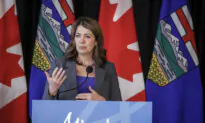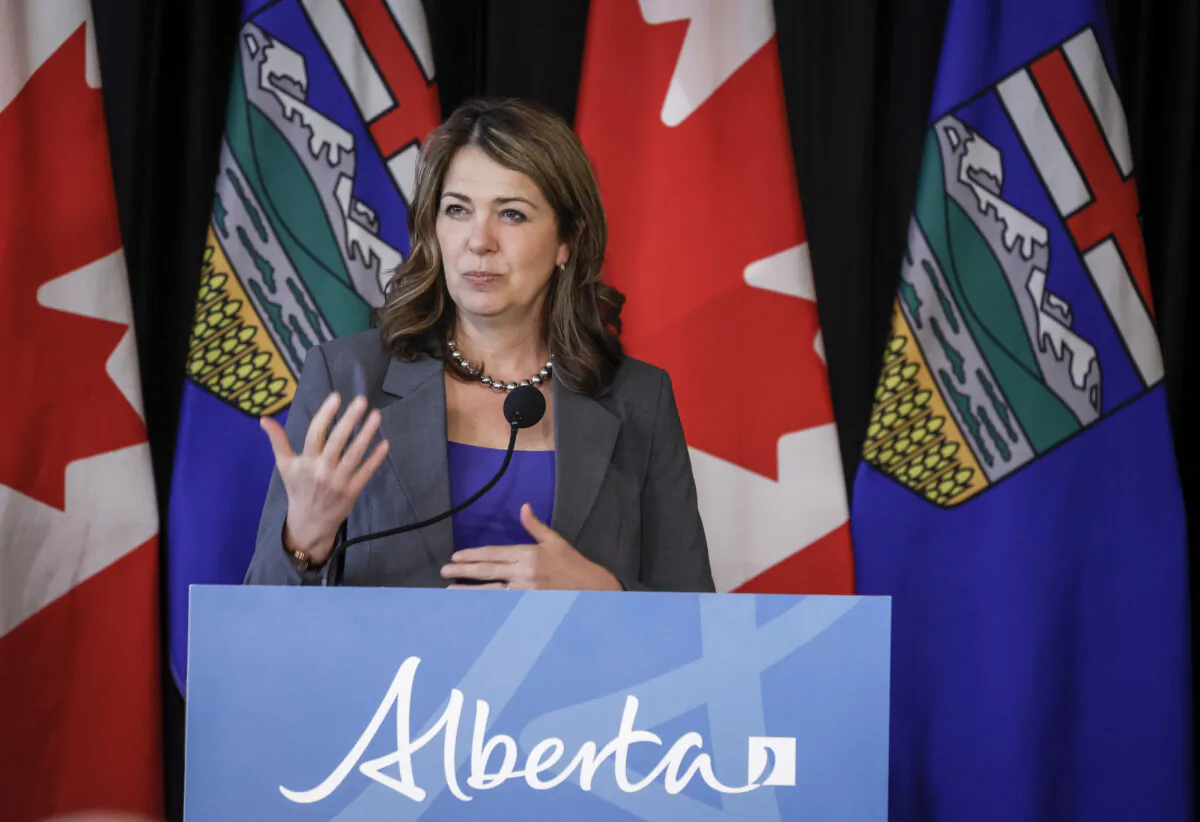
Alberta Premier Danielle Smith has introduced the Alberta Next Panel, tasked with gathering public input and developing proposals to “strengthen” provincial sovereignty within Canada. The panel will also recommend potential referendum questions for a province-wide vote set for 2026.
The premier unveiled the list of panel members during a press conference in Calgary on June 24, saying they were selected to represent a range of sectors and offer expertise across various fields. The panel is part of the measures the premier announced following the re-election of the federal Liberals earlier this year, with the provincial government saying its aimed at finding ways to “protect” the province against current or future “hostile policies” from Ottawa.
The panel will hold a series of in-person and virtual town halls across the province, giving Albertans an opportunity to share their views directly, the premier said. The sessions will run from July to October.
“We will be travelling the province seeking input in no less significant topic than the future of Alberta itself,” Smith said. “The time is right for this critical discussion—Albertans recognize that Canada has not been working for our province for a long time.”
The premier said discussions about Alberta’s future are necessary due to what she described as Ottawa’s lack of a “meaningful” response to the province’s calls for change.
She said Ottawa has “ignored” Alberta’s requests on issues such as the equalization program, provincial jurisdiction, federal policies that impact the energy sector, and bail reform, prompting the province to “figure out a path forward that will benefit the people of Alberta.”
Prime Minister Mark Carney, who has pledged to turn Canada into an “energy superpower” and the “strongest economy in the G7,” has said he will work with the provinces and stakeholders to develop projects of national interest.
On the issue of pipeline construction, which Smith has been a vocal advocate for, Carney has said he would support pipelines if there is “consensus” for their development.
Ottawa has rejected Alberta’s requests to remove legislation such as the Impact Assessment Act and the tanker ban on the coast of B.C., which Alberta says act as obstacles to energy projects. The federal government is instead boasting its recently introduced the One Canadian Economy Act, aimed at speeding up major project approvals and removing federal barriers to interprovincial trade. The bill passed third reading in the House of Commons on June 20 and is now before the Senate.
Alberta Next Panel
The panel will discuss ideas such as the “risks and benefits” of establishing an Alberta pension plan, employing a provincial police service instead of the RCMP for community policing, and whether Albertans should pursue constitutional changes to the composition of the Senate and the House of Commons, the premier said.
Other potential discussion points include proposed changes to equalization payments and increased provincial authority over immigration.
Chaired by the premier, the panel of more than 14 members includes experts such as Trevor Tombe, economics professor at the University of Calgary; Andrew Judson, vice chair of the Fraser Institute’s Alberta board of directors; Bruce McDonald, former justice at the Court of Appeal of Alberta; Akin Osakuade, physician and section chief at Didsbury Hospital; and Benny Xu, community health expert.
It also includes industry leaders such as Adam Legge, president of Business Council of Alberta; Sumita Anand, vice president of Above and Beyond Care Services; Grant Fagerheim, president and CEO of Whitecap Resources Inc.; Michael Binnion, president of Questerre Energy; and Melody Garner-Skiba, business and agricultural advocate.
In addition, four UCP caucus members will be part of the panel, including Environment Minister Rebecca Schulz; Brandon Lunty, MLA for Leduc-Beaumont; Glenn van Dijken, MLA for Athabasca-Barrhead-Westlock; and newly elected MLA for Olds-Didsbury-Three Hills Tara Sawyer.
More members will be announced at a later time, particularly to represent indigenous communities, Smith said.
 Friends Read Free
Copy
Facebook
Tweet
Friends Read Free
Copy
Facebook
Tweet