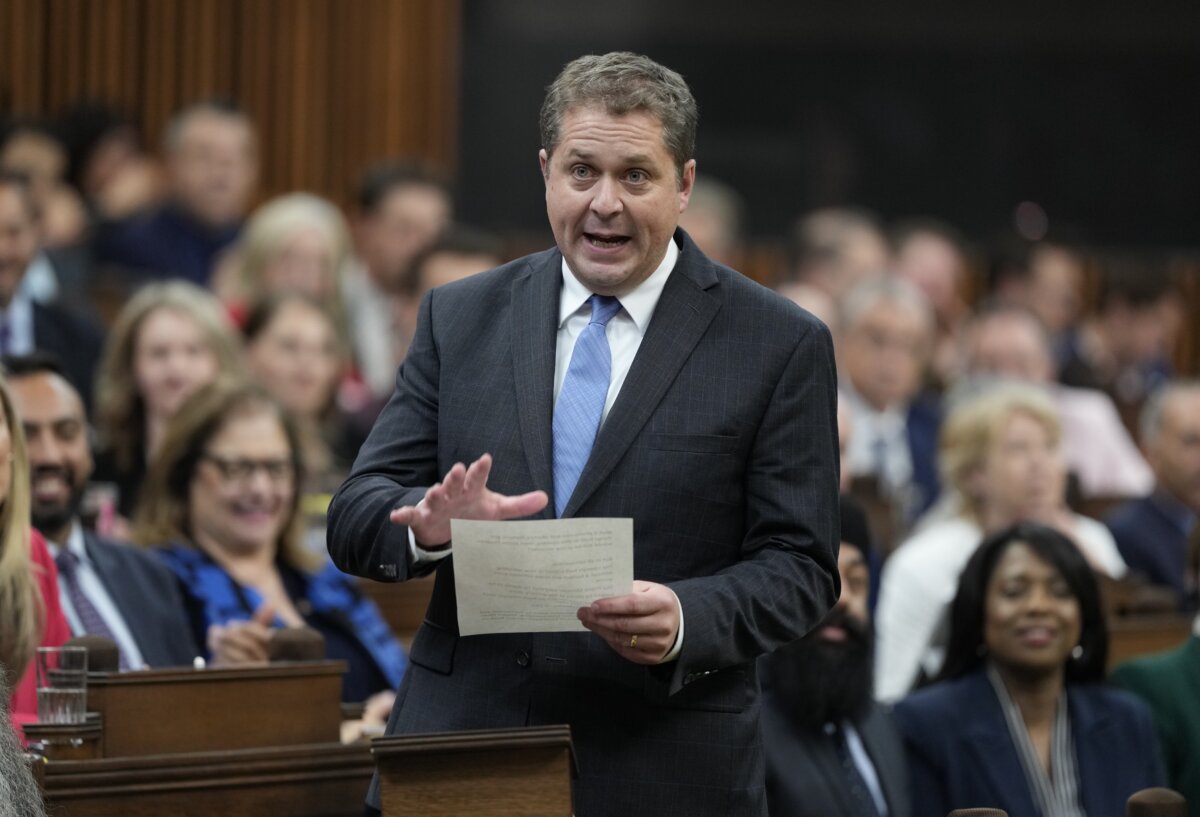

The Conservatives have voted alongside the Liberal government to quickly push legislation through the House of Commons aimed at speeding up major project approvals and reducing interprovincial trade barriers.
The June 16 vote saw 305 Liberal and Conservative MPs vote to limit debate on the legislation, while 30 Bloc Québécois, NDP, and Green MPs voted against it. One Liberal MP, Nathaniel Erskine-Smith, also voted against the motion fast-tracking the bill.
The motion puts forth a rapid timeline for the legislation, passing it to the Transport Committee and giving MPs just three days to debate it, submit amendments, and vote on it before third reading.
Bill C-5 aims to bring down federal barriers to interprovincial trade by stipulating that, when a barrier exists, a good or service that complies with “comparable provincial or territorial rules” will be deemed to satisfy the federal trade requirements in Canada. Businesses that follow comparable provincial and territorial rules will also see costs and delays reduced, and a new framework will be created to recognize provincial and territorial licences and certifications for workers.
The second part of the bill seeks to support the development of major projects that align with national interests, contingent upon discussions with the provinces, territories, and indigenous peoples. The bill would create a single assessment for projects and improve coordination of permitting alongside the provinces and territories, aiming to reduce approval times from five years to two.
Liberal MPs have said the legislation must be passed before July 1, which is a promise Prime Minister Mark Carney made during the election campaign.
Following the vote on speeding up the passage of Bill C-5, MPs also voted to approve the bill for second reading. Similar to the first vote, 304 Liberal and Conservative MPs voted in favour, while the Bloc, NDP, and Greens voted against it. Erskine-Smith also voted in favour of it.
Erskine-Smith said in the House that he voted against fast-tracking the bill because he wanted Parliament to have enough time to improve it and “respect democratic participation” in the process. He added that there would only be around two days for experts and the public to testify before the committee.
“We are rushing legislation through Parliament under the auspices of an urgent threat, but we aren’t willing to put Parliament to work for, what, an additional week, to get things right?” he added.
Liberal MP and Government House Leader Steven MacKinnon denied that cabinet was hindering debate from happening on the bill, saying the speed was necessary.
“This government will proceed responsibly, democratically, according to the rules, but it will proceed,” he said.
Conservative MP Philip Lawrence, who is his party’s shadow minister for intergovernmental affairs, said on social media that Bill C-5 was a “small step in the right direction,” but that it still “barely scratches the surface” of the Liberals’ promise to deliver free trade within Canada by July 1.
The Conservatives have called for amendments to Bill C-5 to ensure regulatory certainty about the projects that would be approved, with Conservative MP and energy critic Shannon Stubbs saying on June 13 that the legislation needs to be “transparent, clear, and certain.”
The Bloc Québécois has accused the Liberals of putting a “gag order” on Parliament in debate around C-5, with leader Yves-François Blanchet noting parliamentary committees were only granted a few days to study the bill. Blanchet said the legislation would amount to the government interfering with provincial jurisdiction while ignoring environmental laws and indigenous rights, while also adopting aspects of the Conservative Party’s election platform.
Blanchet also said Bill C-5 should be split into separate pieces of legislation.
The NDP has also criticized the legislation, with NDP MP Leah Gazan saying in a statement that the bill undermines the democratic process, the rights of indigenous Canadians, and environmental protections, and thus the party would not vote in favour of it in its current form.
 Friends Read Free
Copy
Facebook
Tweet
Friends Read Free
Copy
Facebook
Tweet