
The European Union should use all available leverage, including visa and trade policy, to ensure Morocco co-operates on migration to the continent, following the recent illegal immigrant surge at Ceuta, EU Migration Commissioner Magnus Brunner said on Aug. 6.
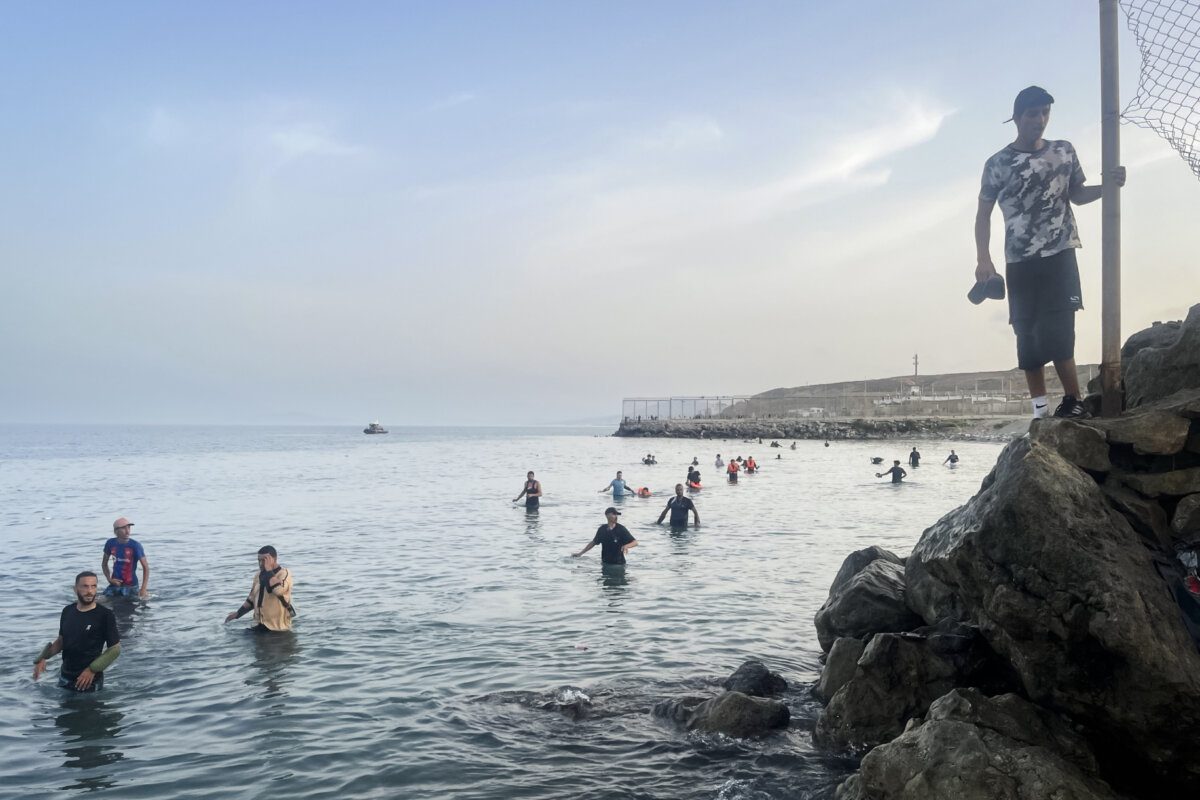
An estimated 72,000 illegal immigrants entered the Spanish exclave of Ceuta in North Africa in a two-day influx by sea and land from July 30–31, in one of the largest illegal movements into EU territory in recent years. Pressure from the EU comes as the junior partner of Spain’s government urged sporting authorities to reconsider allowing Morocco to co-host the 2030 soccer World Cup with Spain and Portugal.
“One very important reminder from Ceuta [is that] to have control, we must cooperate with our neighbors,” Brunner told a European Parliament committee meeting on Thursday. “But as long as control depends on the goodwill of one neighboring state, we remain … vulnerable, and we know that unless something changes, migrant smugglers will try it again.”
Brunner said the episode highlighted the need for stronger action against smugglers and urged lawmakers to advance the EU’s anti-smuggling directive, proposed by the commission almost three years ago.
‘Migration Diplomacy’
On Aug. 4, Brunner called for more “migration diplomacy,” defining this as “going beyond migration management.
“We need to use our leverage more effectively through development assistance, visa policy, and trade. We are currently in the process of negotiating a strategic comprehensive partnership agreement with Morocco. And the topic of migration is one of the core elements of this agreement,” he said.
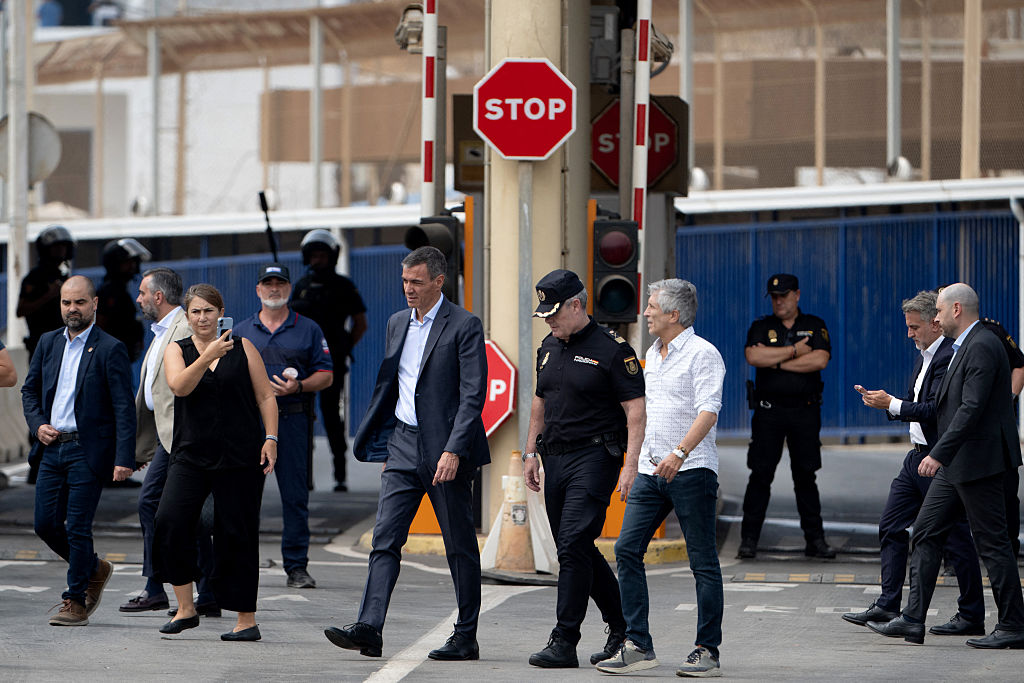 Spanish Prime Minister Pedro Sanchez (C) and Minister of Interior Fernando Grande Marlaska walk by the Tarajal border fence between Spain’s North Africa exclave of Ceuta and Morocco on July 31, 2026 (Jorge Guerrero/ AFP via Getty Images)
Critics have argued this approach leaves the 27-nation bloc exposed to pressure from transit countries, which can use migration flows as a bargaining tool for political or economic concessions.
Brunner said the EU must work more closely with third countries on returning illegal immigrants, while using every tool at their disposal to ensure effective partnerships.
World Cup ‘Significant Opportunity’
Ceuta is an independent Spanish territory of about 84,000 people and sits on the northern shores of Morocco’s Mediterranean coast.
With Morocco due to co-host the 2030 tournament with Spain and Portugal, Sumar, a small left-wing party that shares power with Spain’s Socialists, presented a motion in the country’s Parliament on Aug. 5, asking Spain’s sporting authorities to reconsider the arrangement to co-host the world’s biggest sporting tournament with Morocco.
While it holds only 26 seats in the 350-member Parliament, Sumar’s role is significant because it holds ministerial positions in Prime Minister Pedro Sánchez’s government.
The populist opposition party Vox filed its own nonbinding motion in Spain’s Congress on Aug. 6 calling on Sánchez to pressure FIFA into excluding Morocco from hosting the World Cup and accusing the Moroccan government of using immigration as leverage, Spanish broadcaster Cadena SER reported.
The Moroccan Institute for Policy Analysis (MIPA) says that hosting the tournament “presents Morocco with a monumental financial undertaking and an equally significant opportunity for economic advancement.”
The World Cup gives the North African nation “the chance to modernize its infrastructure, attract foreign investment, and accelerate the country’s overall growth strategy” which “will lead to direct investment opportunities, as well as increased activity in the stock market, particularly in sectors such as construction, tourism, banking, telecommunications, and electricity,” according to MIPA, while it will also offers potential social and geopolitical benefits, with a successful tournament likely to enhance the country’s global image.
 People walk near the new Prince Moulay Abdellah Stadium in Rabat, which was completely demolished in 2023 and rebuilt according to the latest international standards, in Rabat, Morocco, on Sept. 5, 2025. (Abdel Majid Bziouat/AFP via Getty Images)
“The Moroccan state, the Moroccan monarchy, does not respect human rights, it uses migrants to exercise political pressure,” González told Spanish broadcaster TVE. “We ask that Spain’s sports institutions reconsider this World Cup that is to be shared with Morocco because we believe that we must defend human rights.”
Spanish concerns were echoed in neighboring Portugal, where a small party, Livre, sent a letter to Portuguese Prime Minister Luís Montenegro and to the president of the Portuguese Football Federation. Livre called proposals to co-host the World Cup with Morocco “unsustainable” following the Ceuta migrant crisis, Portuguese media outlet Público reported.
‘Not a Reliable Country’
Ceutan Mayor Juan Jesus Vivas told lawmakers on Aug. 6 that an estimated 100 people had died during the mass crossing. He added that between 3,000 and 5,000 migrants are believed to have remained in the exclave, which, together with the larger autonomous city of Melilla, are the European Union’s only two land borders with Africa.
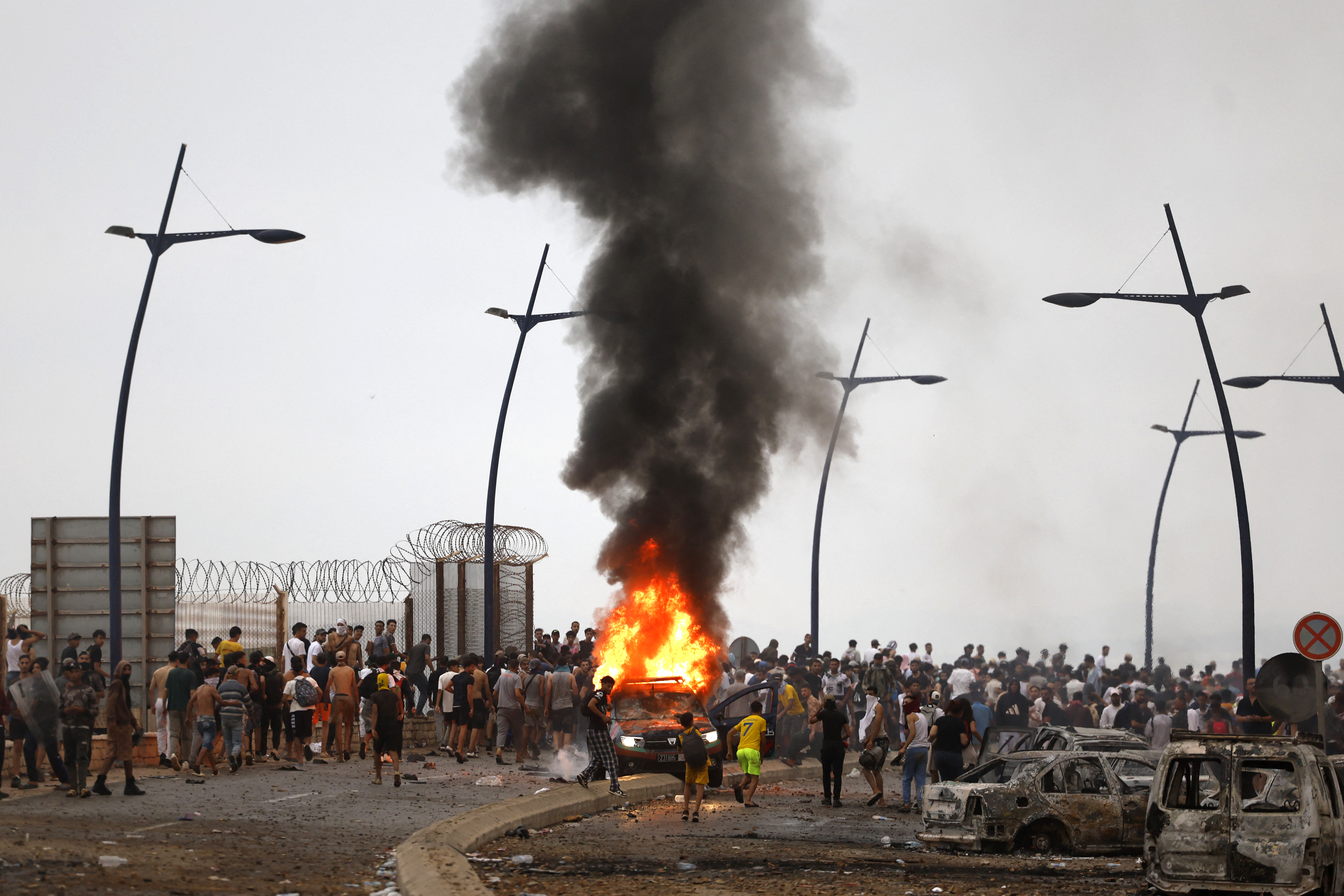 A vehicle burns at the site of clashes near Fnideq, on the Morocco-Spain border, on July 31, 2026. (Abdel Majid Bziouat/AFP via Getty Images)
Spanish Court Ruling
Morocco on Aug. 3 rejected suggestions it was responsible for the surge, saying the consequences of a Spanish Supreme Court ruling that illegal immigrants who arrived by swimming could not immediately be deported if no physical border barrier had been breached ought to have been anticipated by Madrid.
Lahcen Haddad, co-president of the EU-Morocco Joint Parliamentary Committee, defended the Moroccan government, saying the country had prevented more than 227,000 attempted illegal crossings as well as dismantling more than 1,050 smuggling networks between 2023 and 2025.
“Criticism is legitimate, but so is acknowledging the scale of Morocco’s contribution,” Haddad said.
Sánchez has faced fierce criticism at home, particularly from Vox, over the Ceuta incursion.
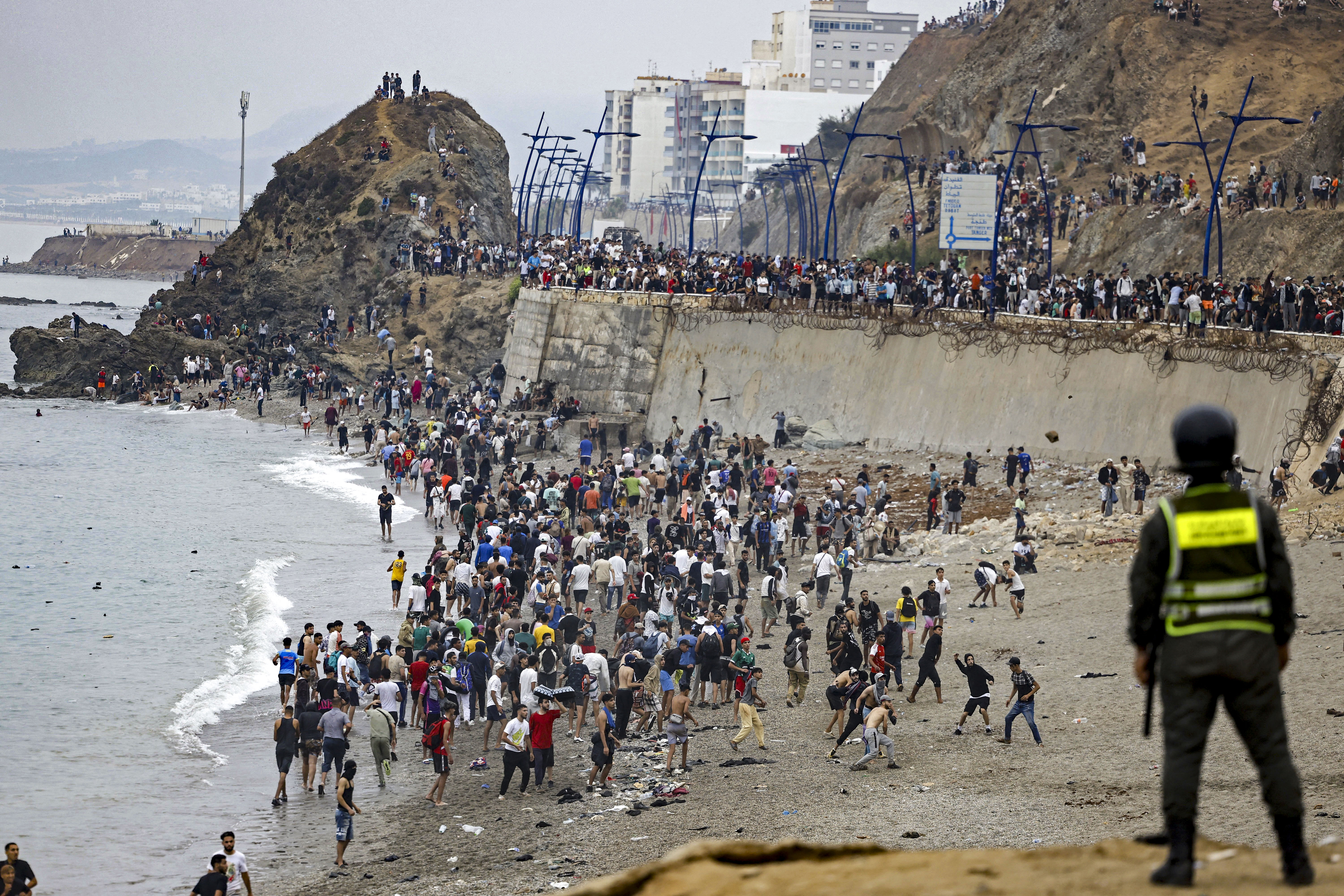 Illegal immigrants gather along the fence at the site of clashes near Fnideq on the Morocco-Spain border, in Fnideq, Morocco, on July 31, 2026. (Abdel Majid Bziouat/AFP via Getty Images)
Spanish and Moroccan authorities and European Commission President Ursula von der Leyen have said migrant smuggling gangs drove the crossings into Ceuta.
On April 14, Sánchez’s government approved a royal decree to grant illegal immigrants already living and working in Spain legal status through an accelerated process. Those who meet certain conditions can now seek a one-year residency and work permit.
After a year, those granted the temporary measure will be eligible to apply for other work or residency permits.
The government estimates that half a million people living in the shadows of Spanish society could be eligible; analysts say the figure is likely higher. Spanish think tank Funcas estimates there are roughly 840,000 illegal immigrants living in Spain.
Owen Evans, Guy Birchall, The Associated Press, and Reuters contributed to this report.
 Friends Read Free
Copy
Facebook
Tweet
Friends Read Free
Copy
Facebook
Tweet