
The federal government’s buyback of recently banned firearms will cost over $340 million, based on police estimates of firearm ownership rates that are over a decade old.
Marcia Jones, director general with the public safety department, testified before the Senate National Finance Committee that budgeted costs to collect 12,000 firearms were $20 million, but that there are “additional costs for the program relating to … destruction of firearms by a third-party destruction services provider.”
Jones said $4.8 million has already been invoiced to date for the business phase of the program. “In addition, there are other services-related costs and staff costs,” she said, as first reported by Blacklock’s Reporter.
An additional $75,459,007 would be paid to provinces and territories this year to assist with the broader program of collecting prohibited firearms from legal owners, while $260,033,407 has been budgeted to compensate gun owners.
In total, the expenses since 2024 are estimated at $342.6 million, although Jones acknowledged the number of firearms to be purchased is not certain. She said the estimate of 180,000 “assault-style firearms” to be collected through the program is based on RCMP data for previously registered firearms.
“This allows us to forecast anticipated program costs for the individual phase in terms of what we will be collecting,” she said. “We are also in the process of establishing compensation amounts for the individuals phase.”
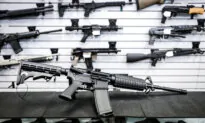
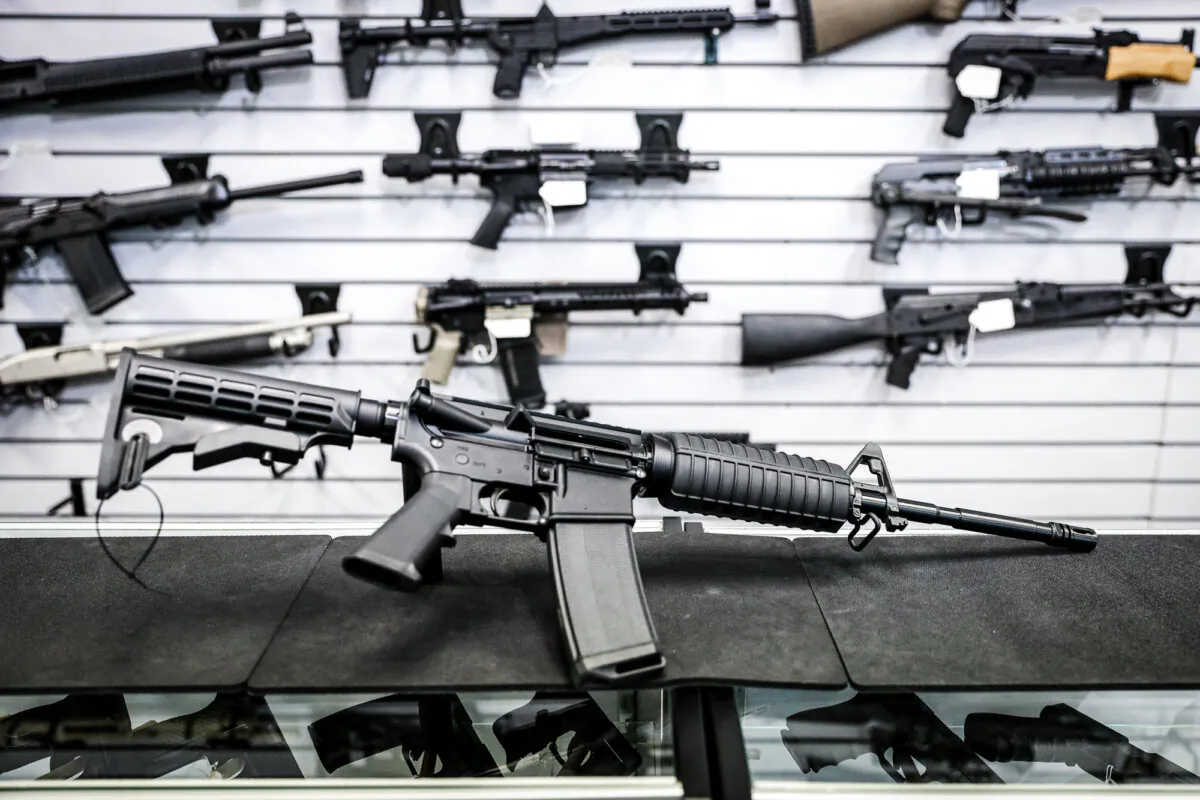
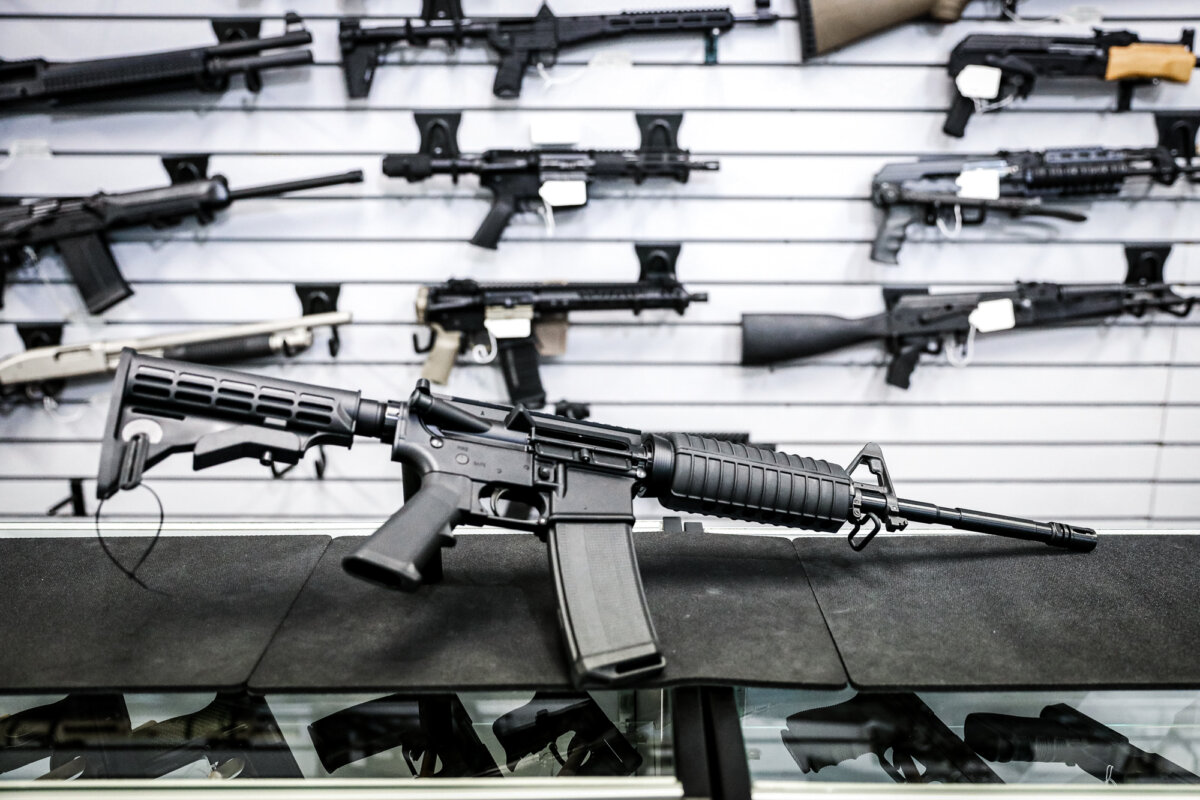
Following an April 2020 Nova Scotia mass shooting that left 22 people dead, then-Prime Minister Justin Trudeau announced a ban on the use, sale, and importation of more than 1,500 makes and models of firearms dubbed “assault-style weapons” by Ottawa. The banned firearms list was later expanded to more than 2,000 types. All five of the firearms used by the shooter had been obtained illegally, including three that were smuggled from the United States.
In May 2020, the government put an amnesty in place until April 30, 2022, allowing gun owners and businesses to comply with the law by disposing of their prohibited firearms. The amnesty was extended in March 2022 for an additional 18 months until Oct. 30, 2023, and was then extended again until Oct. 30, 2025.
In February 2021, the government announced Bill C-21, which introduced the buyback program for banned firearms. The legislation, adopted in December 2023, also imposed a national freeze on the sale, purchase, or transfer of handguns in Canada.
The current cost estimate for the gun buyback program follows a 2020 cabinet forecast of between $300 million and $400 million by then-Public Safety Minister Bill Blair. The Parliamentary Budget Office in a 2021 report said costs could run as high as $756 million.
In response to a question by Senator Claude Carignan on whether the RCMP data for previously registered firearms had been destroyed, Jones acknowledged the estimate of 180,000 “assault-style firearms” was based on outdated figures.
In 2012, under Stephen Harper’s Conservative government, Parliament passed Bill C-19, Ending the Long-Gun Registry Act, which mandated destruction of all records compiled under statutory registration of shotguns and rifles that dated from 1998.
“We have good visibility through the RCMP on registered firearms,” Jones said. “With discontinuation of the Long-Gun Registry in 2012, there is less visibility on unregistered firearms.” She said that with the exception of the province of Quebec, which has maintained a firearms registry, there is “a bit of a data gap in that regard.”
“So this is leftover data that was used here?” asked Carignan.
“That’s right,” replied Jones. “We were able to do estimates based on what was known in 2012.”
 Friends Read Free
Copy
Facebook
Tweet
Friends Read Free
Copy
Facebook
Tweet