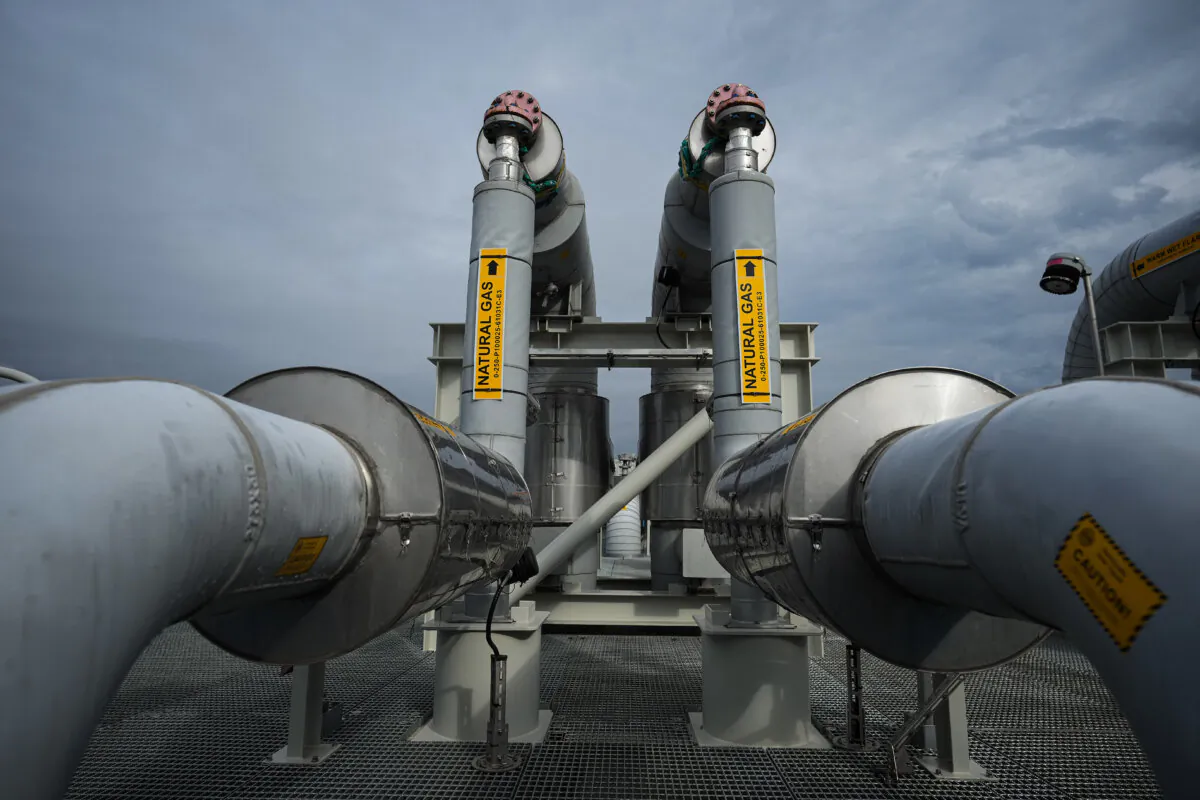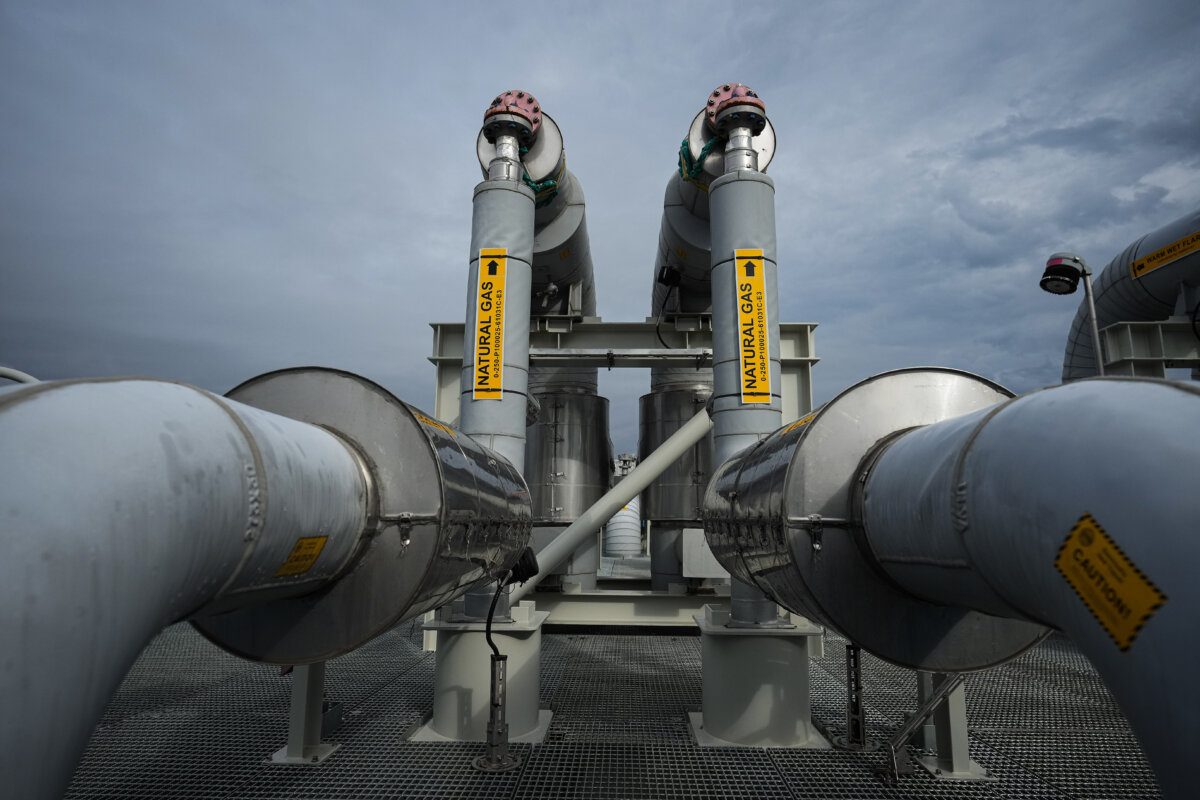

An inaugural liquefied natural gas (LNG) cargo left the new LNG Canada facility in Kitimat, B.C., on June 30, marking the first-ever large scale LNG shipment from Canada’s West coast to Asian markets.
The 291-metre long and 46-metre wide GasLog Glasgow tanker chartered by Shell and operating under Bermuda’s flag left the Kitimat terminal with the cargo for its 10-day journey to northern Asia. Following the LNG being pumped onto the tanker, tugboats will take the vessel approximately 300 kilometres through the Douglas Channel to the open ocean.
The Kitimat export terminal is Canada’s first large-scale facility to begin operations, with the rest targeted to open between 2027 and 2030. Construction on the $18 billion LNG Canada terminal in Kitimat began almost seven years ago and is one of seven LNG facilities under development in Canada, all of which are located in B.C.
LNG Canada is a joint venture company between Shell, Petronas, PetroChina, Mitsubishi Corporation, and KOGAS. The company website describes the LNG facility as “a long-life asset,” adding that its 40-year export license “enables us to initially export up to 14 million tonnes of LNG per annum.”
Kitimat is a small town of roughly 8,200 people located approximately 200 kilometres east of Prince Rupert, B.C. LNG Canada constructed the Cedar Valley Lodge to accommodate its workers, housing as many as 4,500 people. It also provides bus transport to the worksite to reduce local traffic.
Roughly 300 workers will be required to run operations at the site. LNG Canada is also considering a second phase of construction to double export capacity to 28 million tonnes a year.
The facility is the largest private sector investment in Canadian history with an estimated cost of roughly $40 billion to get to operational status, according to the municipality’s website. This includes construction of the $14.5 billion Coastal GasLink pipeline, which transports natural gas some 670 kilometres from northeastern B.C. to the Kitimat terminal.
Natural gas in B.C. is projected to generate $1.4 billion in royalties by 2027, according to the B.C. government’s budget and financial plan released Feb. 22.
LNG allows natural gas to be transported in liquid form to locations not reached by pipelines. The product is cooled to approximately minus 162 degrees Celsius and, once it reaches its destination, the natural gas product is regasified and primarily used to generate electricity, as well as for heating, transport, industrial operations, and producing chemicals and fertilizers.
 Friends Read Free
Copy
Facebook
Tweet
Friends Read Free
Copy
Facebook
Tweet