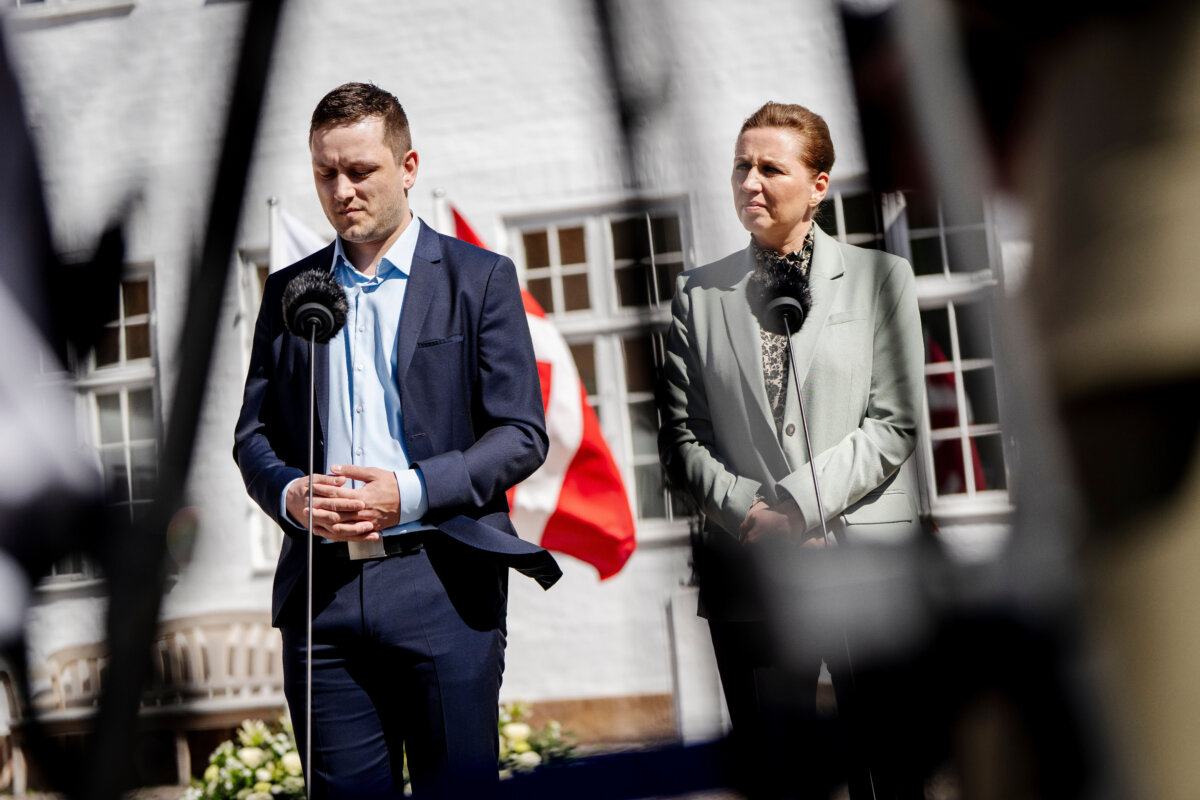

France is working with partner countries to plan a response should the United States act on its stated goal of acquiring Greenland, a minister said on Jan. 7, as European nations pushed back on U.S. President Donald Trump’s ambitions for the Arctic island.
The rhetoric around Greenland, a semi-autonomous Danish territory, has ramped up since the U.S. military’s weekend operations in Venezuela, with the White House confirming on Jan. 6 an intent to acquire the Arctic island in the interests of national security.
French Foreign Minister Jean-Noël Barrot said the matter would be discussed at a meeting with his counterparts in Germany and Poland scheduled for Jan. 7.
“We want to take action, but we want to do so together with our European partners,” he said on France Inter radio.
Danish Foreign Minister Lars Lokke Rasmussen and his Greenlandic counterpart, Vivian Motzfeldt, have requested an urgent meeting with U.S. Secretary of State Marco Rubio, according to a statement posted on Jan. 6. Motzfeldt said that previous requests to sit down with Rubio have been unsuccessful.
European leaders on Jan. 6 contested Trump’s repeated comments that the United States has a claim to Greenland from a strategic and national security perspective.
Collective Pushback
The leaders of France, Germany, Italy, Poland, Spain, and the UK issued a joint statement affirming their view that the Arctic island, which has long been part of the Kingdom of Denmark, “belongs to its people.”
The six leaders gave their backing to Danish Prime Minister Mette Frederiksen in defending Danish sovereignty over Greenland, which has an estimated population of about 56,000 people of chiefly Inuit descent.
“Greenland belongs to its people,” they said. “It is for Denmark and Greenland, and them only, to decide on matters concerning Denmark and Greenland.”
They added in their statement that security in the Arctic must be achieved by NATO allies working collectively.
“NATO has made clear that the Arctic region is a priority and European Allies are stepping up,” the leaders said.
“We and many other Allies have increased our presence, activities, and investments, to keep the Arctic safe and to deter adversaries.”
Separately, the Nordic nations of Denmark, Finland, Iceland, Norway, and Sweden issued a joint statement on Jan. 5 stressing their dedication to Arctic security and Danish sovereignty over Greenland.
Frederiksen said on Jan. 5 that a U.S. military takeover of Greenland would effectively spell the end of the NATO alliance, as Denmark and the United States are both members.
The Arctic island is geographically closer to North America than to Denmark, but it has been part of the Nordic kingdoms for more than 600 years.
-

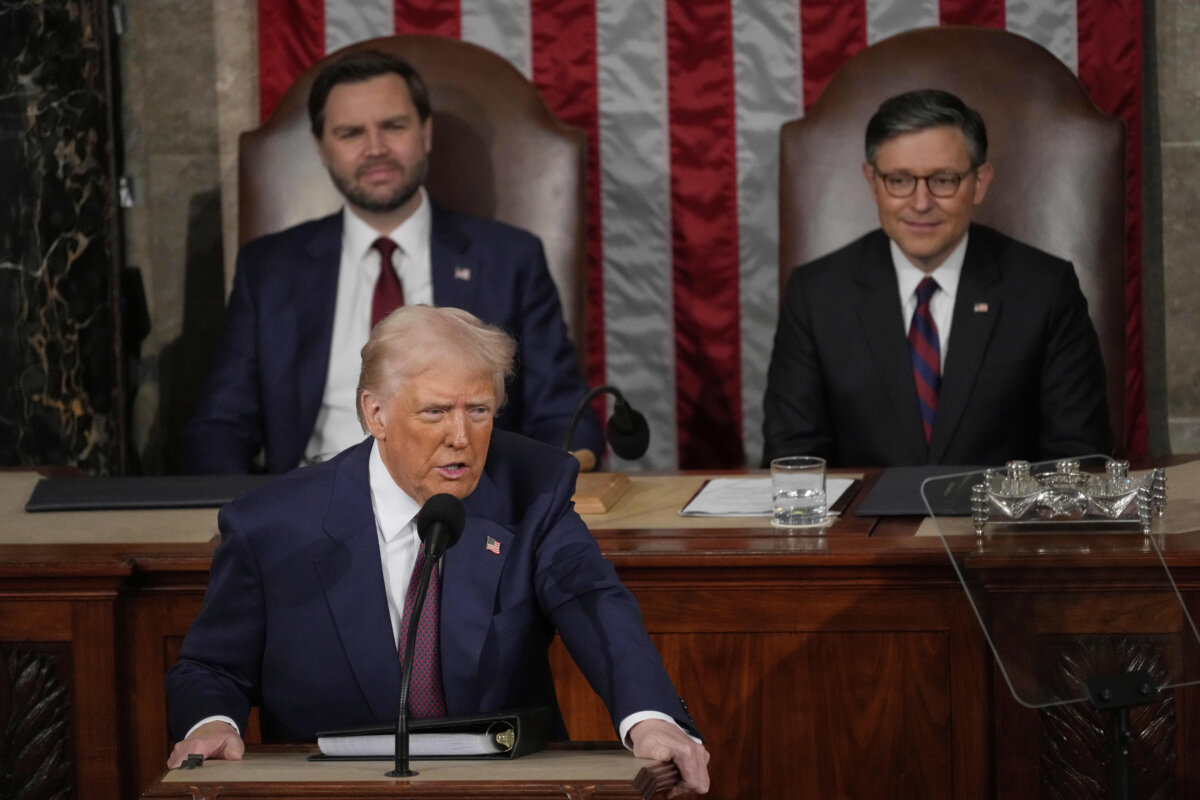
Trump renewed his call to acquire Greenland in the aftermath of the capture of Venezuelan leader Nicolás Maduro and his wife and the declaration that Washington would temporarily run the Latin American country.
The U.S. president has made public calls dating back to 2019, during his first term of office, for Washington to have jurisdiction over the territory.
Greenland is believed to have significant geological potential for oil, gas, and critical minerals, including rare earth elements, although estimates of recoverable resources vary, according to the U.S. Department of the Interior.
-
Cryptic ’20 Days’ Comment
On Jan. 4, when asked by a reporter whether he expects to take action on Greenland, Trump responded, “Let’s talk about Greenland in about 20 days.”
Trump reiterated on Air Force One as he flew back to Washington on Jan. 5 from his home in Florida that the Arctic island was of strategic importance for the United States and its allies.
“Greenland is covered with Russian and Chinese ships all over the place,” Trump said. “We need Greenland from the standpoint of national security, and Denmark is not going to be able to do it.”
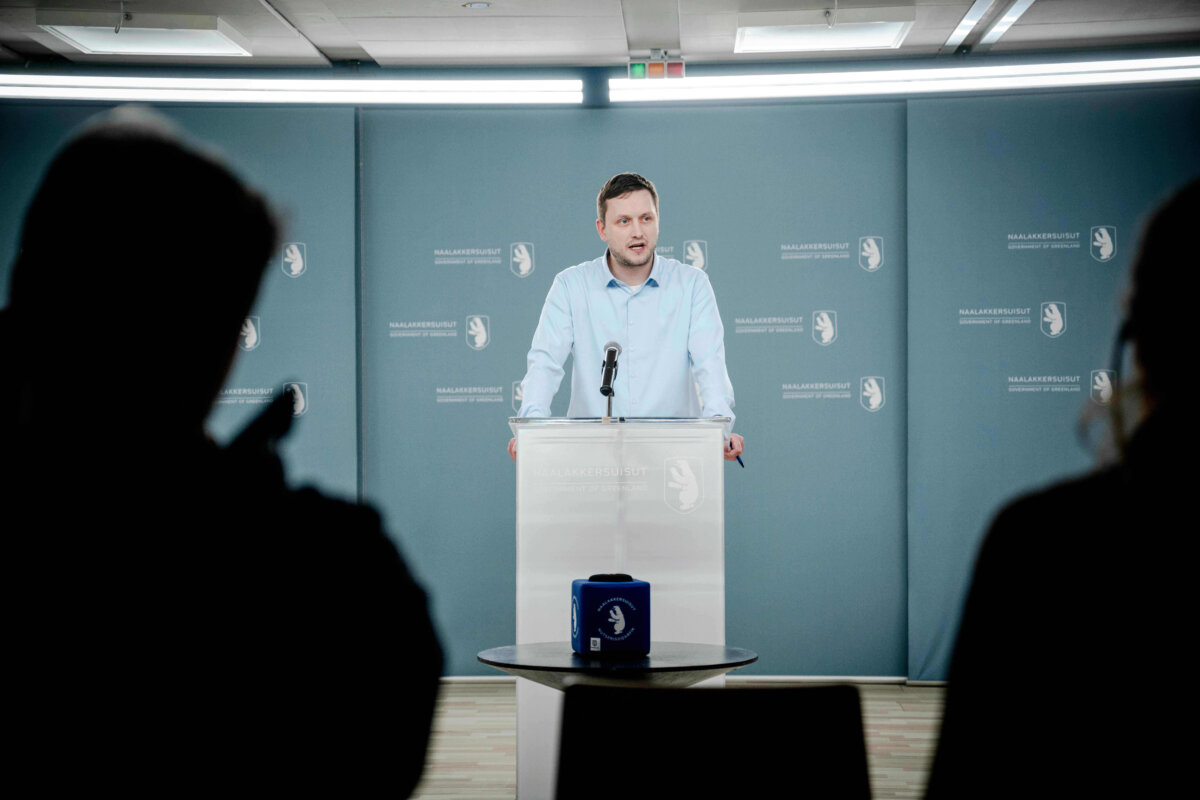
Greenlandic Prime Minister Jens-Frederik Nielsen criticized Trump’s comments and warned of serious consequences should the United States make moves to seize the Arctic island, which Denmark has repeatedly said is not for sale.
“If the United States chooses to attack another NATO country militarily, then everything stops,” Frederiksen told Danish broadcaster TV2 on Jan. 5. “That is, including our NATO and thus the security that has been provided since the end of the Second World War.”
-
Danish Claim Questioned
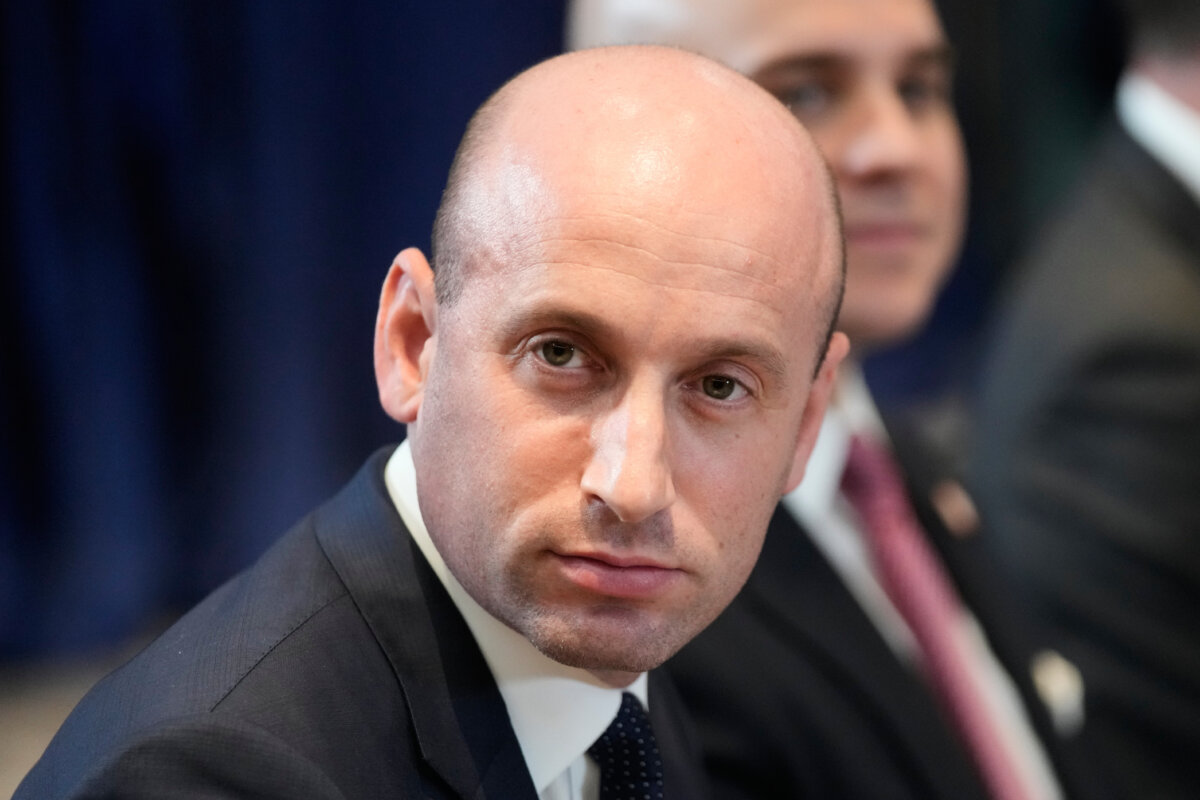
Trump’s deputy chief of staff, Stephen Miller, questioned the Danish historical claim in an interview with CNN on Jan. 5, asking, “What is their basis of having Greenland as a colony of Denmark?”
Miller said: “The president has been clear for months now that the United States should be the nation that has Greenland as part of our overall security apparatus.
“You can talk all you want about international niceties and everything else. But we live in a world, in the real world, that is governed by strength, that is governed by force, that is governed by power.”
Greenland had been a colony of Denmark for hundreds of years and became an integral part in 1953, granting Greenlanders full Danish citizenship. The U.S. government recognized Copenhagen’s right to the whole of Greenland at the beginning of the 20th century, when it was under direct Danish rule.
Greenland became self-governing in 2009, as legislation recognized its right to independence under international law. Although the independence option was favored by a majority (56 percent) of Greenlanders according to a Verian Group 2025 poll, it appears unlikely, as the island’s economy is heavily dependent on Danish subsidies.
Greenland’s location has made it crucial to the defense of North America since World War II. The land mass sits off the northeastern coast of Canada, and more than two-thirds of its territory lies within the Arctic Circle. It also shares a short land border with Canada on Hans Island.
The U.S. Department of Defense operates the remote Pituffik Space Base in northwestern Greenland. Built following a 1951 defense agreement between Denmark and the United States, it supports missile warning, missile defense, and space surveillance operations for both the United States and NATO.
On Denmark’s mainland, the cooperation between Copenhagen and Washington has been long-standing. The Danes buy U.S. F-35 fighter jets, and in 2025, Denmark’s parliament voted through a bill to allow U.S. military bases on Danish soil.
The legislation builds on a 2023 military agreement, made with the Biden administration, through which U.S. troops had broad access to air bases in Denmark. Opponents say that the 2025 vote ceded Danish sovereignty to Washington.
The Associated Press and Reuters contributed to this report.
 Friends Read Free
Copy
Facebook
Tweet
Friends Read Free
Copy
Facebook
Tweet