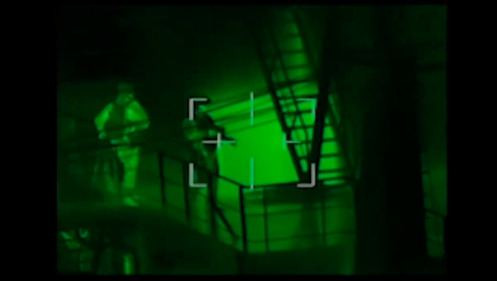
French forces boarded a sanctioned oil tanker sailing in the Atlantic from Russia on May 31. The operation was supported by the UK, French President Emmanuel Macron said on June 1.
“This operation took place in the Atlantic Ocean, on the high seas, with the support of several partners, including the United Kingdom, in strict compliance with the law of the sea,” Macron said in a June 1 post on X.
“It is unacceptable for ships to circumvent international sanctions, violate the law of the sea, and finance the war that Russia has been waging against Ukraine for more than four years.”
Macron said that these vessels, which “fail to adhere to the most basic rules of maritime navigation, also pose a threat to the environment and to everyone’s safety.”
France’s Maritime Prefecture of the Atlantic said in a separate statement on June 1 that the French navy had intervened on an oil tanker, which it did not name, more than 400 nautical miles (460 miles) west of the tip of Brittany, which had been heading out from Murmansk, Russia.
“This operation was aimed at checking the nationality of a vessel suspected of flying a false flag,” it stated. “After the inspection team boarded the vessel, an examination of the documents confirmed suspicions regarding the irregularity of the flag flown. In accordance with international law and at the request of the public prosecutor, the vessel was diverted.”
It said the vessel is currently being escorted by the National Navy to a mooring point for continued checks.
A UK sanctions notice dated Feb. 24 mentions a ship named Tagor with unique ID RUS3482 under the Russia sanctions regime.
The UK sanctions notice said the secretary of state had reasonable grounds to suspect that Tagor “has been or is likely to be involved in activity whose object or effect is to destabilise Ukraine or undermine or threaten the territorial integrity, sovereignty, or independence of Ukraine.”
It also said the vessel, identified by IMO number 9282481, was involved in obtaining a benefit from, or supporting, the Russian government by carrying oil or oil products originating in Russia from Russia to a third country.
The UK has sanctioned 544 alleged Russian shadow fleet vessels and claims that about 75 percent of Russia’s crude oil is transported in the shadow fleet.
Earlier this year, British Prime Minister Keir Starmer gave the military permission to board ships that make up Russia’s shadow fleet if they are passing through UK waters, including the English Channel.
UK territorial waters usually extend 12 nautical miles from the British coast, but in the English Channel, which is only 21 miles at its narrowest point, UK waters extend to the median line, and France controls the southern side.
That means that although the English Channel is the world’s biggest shipping lane, in the Strait of Dover, there are no international waters, and any Russian or shadow fleet vessel has to pass through either UK or French waters.
If a shadow fleet wants to avoid the risk of being boarded, it will need to make a diversion around the British Isles, which adds several days and hundreds of miles to its journey time from the Middle East, Asia, or Africa.
In January, the French Navy boarded a sanctioned oil tanker in the Mediterranean Sea that departed from Russia while sailing under a false flag.
At the time, the French Navy said it also worked with intelligence provided by the UK to intercept the ship named Grinch, which departed from Murmansk, Russia.
In the same month, the UK and the United States worked together to seize the Russian-flagged tanker M/V Bella 1 in the North Atlantic because it was suspected of carrying sanctioned oil from Venezuela.
Chris Summers and Jill McLaughlin contributed to this report.
 Friends Read Free
Copy
Facebook
Tweet
Friends Read Free
Copy
Facebook
Tweet