
A wave of Ukrainian drone attacks on targets inside western Russia briefly impacted air travel in Moscow and paralyzed rail transport in the Rostov region.
In an overnight attack that lasted just less than eight hours, 74 Ukrainian drones were “intercepted and eliminated” by Russian air defenses, according to the Russian Defense Ministry.
In a statement cited by Russia’s TASS news agency, the ministry stated that 23 incoming drones were successfully downed over the greater Moscow region, home to approximately 21.5 million people.
Varying numbers of drones were also shot down over Russia’s western regions of Kursk, Rostov, Bryansk, Kaluga, Tula, and Lipetsk, according to the ministry.
Although no significant damage was reported in the Moscow region, Russia’s civil aviation authority temporarily suspended flights at several airports. Video footage released by Russian media shows passengers waiting in long lines at the Sheremetyevo airport, while others slept on the floor because of flight delays.
According to TASS, falling drone debris struck a railway facility in the western Rostov region, igniting a fire and causing delays to 26 passenger trains.
“Traffic through the Kamenolomny station [in Rostov] is proceeding at reduced speed,” the news agency reported, noting that emergency response teams had been sent to the affected area.
At the time of publication, Kyiv had yet to issue a statement on the reported attacks.
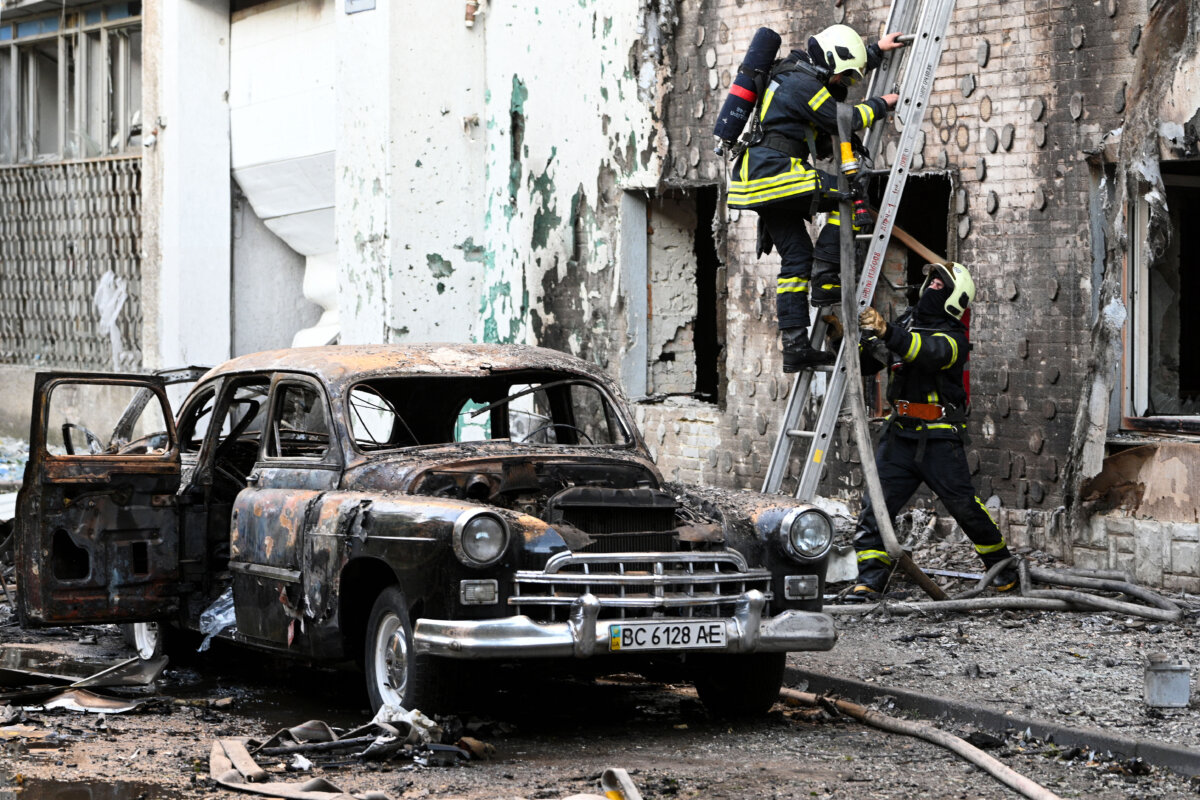
The nighttime drone strikes by Ukraine coincided with a Russian attack—involving both missiles and drones—on targets in several parts of Ukraine, including the capital, Kyiv.
According to Ukrainian President Volodymyr Zelenskyy, two people were killed in the Russian barrages and at least 15 others were injured.
“Rescue and emergency efforts are underway in our cities and communities following the Russian attack,” he wrote on X.
“Damage has been reported in Kyiv and the [Kyiv] region, as well as in the Kharkiv and Ivano-Frankivsk regions.”
Zelenskyy said Russian drones had been intercepted over Ukraine’s Sumy, Khmelnytskyi, Kirovohrad, Mykolaiv, Poltava, and Kherson regions.
The northeastern city of Kharkiv, Ukraine’s second-largest population center, was hit by 12 Russian strikes, setting an industrial facility ablaze, according to the city’s mayor, Ihor Terekhov.
Ruslan Martsinkiv, mayor of Ivano-Frankivsk, located in western Ukraine, said his city had suffered its largest Russian attack since the conflict began in early 2022.
The latest Russian attack involved 24 missiles and more than 425 drones, the Ukrainian Air Force stated, noting that 23 of the latter appeared to have struck their targets.
‘Diametrically Opposed’ Truce Conditions
Over the weekend, Zelenskyy said he had offered to hold a fresh round of talks with Russian negotiators, stressing his hope of securing a truce.
“Everything should be done to achieve a cease-fire,” he said in a July 19 video address. “The Russian side should stop hiding from decisions.”
The next day, Kremlin spokesman Dmitry Peskov said Russian President Vladimir Putin hoped to reach a “peaceful conclusion” with Kyiv “as soon as possible.”
However, Peskov said that Moscow’s priority was to “achieve [its] goals” in the conflict, which, he said, remained “clear.”
On July 21, he acknowledged that Moscow and Kyiv had exchanged draft memorandums on possible talks, but described the conditions laid out in the drafts as “diametrically opposed.”
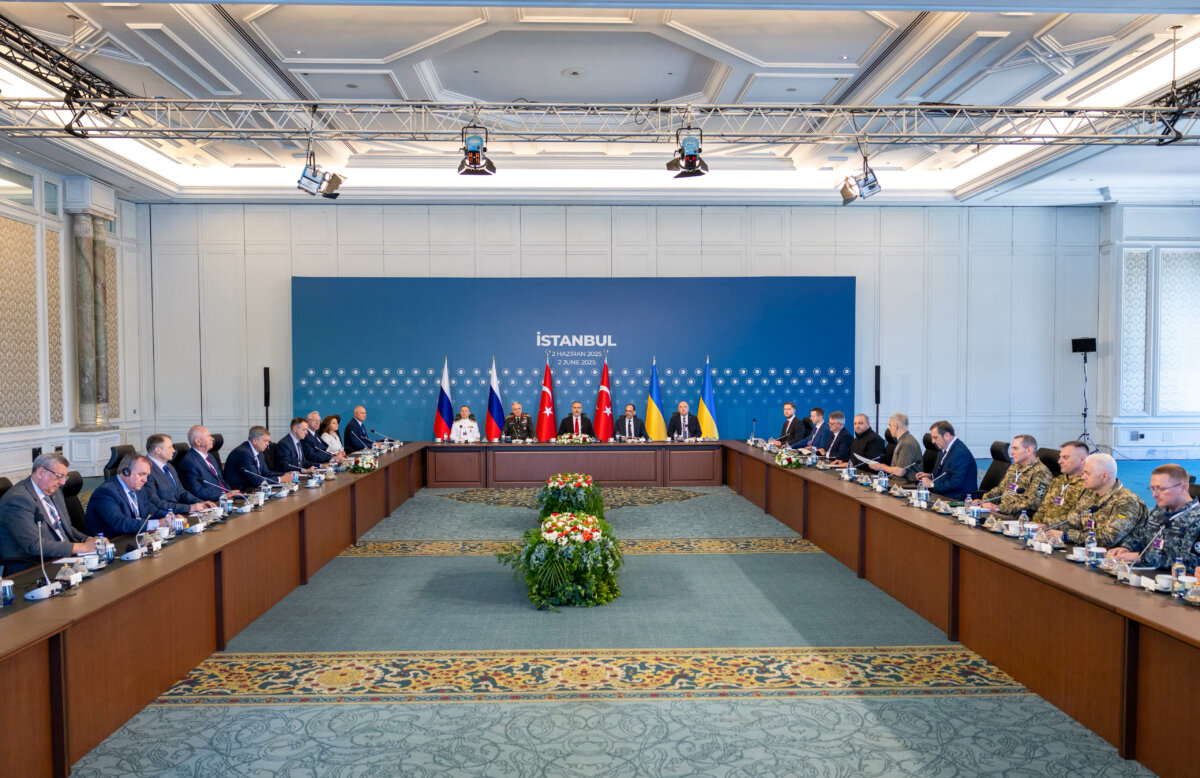
Two previous rounds of talks in Istanbul—on May 16 and June 2—led to substantial prisoner swaps but failed to produce any major breakthroughs.
Reuters contributed to this report.
 Friends Read Free
Copy
Facebook
Tweet
Friends Read Free
Copy
Facebook
Tweet