
The executive director of the International Energy Agency (IEA) has called Germany’s nuclear phase-out a “historic mistake.”
In an interview with German newspaper WELT on Feb. 4, Fatih Birol was asked why Germany has “chosen an energy path that no other major economy is following.”
“Germany is the country of Kant and Leibniz, a country of reason,” Birol said. “That is why I expected Germany to take a particularly rational approach to energy policy.”
The IEA is an intergovernmental organization, established in 1974, that provides policy recommendations on energy, renewable energy, and climate.
“Instead, the country has made two historic mistakes: excessive dependence on a single supplier—Russia—and the phase-out of nuclear energy,” he said. “Both have undermined competitiveness and energy security.”
Germany’s long-standing opposition to nuclear energy, a policy that was solidified under German Chancellor Angela Merkel’s government and the Green Party’s influence, continues to cast doubt over the future of nuclear power in Europe.
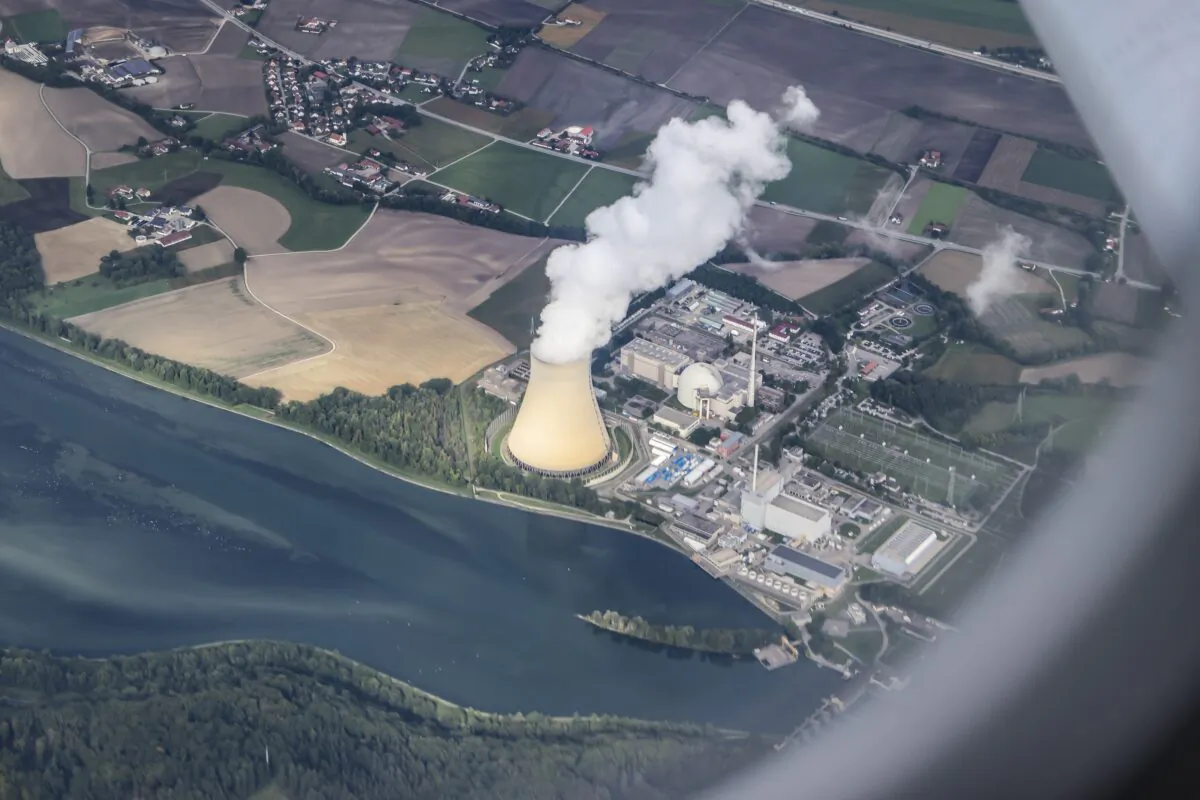
The country shut down its last three nuclear plants in 2023, despite that they could have continued operating for decades, even a century, and opted instead for energy sources such as wind and solar.
Denmark, Austria, Portugal, and Luxembourg have similarly rejected nuclear energy in favor of alternatives such as solar and wind.
In remarks made at a business conference in Saxony-Anhalt, Germany, on Jan. 14, German Chancellor Friedrich Merz said that shutting down Germany’s reactors was a “serious strategic mistake.”
“We’re now making the most expensive energy transition in the entire world,” he said. “I don’t know of a second country that makes it as difficult and as expensive for itself as Germany does.”
Birol said that the chancellor’s “admission is an important step in the right direction” and that Germany “must understand that abundant available electricity means modernization, prosperity and a secure energy future.”
However, the Turkish economist and energy expert said that “the political climate” in Germany means “it would indeed be difficult to return to nuclear power now.”
“Nevertheless, it would be sensible to take a sober second look,” he said. “If only a single nuclear power plant could be brought back online, that would be a significant gain for Germany.”
Birol said that worldwide, nuclear power is currently experiencing a “strong comeback.”
He said that initial investment costs for traditional nuclear power plants are high, but operating costs are very low, and fuel costs are minimal. And he said that overall, electricity costs are not “dramatically different” from those of gas-fired power plants.
Nuclear power has one decisive advantage in that it has “supply security,” meaning “you press a button and electricity is there, around the clock,” Birol said.
“Almost the entire world is returning to nuclear power,” he said. “That should give Germans pause.”
The mood is shifting in some parts of Europe in terms of net-zero goals.
EU leaders have prioritized a renewables-first energy strategy alongside the goal of achieving “climate neutrality” by 2050, a central pillar of European Commission President Ursula von der Leyen’s European Green Deal.
Belgian Prime Minister Bart De Wever recently criticized Europe’s green transition, warning that current EU climate and energy policies are accelerating deindustrialization.
On Jan. 29 at The Future of Europe conference, hosted by Belgian newspapers De Tijd and L’Echo, De Wever said Europe had made a series of “dogmatic choices” on energy and climate that have weakened its industrial base.
“Let’s be very realistic, ladies and gentlemen, the decarbonization of Europe will be a synonym of the deindustrialization of Europe, and it’s already happening,” said De Wever, who is the leader of conservative Flemish nationalist party N-VA.
De Wever singled out Europe’s resistance to nuclear power as a major strategic error, calling it “the stupidity of the century.”
“We made dogmatic choices against nuclear energy,” he said.
Similar concerns have been voiced by Polish Prime Minister Donald Tusk, who has called for a review of the European Green Deal, warning that high energy prices risk destabilizing democratic governments.
Speaking in Strasbourg, France, on Jan. 22, 2025, Tusk said some EU regulations had led to a situation in which “energy prices are too high,” and he said that it could topple democratic governments.
“High energy prices might bring the downfall of many democratic governments,” he told members of the European Parliament.
“It’s unacceptable that our European energy is the most expensive. If it cannot be the cheapest, at least it should be more or less on the same level as in other countries.”
 Friends Read Free
Copy
Facebook
Tweet
Friends Read Free
Copy
Facebook
Tweet