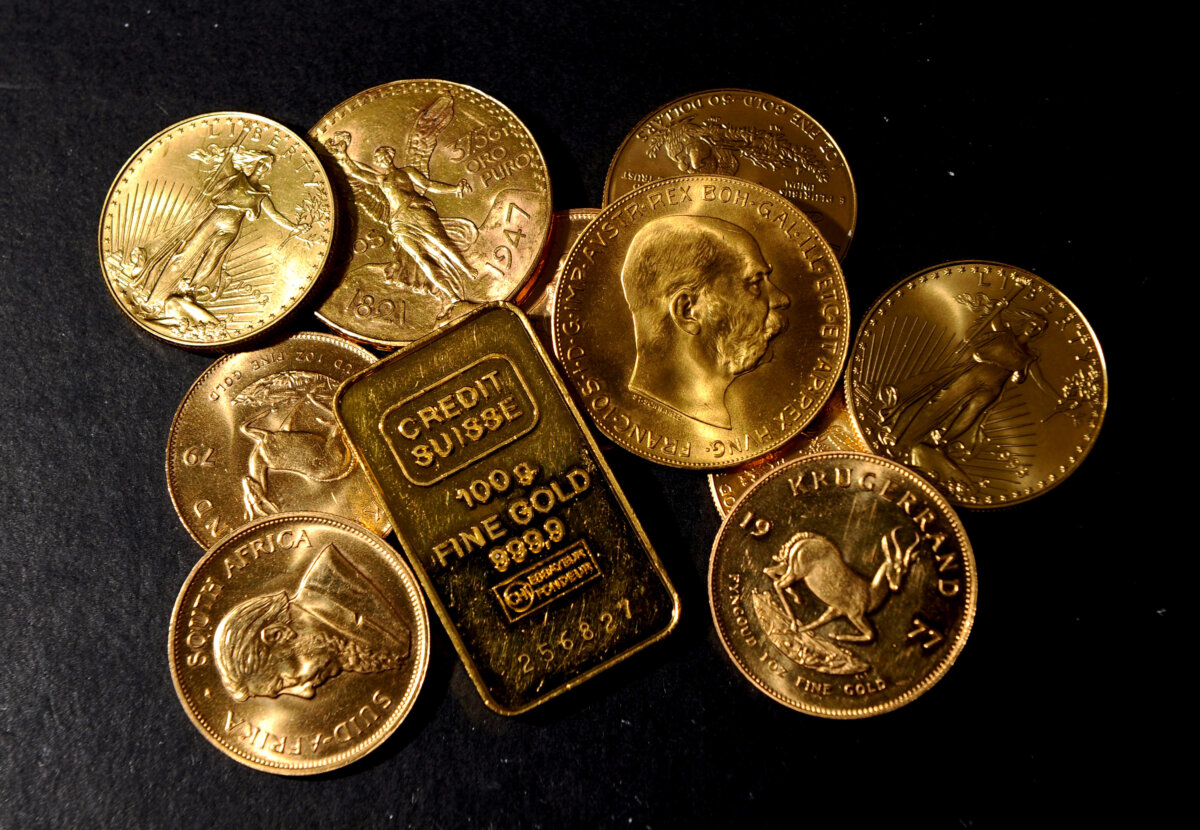

Australians are returning to a 5000-year-old tradition as they stockpile gold and other precious metals amid years of global turbulence and uncertainty.
In recent days, viral footage has circulated online of a long line from one gold dealer’s doors in Sydney’s Martin Place.
According to major bullion dealer, Ainslie Bullion, investors have been spurred by a culmination of factors including the dropping value of currency due to uncontrolled government spending and budget deficits, as well as ballooning debt.
This has left mum and dad investors around the world looking for safe options to invest their money—and with difficulties breaking into the already sky-high property market—many have instead turned to precious metals.
The price of gold has soared from A$2,380.77 (US$1,550.71) in Oct. 11, 2021, to A$6,257.90 (US$4,076.08) in Oct. 13, 2025.
“There has been a massive surge in interest and transactions with our waiting rooms all full and instore and online orders both breaking all-time records—and we have been around for 51 years,” Ainslie Bullion CEO Michael Engeman told The Epoch Times.
“There is certainly a momentum play with the prices of gold, silver and platinum up very strongly this year and people jumping in.”
Gold has, throughout 5000 years of history, been what Engeman terms “the monetary asset of last resort, or safe haven.”
“That ranges from global resets that occur around every 80 years—and the last around 80 years ago—to financial crashes like we saw in the global financial crisis or COVID,” he said.
“On the latter, in the six worst years on the Australian ASX200 you would have been down on average 20.5 percent.
“In those very same years gold went up on average 35.5 percent, so you were 56 percent better off in gold than shares in those years.”
Gold maintains its value by being scarce as opposed to cash which can be printed in large batches, devaluing its worth.
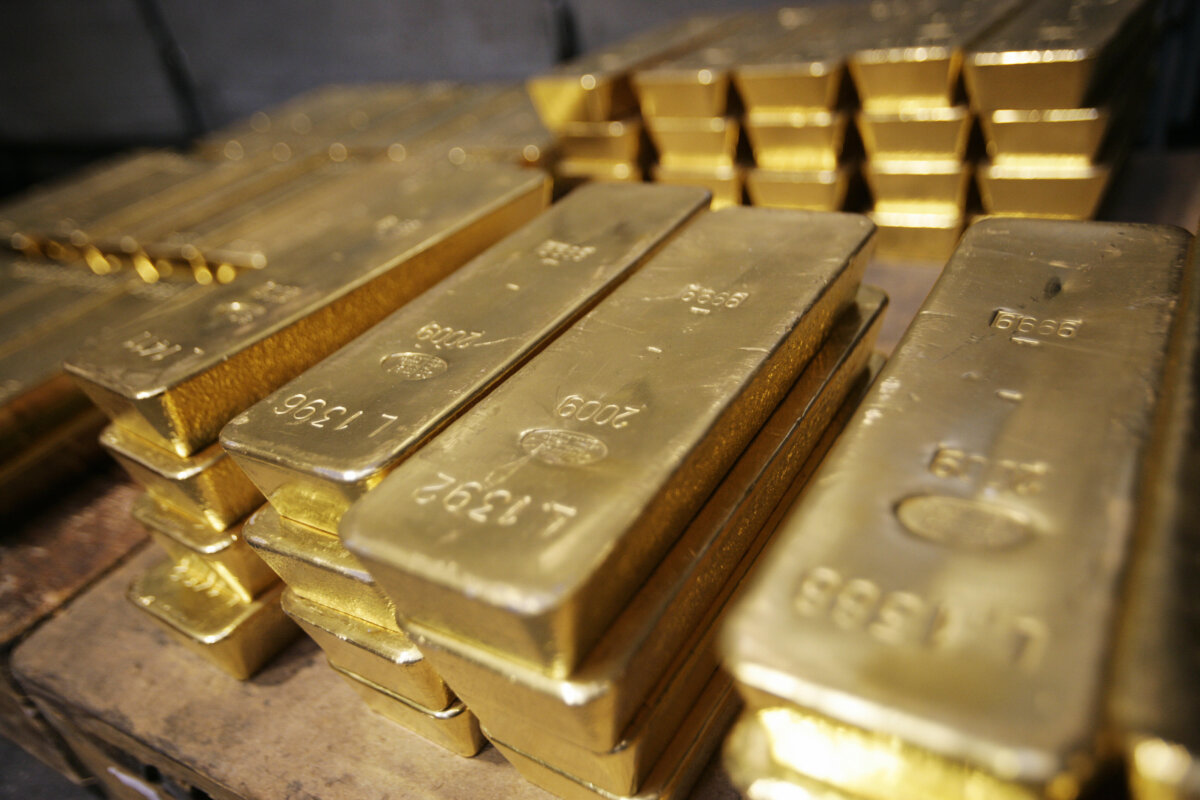
The precious metal is hard to find, expensive to mine and has traditionally increased in amount at about 1.6 percent annually—meaning investors used to look elsewhere if they were seeking stronger returns.
“If you compare that to the U.S. printing 40 percent of all the U.S. dollars ever in existence in one year during COVID-19 you get the reason why people are flocking to it,” Engeman said.
“Gold discoveries are becoming fewer and approval times to open a mine longer.”
Then there’s the case of the world’s central banks purchasing unprecedented amounts of gold as reserves, seemingly at the expense of the traditional preference for buying U.S. treasury bonds—something which has helped to drive up prices.
“This puts a solid floor under the price of gold as these are strategic long-terms sovereign nation reserves,” Engeman said.
“There is also a growing scepticism around the ‘paper promises’ that many synthetic vehicles for owning gold represent. This is seeing people turning to physical bullion which has zero counterparty risk. The old saying, ‘You don’t own it if you don’t hold it,’ is ringing large right now.”
The insight into gold-buying comes as Australian shares fell on the back of global trade tensions.
The S&P/ASX200 fell 75.5 points on Oct. 13, down 0.84 per cent, to 8,882.8, as the broader All Ordinaries lost 81 points, or 0.87 per cent, to 9,183.3, AAP reported.
Ten of 11 sectors were reported to have traded lower, while gold and rare earths miners held strong.
 Friends Read Free
Copy
Facebook
Tweet
Friends Read Free
Copy
Facebook
Tweet