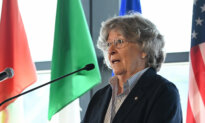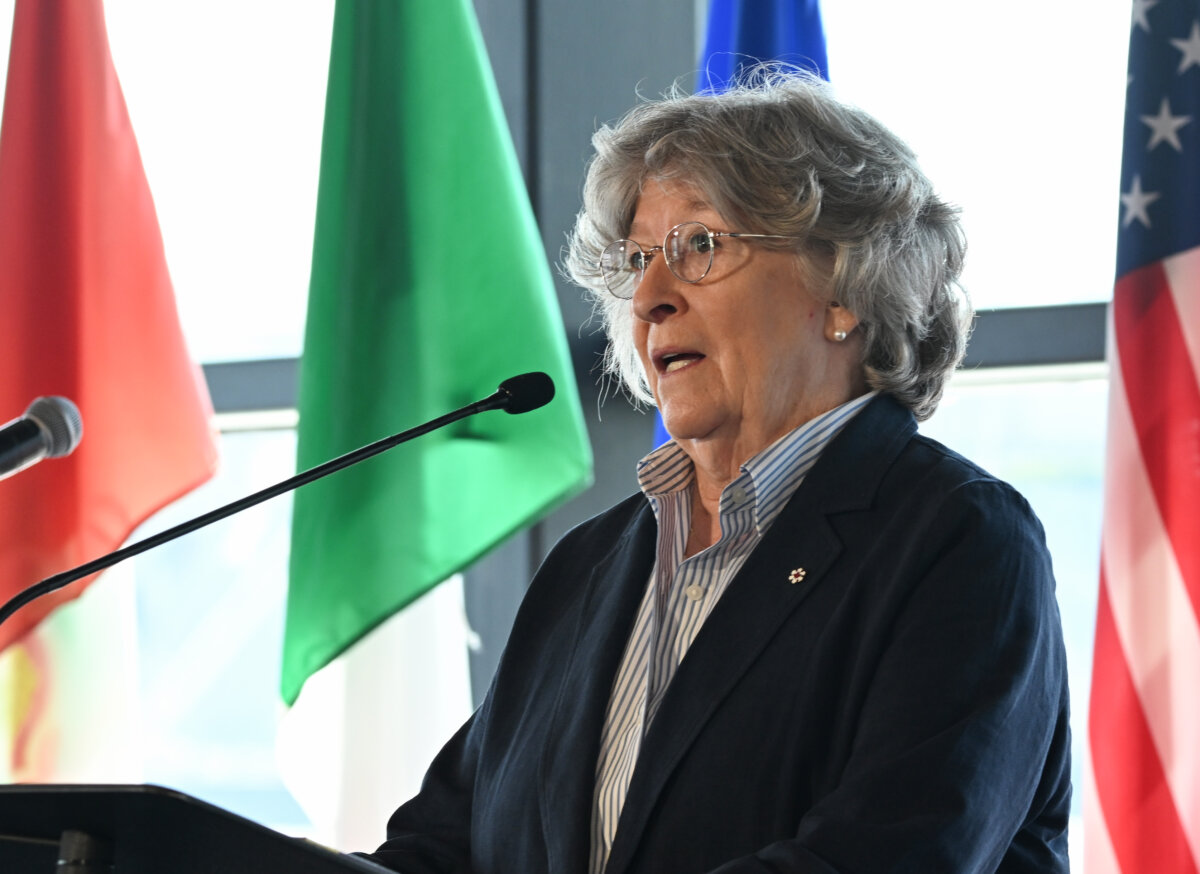

Gov. Gen. Louise Arbour says Quebec Premier-designate Paul St-Pierre Plamondon could face constitutional and legal obstacles in his plan to eliminate the role of lieutenant governor in the province.
Arbour made the remarks during an Oct. 8 visit to the St. Boniface Museum in Winnipeg as part of her first official visit to Manitoba.
“We’ll see how things unfold,” she told reporters. “People say a lot of things during election campaigns. There are some projects that are easier to implement than others.”
The Parti Québécois (PQ) leader announced on Oct. 6, the day after winning a minority mandate in the provincial election, that he is looking for legal avenues to block Lieutenant Governor Manon Jeannotte from participating in formal swearing-in ceremonies and the opening of the legislature.
St-Pierre Plamondon also pledged during his campaign to defund Jeannotte’s office and redirect the annual operating budget of roughly $1 million to addressing homelessness.
The separatist leader said he is consulting with government lawyers to determine whether these pledges are enforceable.
Arbour suggested the changes could be difficult because Canada is governed by a constitutional system “that has served us very well, in my opinion, so far.”
Part of that system is having a lieutenant governor for each province. Quebec’s Office of the Lieutenant Governor has been in place since the province was created in 1867.
Jeannotte, as the King’s official representative in Quebec, carries out a range of constitutional and ceremonial responsibilities. The lieutenant governor also grants royal assent to all legislation as the final stage in the lawmaking process. A bill cannot become law in Quebec unless it obtains royal assent.
Arbour also questioned the decision of St-Pierre Plamondon and other MPs elected Oct. 5 to forgo swearing an oath of allegiance to King Charles III.
Canada is a constitutional monarchy and a parliamentary democracy under a federal system that Arbour said “imposes certain constraints on the functioning of public authorities.” That includes swearing an oath to the reigning monarch.
“Can it function in that way? We are framed by a constitutional environment, a written constitution, a constitutional convention, laws,” Arbour said.
Quebec enacted legislation in 2022 that permits members of the national assembly to forgo the oath to the King, but that provision is being challenged in the Quebec Superior Court.
The lawsuit was filed in August by constitutional lawyer and University of Ottawa law professor Lawrence David alongside the Public Interest Litigation Institute (PILI).
The lawsuit argues that members of the national assembly who sit without taking the required constitutional oath lack the legal standing to serve in their positions. David, president of founder of PILI, has also said he believes the constitutional amendment included in the law requires the consent of the federal government and all Canadian provinces.
The ruling is expected to take years, prompting David and the Consumer Law Group, where he is an associate lawyer, to file an injunction application following the Oct. 5 election asking the Quebec Superior Court to grant an emergency order forcing all elected members to swear an oath of allegiance to the King when the national assembly reconvenes in November.
The request is set to be debated on Oct. 9 at the Montreal Courthouse.
Several national assembly members have been sworn in since 2023 without pledging allegiance to the King.
The Canadian Press contributed to this report.
 Friends Read Free
Copy
Facebook
Tweet
Friends Read Free
Copy
Facebook
Tweet