
Radical Islamic group Hizb ut-Tahrir has criticised comments by Australia’s spy chief as the possibility of being designated a terror group under proposed law reforms draws near.
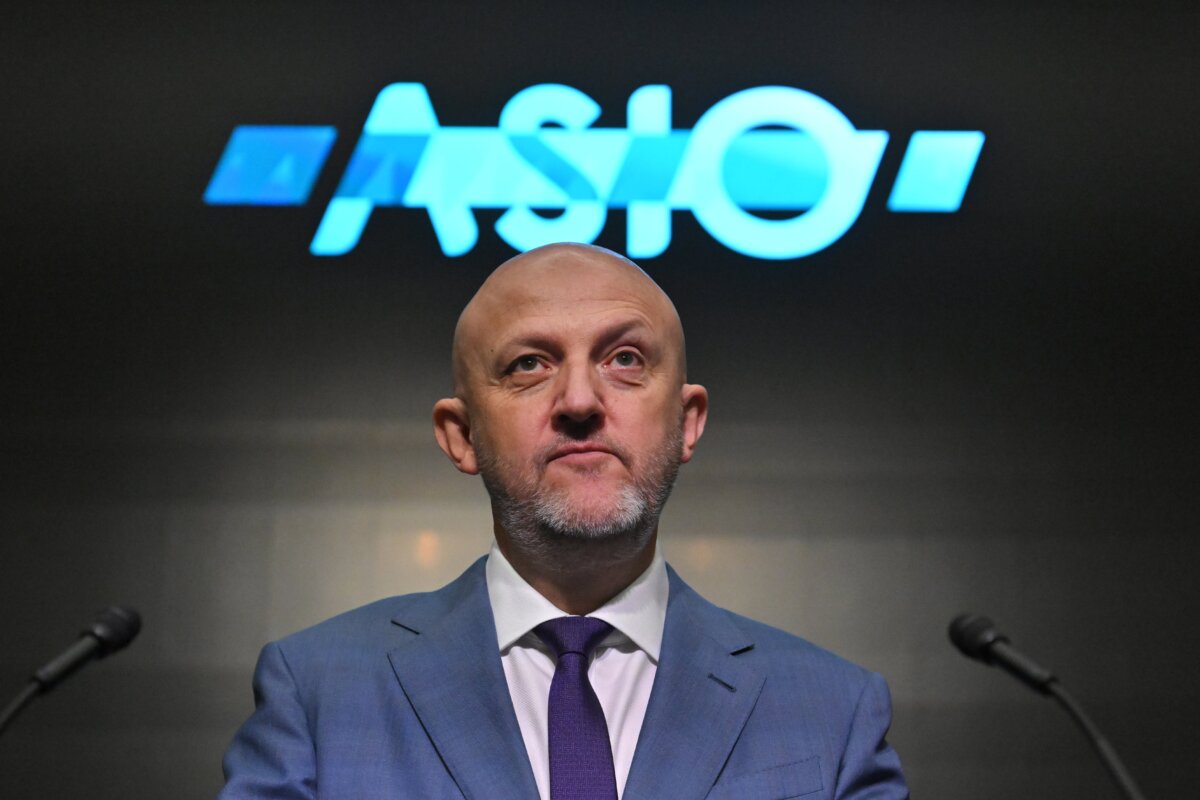
Australian Security Intelligence Organisation (ASIO) Director-General of Security Mike Burgess publicly referenced the pan-Islamist group during his 2025 Lowy Lecture in November, likening Hizb ut-Tahrir to those of neo-Nazi organisations.
“While an entity such as Hizb ut-Tahrir is religiously motivated, its provocative behaviour, offensive rhetoric. and insidious strategy are very similar to the tactics of the National Socialist Network,” Burgess said.
“The organisation’s condemnation of Israel and Jews attracts media attention and aids recruitment, but it deliberately stops short of promoting onshore acts of politically motivated violence.
“Hizb ut-Tahrir wants to test and stretch the boundaries of legality without breaking them.”
Hizb ut-Tahrir’s stated aim is the establishment of a global Islamist state governed by strict sharia law.
While the group operates in Australia, it has been banned in a number of countries, including Muslim-majority nations such as Egypt and Pakistan, as well as Germany and the UK.
Sweeping new legislation proposed by Labor could allow groups such as Hizb ut-Tahrir to be designated as extremist threats without the need to prove direct involvement in violent acts.
Hizb ut-Tahrir responded to Burgess’s comments in an open letter published on Jan. 15, accusing him of unfairly portraying its position.
“You suggested Hizb ut-Tahrir deliberately stops short of promoting onshore acts of violence,” the statement said.
“The suggestion being we do so because it is the law, not because it is our principled position since inception—which you are most aware.”
The group said Burgess’s remarks amounted to “propaganda pandering” against Muslims and denied conflating Jews with Israel in a way that could endanger Jewish people.
Potential New Laws Loom
If Labor’s proposed Combatting Antisemitism, Hate, and Extremism Bill 2026 receives successful backing in an urgently recalled parliament next week, the government will have stronger powers in deciding which groups to designate as hate organisations.
“It’s a comprehensive package of reforms which create serious offences for hate preachers and leaders seeking to radicalise young Australians,” Prime Minister Anthony Albanese said of the proposed law reforms.
“It increases the penalties for hate crimes offences. It ensures offenders whose crimes are motivated by extremism have that factored into sentencing.
“It creates a new offence for inciting hatred in order to intimidate or harass.”
The laws, if passed, would expand bans on prohibited symbols, make it easier for the Home Affairs Minister to cancel or refuse visas and also list an organisation as prohibited.
There are, however, doubts the reforms will get over the line with widespread criticism across the board, including complaints that definitions within the law reforms are too vague and could go too far by curtailing free speech.
Hizb ut-Tahrir in Australia
Hizb ut‑Tahrir is a splinter group from the Muslim Brotherhood, founded in 1953 by Taqiuddin al‑Nabhani, who considered the Brotherhood too moderate and accommodating to the West.
Like the Brotherhood, it seeks a global Islamic caliphate, but it rejects democracy and human rights.
Its ideology is influenced by Marxist theorist Sayyid Qutb, who reframed jihad to justify violent actions, diverging from mainstream Islamic interpretations of the term as spiritual or moral struggle.
The Australian chapter of Hizb ut-Tahrir started to become active around the early 1990s.
Over the years, numerous groups including Jewish organisations and some Coalition MPs have called for it to be banned.
Under the current criminal code, an organisation can only be listed as a terrorist organisation if it engages in, prepares, or promotes acts of terrorism—provocative and ideological pushes do not count.
The Epoch Times contacted ASIO for comment, with an ASIO spokesperson referring back to the Lowy lecture for comment.
 Friends Read Free
Copy
Facebook
Tweet
Friends Read Free
Copy
Facebook
Tweet