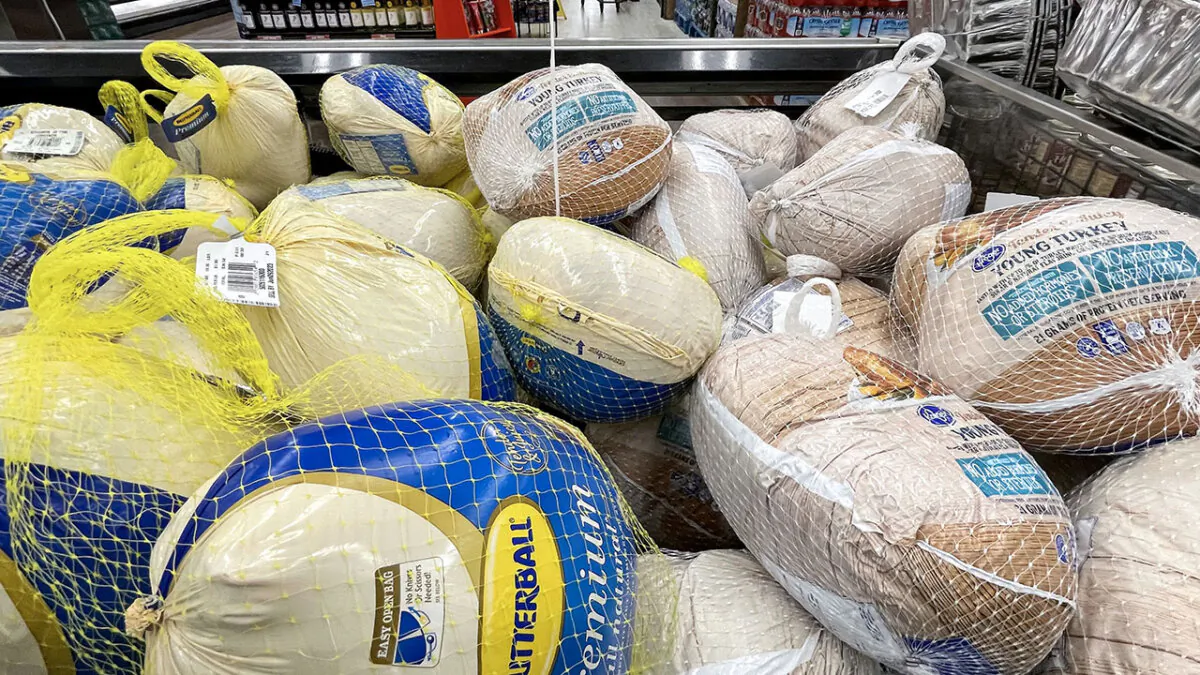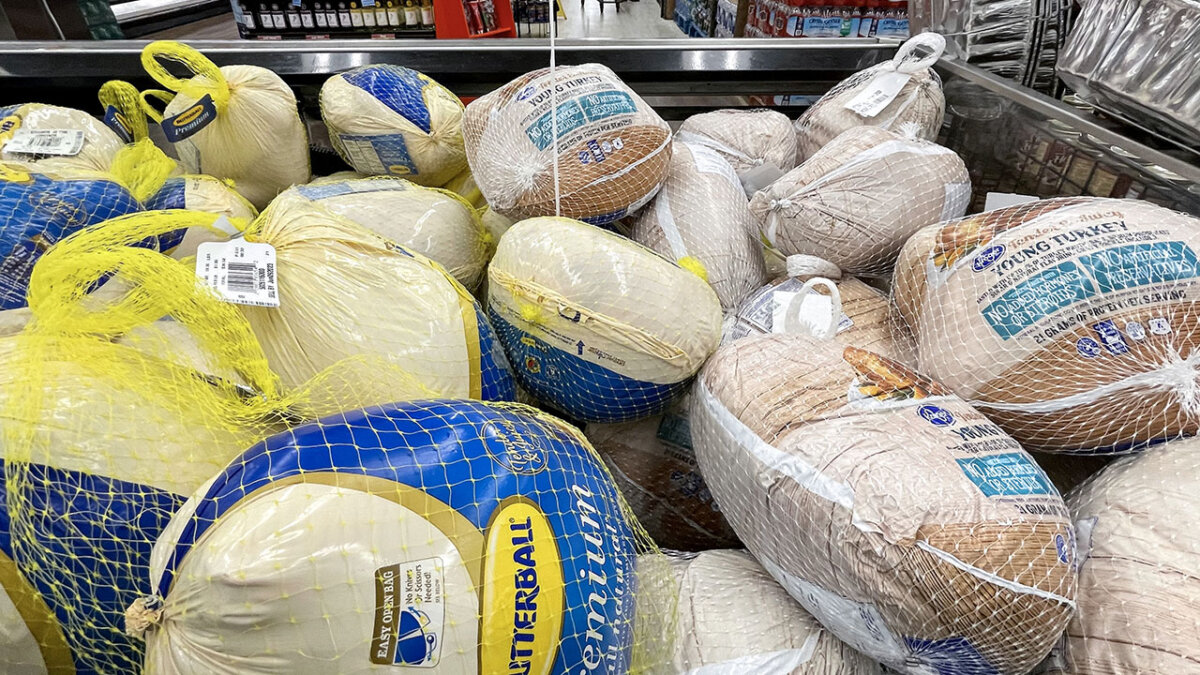

As Canadian food costs continue to climb, the average holiday turkey dinner will cost a family of four to six people $104.85, according to research from Dalhousie University’s Agri-Food Analytics Lab.
“As Canadians face higher food prices this holiday season, many are exploring innovative ways to celebrate, emphasizing the spirit of togetherness and shared joy, regardless of the menu on the table,” Agri-Food Analytics Lab director Dr. Sylvain Charlebois said in the report.
The price of turkey has risen by five percent, the price of potatoes 6.6 percent, and the price of carrots 12.8 percent since 2022, Mr. Charlebois, also known as the ‘Food Professor,’ said.
High food prices may convince many Canadians to shift away from traditional turkey and stuffing toward lower-cost alternatives, the report said. Switching out turkey for ham, for instance, would reduce the cost of the meal by approximately $7.79 on average.
Mr. Charlebois also said cutting costs around Christmas may not require “sacrificing our most beloved meal items” and that searching the internet for low-cost dish ideas is also an option.
“This is an opportunity to share not only the cost of the meal, but also the enjoyment, without putting too much financial and social pressure on the host or the guests,” he said.
Last year, Agri-Food Analytics Lab’s annual Canada’s Food Price Report predicted a five to seven percent food price increase in 2024, with the most substantial increases in the cost of vegetables, dairy, and meat. The report predicted that the average family of four would spend up to $16,288.41 per year on food, an increase of up to $1,065.60 from 2022.
The 2022 report blamed higher food prices on destabilization from international events like the Russia-Ukraine War, high oil prices, the weakness of the Canadian dollar compared to the U.S. dollar driving up the cost of imported American goods, labour shortages in crucial food sectors, and adverse climate events.
According to a Statistics Canada report from July, food prices are on average 20 percent higher than in 2021, causing roughly half of Canadians surveyed to seek out sales or promotions, or to buy cheaper food brands or alternatives.
An April model from the Agri-Food Analytics Lab forecasted that, compared to 2022, wholesale food prices in Canada, before goods are sold to grocers, will rise by 34 percent on average for all food categories by 2025. The model, created using historical data and machine learning, predicted that restaurant foods would go up by 46 percent, meats by 45 percent, dairy by 41 percent, fruits by 29 percent, bakery goods by 35 percent, seafood by 24 percent, and vegetables by eight percent by 2025.
 Friends Read Free
Copy
Facebook
Tweet
Friends Read Free
Copy
Facebook
Tweet