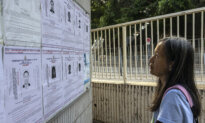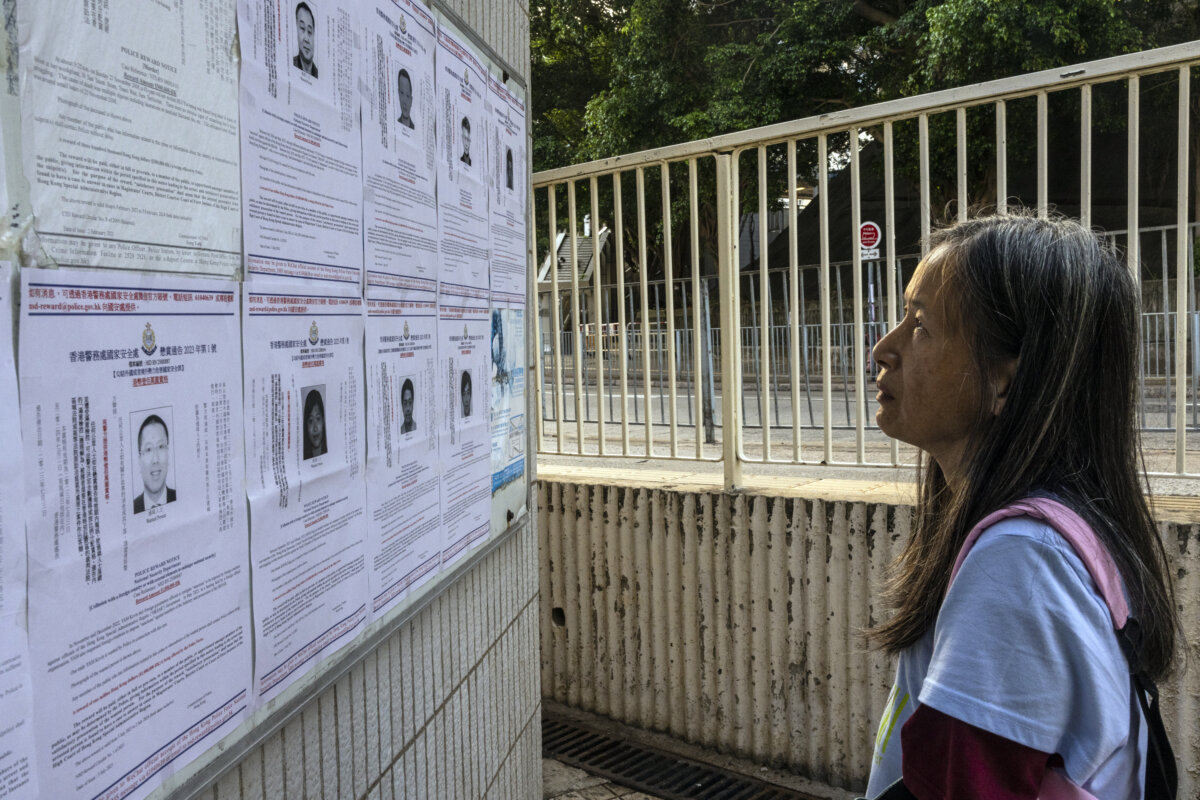
Authorities in Hong Kong on Aug. 4 canceled the passports of 12 activists based overseas, 10 days after arrest warrants were issued, accusing them of subversion under a national security law.
On July 25, a total of 19 activists were accused of organizing, establishing, or taking part in a group called the “Hong Kong Parliament.”
Three of the 19—Elmer Yuen Gong-yi, Johnny Fok Ka-chi, and Choi Ming-da—had their passports canceled last year, and now, the remaining 16 have been subjected to the same special measures, which include the banning of any financial support for them.
Among the 16 are Victor Ho, former chief editor of Chinese-language newspaper Sing Tao Daily; Vancouver-based Keung Ka-wai; Chongyi Feng, an associate professor in China studies at the University of Technology Sydney; and U.S. citizen Gong Sasha.
The Hong Kong government said in a statement that it had canceled travel documents for 12 of the 16 who hold Hong Kong passports.
It also banned anyone from leasing properties to the 16 activists—who it referred to as “specified relevant absconders”—or forming joint commercial ventures with them. Transgressors could face up to seven years in prison.
‘Transnational Repression’
The statement quoted an unnamed government spokesperson as saying: “These lawless wanted criminals are hiding in the United Kingdom, the United States, Canada, Germany, Australia, Thailand, China’s Taiwan region, etc, and continue to blatantly engage in activities that endanger national security.
“They also intended to incite hatred through smear and slander against the central authorities and the HKSAR [Hong Kong Special Administrative Region]. We therefore have taken such measures to make a significant impact.”
The Hong Kong government stated that the new measures had been imposed by Hong Kong’s secretary for security, Chris Tang.
In 2020, the Treasury Department sanctioned Tang for undermining Hong Kong’s autonomy and “restricting the freedom of expression or assembly of the citizens of Hong Kong.”
After the arrest warrants were issued last month, Secretary of State Marco Rubio criticized the move.
In a statement on July 26, Rubio said: “The extraterritorial targeting of Hong Kongers who are exercising their fundamental freedoms is a form of transnational repression.
“We will not tolerate the Hong Kong government’s attempts to apply its national security laws to silence or intimidate Americans or anyone on U.S. soil.”
The Hong Kong office of the Chinese Foreign Ministry responded to Rubio’s criticism, saying the action it had taken was legitimate.
Hong Kong Police accuse the individuals of having violated Article 22 of the Hong Kong National Security Law, which was imposed by Beijing in 2020 following months of pro-democracy protests in 2019.
The law significantly eroded freedoms promised by the Chinese communist regime when the UK agreed to hand back the former British territory to China in 1997.
But the governments in Beijing and Hong Kong said the security laws were necessary to ensure the stability of the former British colony.
The 16 activists are named in the Hong Kong government statement as Victor Ho, Chan Lai-chun, Feng Chongyi, Gong Sasha, Ng Man-yan, Tsang Wai-fan, Chin Po-fun, Paul Ha Hoi-chun, Hau Chung-yu, Ho Wing-yau, Keung Ka-wai, Tony Lam, Agnes Ng, Wong Chun-wah, Wong Sau-wo, and Zhang Xinyan.
Hong Kong authorities have offered rewards of up to HK$1 million (US$127,400) for information leading to the arrest of the 19 activists.
Britain’s extradition treaty with Hong Kong was suspended after the national security law was introduced in 2020, but a statutory instrument was introduced in the House of Commons on July 17 that would allow extradition cases to the former colony to be considered on a “case-by-case” basis.
Conservative member of Parliament Alicia Kearns described it as “highly concerning” and wrote on X, “Why does the government deem this reasonable when freedom of expression, political freedom, and the rule of law in Hong Kong have been crushed by the National Security Law and the extradition of Hong Kongers to mainland China made possible?”
The Associated Press contributed to this report.
 Friends Read Free
Copy
Facebook
Tweet
Friends Read Free
Copy
Facebook
Tweet