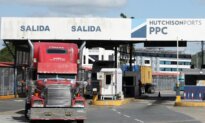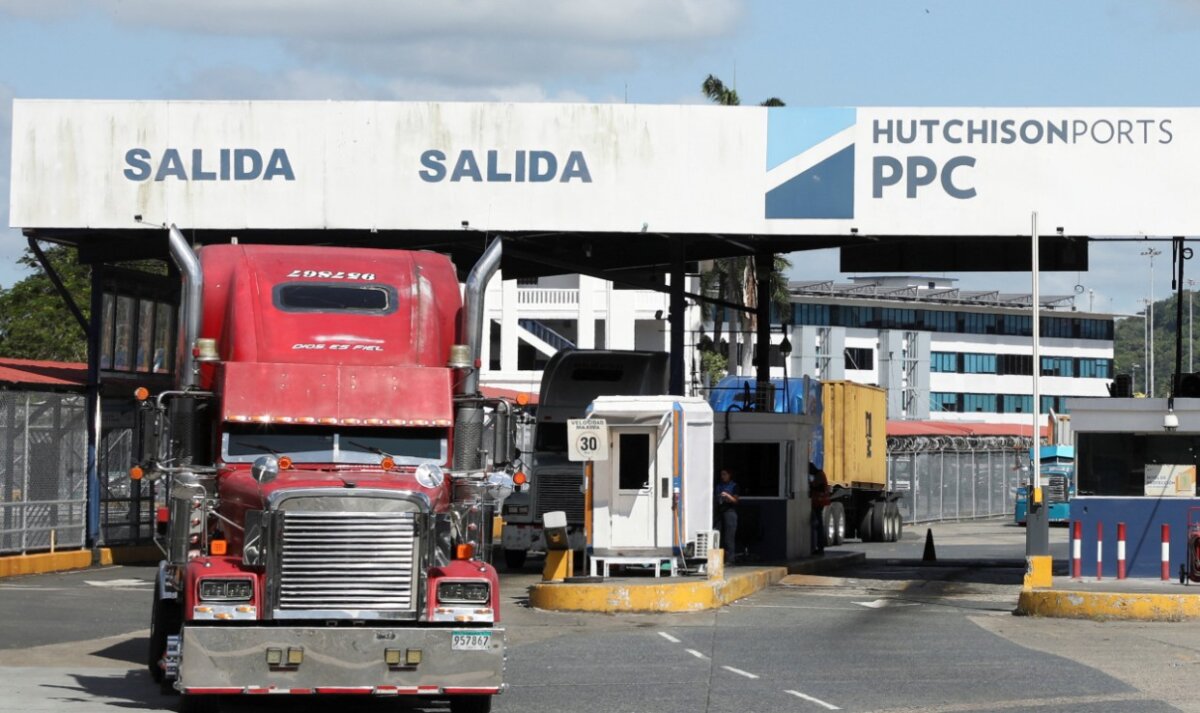
A subsidiary of Hong Kong-based company CK Hutchison has launched arbitration proceedings against the Danish shipping giant Maersk over the takeover of two ports at either end of the Panama Canal, which were at the heart of a power struggle between Washington and Beijing.
In an April 7 statement, Panama Ports Company (PPC) said Maersk broke a long-term contract in February, when it sided with the Panamanian government to help remove it from the Port of Balboa.
The Panamanian government’s move reversed concessions for the Balboa and Cristobal terminals held by PPC, a unit of CK Hutchison Holdings, which had managed the ports for 30 years.
Panama’s Supreme Court ruled on Jan. 29 that the concessions were unconstitutional, noting irregularities in a 25-year extension granted in 2021, according to an audit by the country’s comptroller.
The Port of Cristobal is now being run by the Switzerland-based Mediterranean Shipping Company (MSC), and the Port of Balboa is being temporarily run, for up to 18 months, by APM Terminals Panama, which is affiliated with Maersk.
PPC and its Hong Kong-based parent company have focused their ire on Maersk.
‘Notorious’ Expulsion From Panama
“It is already notorious that, on 23 February 2026, Panama expelled PPC from port operations through extreme executive measures, took over the port terminals, and entered into a pre-arranged concession contract for the Balboa terminal with a new operator [APM Terminals Panama] that is affiliated with Maersk and has utilized PPC operational facilities and information,” PPC said in the statement.
The Panamanian court ruling in late January followed extended pressure from the U.S. government, which initially said it wanted to take over the Panama Canal to curb Chinese influence over the waterway, which carries about 5 percent of all maritime trade.
In December 2024, while he was U.S. president-elect, Donald Trump said he would take back the Panama Canal if Washington’s rights were not respected, citing the 1977 treaty signed by then-President Jimmy Carter and the then-Panamanian leader Omar Torrijos.
The canal is Panama’s single largest source of income and generated $5.7 billion in revenue for the country in fiscal year 2025.
In October 2025, the number of vessel transits through the canal increased to 13,404 for the year ending on Sept. 30, 2025, up by 19.3 percent on the preceding 12-month period.
Beijing has accused the United States of using “bullying tactics” in Panama.
However, earlier this month, U.S. Secretary of State Marco Rubio said Beijing’s decision to detain or hold up dozens of Panama-flagged ships in China “erodes confidence in the global trading system.”
“The United States stands with Panama against any retaliatory actions against its sovereignty and will always support our partners in the face of bullying,” Rubio said in a post on X on April 2.
PPC started arbitration proceedings against Panama in February, and in March, expanded its claims, saying it wanted more than $2 billion in damages.
In a statement on March 6, CK Hutchison accused the Panamanian state of not being transparent in its dealings, saying it unlawfully “occupied the ports and took the property and personnel of PPC.”
Sale to BlackRock Stalls
The dispute over the two ports in Panama also complicated CK Hutchison’s plans to sell a majority stake in its global ports business for $23 billion to a consortium led by U.S. investment company BlackRock and MSC.
In March 2025, CK Hutchison said it had agreed to a deal with a consortium led by BlackRock.
But within days, China’s Hong Kong and Macao Affairs Office reposted a commentary criticizing the deal as a betrayal of China.
The sale of the majority stake has stalled, and last month, the Financial Times reported that BlackRock wanted to push it through without the ports in Panama.
Although the Trump administration denies influencing Panama’s decision to expel PPC from the ports, it was seen as a success for the White House, which wishes to regain dominance in the Western Hemisphere and reduce Chinese influence, according to the Foundation for Defense of Democracies, a Washington-based think tank.
The White House said in November 2025, when it unveiled its new National Security Strategy, that it plans to revive the Monroe Doctrine, a U.S. policy that pushed back against European influence in the New World.
“After years of neglect, the United States will reassert and enforce the Monroe Doctrine to restore American preeminence in the Western Hemisphere, and to protect our homeland and our access to key geographies throughout the region,” the White House stated.
The Associated Press and Reuters contributed to this report.
 Friends Read Free
Copy
Facebook
Tweet
Friends Read Free
Copy
Facebook
Tweet