
News Analysis
The Canadian government has made electric vehicles (EV) a priority over the last few years, with sizable funding for battery factories, a rebate program to improve affordability, and a mandate to phase out the purchase of new gas-powered vehicles by 2035.
But with the U.S. government signing resolutions blocking a similar EV mandate in California and some 17 other states, coupled with continued issues related to affordability, Ottawa’s plan could be facing increasing obstacles.
Jerome Gessaroli, a finance professor at the British Columbia Institute of Technology, notes that the U.S. government’s new regulations impact around one-third of the country’s vehicle market, which would have downstream effects for Canada.
“When you take out that big chunk of EV mandates—35 to 40 percent of the U.S. vehicles—it will affect what the automakers plan on doing,” he told The Epoch Times, noting that some automakers have already begun cancelling or delaying EV projects.
“So, if Canada tried to keep its EV policies when the U.S. had none—and we’re such a small market relative to the U.S. market—then supplying them could be difficult.”
David Checkel, a professor emeritus of mechanical engineering at the University of Alberta, said if the Canadian government wants to keep its EV plan, it may have to push back its ban on the purchase of new gas-powered vehicles if the U.S. regulations stay in place.
“This has a big effect on Canada simply because of the way the auto industry works. There’s less overall market. There will be less models produced and fewer vehicles produced, certainly in the U.S. and the rest of the world,” he said in an interview.
Brian Kingston, president and chief executive officer of the Canadian Vehicle Manufacturers’ Association, told reporters on July 2 that the government’s EV mandate “is not sustainable.”
“The targets that have been established cannot be met,” Kingston said.
For now, however, the federal government doesn’t appear to be changing course. On June 17, the Liberal government reaffirmed its commitment to EVs by opposing a Conservative Party motion to scrap the EV sales mandates.

America Versus Canada on EVs
While U.S. states and cities have long been prevented from enacting their own vehicle regulations that are stricter than federal standards, California has been granted numerous waivers under the Clean Air Act.
Then in 2019, during his first term, President Donald Trump rescinded an Environmental Protection Agency (EPA) waiver allowing California to set its own greenhouse gas emission standards and zero-emission vehicle sales mandate.
U.S. President Joe Biden restored that authority for the state in 2022, and that year California adopted regulations to require all new passenger cars, trucks, and SUVs sold in the state to be zero emission by 2035.
Trump again blocked California’s landmark vehicle emissions mandates via a package of resolutions he signed on June 12, 2025. These included overturning the state’s plans to phase out the sale of new gasoline-only vehicles by 2035, rolling back low-nitrogen oxide regulations for heavy-duty trucks, and again rescinding an EPA waiver that allows the state to enforce stricter vehicle emissions standards. California is challenging the federal government in the courts over the measures.
The resolutions don’t just apply to California, as 17 other states, including the populous states of New York, Washington, Virginia, New Jersey, and Massachusetts, had signed on to California’s vehicle emissions mandates.
To further complicate matters for the states’ EV agendas, the U.S. Supreme Court ruled on June 20 that fuel producers had the right to challenge California’s vehicle emissions standards. This overruled a lower court’s 2024 decision to reject a lawsuit by oil and gas companies and 17 Republican-led states to challenge California’s EPA waiver, saying the energy companies couldn’t demonstrate they had standing to sue.
Trump is also cutting tax credits that incentivize EV purchases through his “Big Beautiful Bill.”
The Institute for Energy Research in a February 2025 commentary cited a Wood Mackenzie forecast estimating that Trump’s calls to remove the EV-related subsidies and emissions waivers could reduce EV sales to 23 percent of market share by 2030 compared to the Biden administration’s earlier estimate of 32 percent of market share.
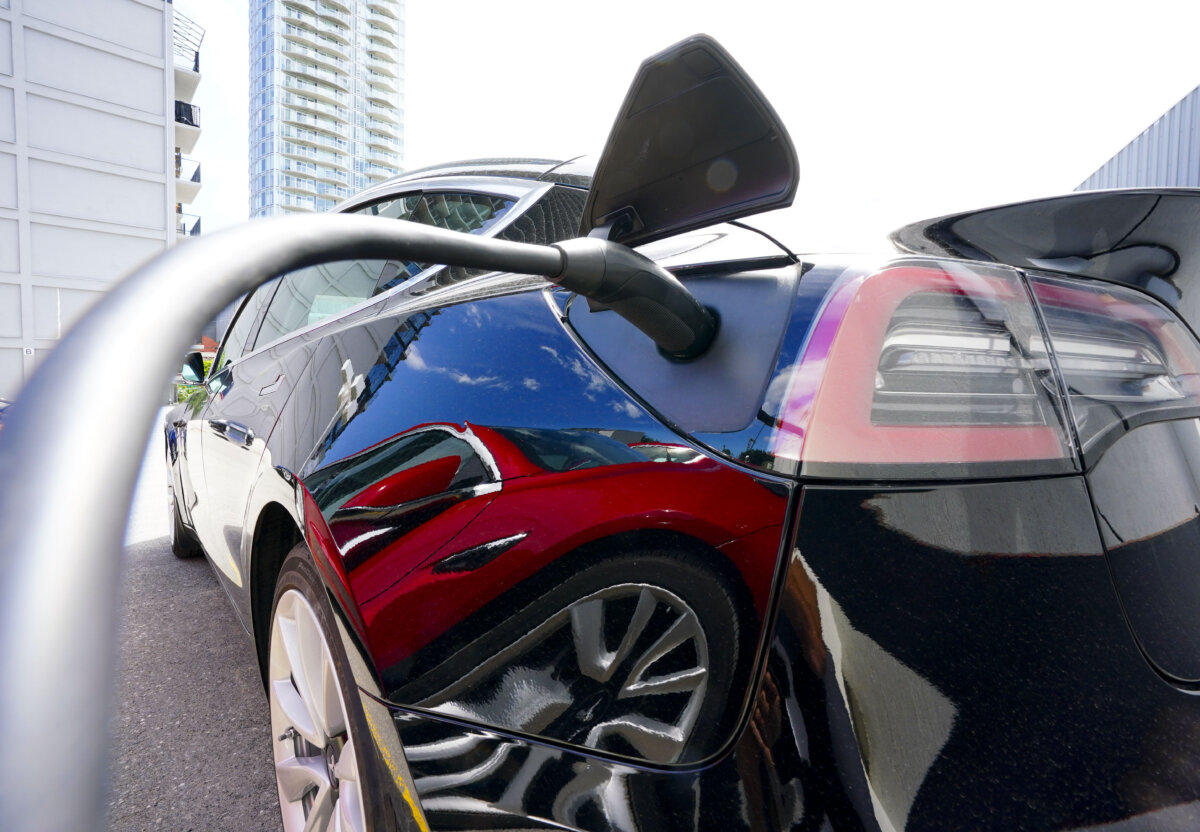
By contrast, Ottawa has prioritized EVs in recent years. In late 2023, the Liberals introduced new regulations that would require at least 20 percent of all new light-duty vehicles offered for sale in Canada to be zero-emission vehicles by 2026. Light-duty vehicles refer to passenger cars, SUVs, and pickup trucks. These include battery-electric vehicles fuelled only with electricity, fuel-cell vehicles that operate using hydrogen, and plug-in hybrid EVs. The requirements will then rise each year, hitting 60 percent by 2030 and 100 percent by 2035.
The EV mandate is part of the federal government’s overall plan to reduce greenhouse gas emissions to 40 percent below 2005 levels by 2030.
Canada has also drawn in about $46 billion in funds allocation for 13 EV, battery, and battery component manufacturing projects since 2020, providing subsidies for factories in cities like St. Thomas and Windsor.
Additionally, Ottawa put forth an incentive program for light-duty EVs, providing buyers with purchase rebates of up to $5,000. Though that program was set to end in March 2025, the government has signalled it will be bringing it back. The Liberals have also said they will expand Canada’s EV charging network by supporting the building of thousands of new stations by 2027.
The Conservative Party has opposed the EV mandate, as has Alberta Premier Danielle Smith. Deputy Conservative Leader Melissa Lantsman has argued that Canada does not have the charging stations and electrical infrastructure for the EV mandate to be viable.
The Conservatives on June 17 put forward a non-binding motion in the House of Commons to overturn the federal EV mandate in order to “allow Canadians the choice to purchase any vehicle that meets their needs at a price they can afford.” However, the motion failed thanks to the Liberals, New Democrats, and Bloc Québécois.
The new Liberal government under Prime Minister Mark Carney has turned away from some of Justin Trudeau’s net-zero emissions policies, such as the controversial consumer carbon tax that Carney ended in March soon after he took office. However, Carney has maintained several others that have been fiercely opposed by energy-rich provinces including Alberta, such as the industrial carbon tax, the Impact Assessment Act, the oil tanker ban on B.C.’s north coast, emissions caps on the oil and gas sector, EV mandates, as well as legislation affecting plastic production.
While the Canadian and U.S. federal governments differ in their approach to domestic EVs, the two are aligned when it comes to China. In 2024, the two countries placed 100 percent tariffs on Chinese EVs in order to prevent cheap Chinese vehicles from flooding their markets.
Impact on Canada
Before the U.S. government blocked the California EV mandate, some cracks were already beginning to show in Canada’s EV plan, which including billions in subsidies to increase domestic EV and battery production.
In March, Swedish EV battery manufacturer Northvolt announced it has filed for bankruptcy. The company had planned to build a $7 billion factory in Quebec.
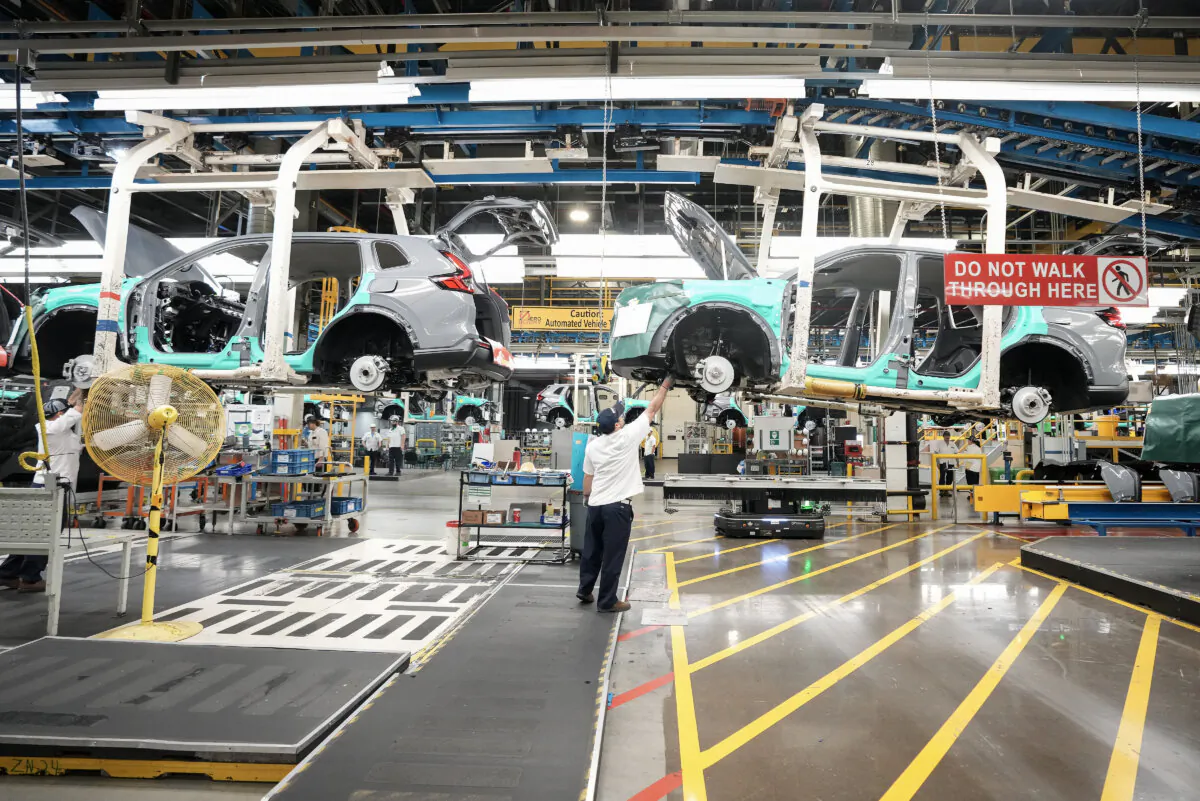
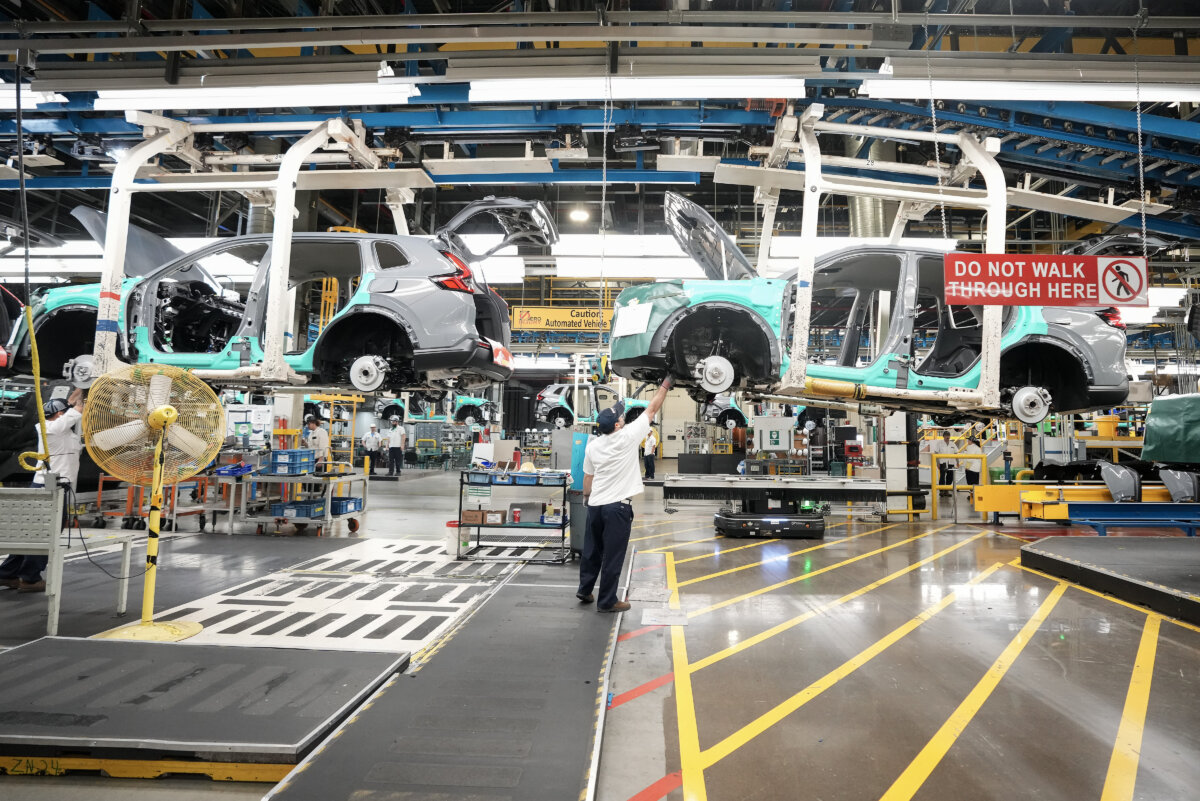
Honda Canada then announced in May that it has decided to postpone for two years a $15 billion EV project in Ontario, including a planned EV battery manufacturing facility and an upgraded vehicle assembly plan, after market growth for EVs “slowed more than initially expected.”
The federal government and two provincial governments had earlier agreed to provide billions of dollars in subsidies to the two companies. Ottawa and Quebec announced a production subsidy of up to $4.6 billion for Northvolt, while Honda was eligible to receive up to $5 billion of support from Ottawa and Ontario.
In the first quarter of 2025, Canada saw a 54 percent drop in the number of EVs registered (37,229) compared to the previous quarter (81,216). Statistics Canada attributed the decline to Quebec pausing its EV rebate program for two months, from February to March, due to a lack of funds. In March, new EVs comprised just 6.5 percent of all new vehicles sold in Canada, while in April, they comprised 7.5 percent.
This is against the backdrop that EV affordability has been an ongoing issue in Canada, with the Parliamentary Budget Officer (PBO) estimating that the price of battery-electric vehicles would need to fall by around one third in order to meet Ottawa’s 2030 sales target of 60 percent by 2030. The PBO noted that while the return of the government’s EV rebates will increase affordability, the ending of the consumer-facing carbon tax and lower fuel prices have made traditional internal combustion engine vehicles more affordable.
An AutoTrader survey conducted between Feb. 13 and March 12 indicated just 42 percent of respondents were considering an EV as their next vehicle, down from 46 percent in 2024. That figure was 68 percent in 2022. The survey of 1,801 people reported that drivers were concerned about reduced government incentives, inadequate infrastructure to support the vehicles, and long-term costs.
Federal research in 2024 saw a similar downtrend in Canadians looking to buy EVs, with a survey conducted between Jan. 17 and Feb. 7, 2024, indicating that only 36 percent of respondents have considered purchasing or leasing a EV, compared to 51 percent in 2022. The poll also suggested that 75 percent of Canadians believe EVs are too expensive. In addition, over half of Canadians think that there are too few charging stations available and that EVs perform poorly in cold weather and can’t travel far enough on a full charge.
Gessaroli says EVs remain too expensive for lower-income and lower-middle-income households, even with federal rebates. He said that while the cheapest way to charge EVs is often at home, many lower-income people live in apartments and don’t have this option.
That point has been borne out by a Canadian Automobile Association survey conducted in the fall of 2024, which indicated that those living in apartments or condominiums are much less likely to switch to EVs than those living in single family homes.
Gessaroli also noted that with the integration between the Canadian and American auto industries, EV affordability will be harmed further if there is not a consistent auto policy throughout North America.
“If the U.S. goes one way, and we don’t maintain quite a rigid stance, then there will be some misallocation of resources and the compliance will create some distorted market signals that are going to lead to a situation where the market doesn’t function as well as it could,” he said.
Meanwhile, a group of 11 states led by California has filed a lawsuit challenging Trump’s move to revoke waivers for California’s EV mandate.
Checkel said that while the situation surrounding EVs in the United States is currently “uncertain,” he predicts the mandate will stay cancelled for at least the next three years. He said this will lead to Canadian consumers seeing fewer choices for EVs, on top of already having higher regulatory costs when it comes to introducing newer models into the country.
“I’m sort of waiting to see if the other shoe drops on vehicle mandates [in Canada] as the Americans back off,” he says.
 Friends Read Free
Copy
Facebook
Tweet
Friends Read Free
Copy
Facebook
Tweet