
European Union lawmakers are meeting with Chinese officials and representatives from Shein, Alibaba, and other marketing giants during a visit to Beijing this week, highlighting consumer protections.
The European Parliament’s Committee on the Internal Market and Consumer Protection (IMCO) is on its first such mission in eight years, with a goal of curbing the volume of dangerous products via small parcels coming into the EU from China’s e-commerce giants and balancing digital trade.
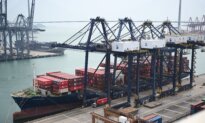
The EU considers its trade relationship with China imbalanced, noting a trade deficit of 305.8 billion euros ($355 billion) in 2024 that grew to 359 billion euros ($417 billion) in 2025. In recent years, the European Parliament has opened several investigations into Chinese exports, warning that the nation has an oversupply problem and risks flooding the global market.
According to IMCO, more than 90 percent of the 5.9 billion small packages that entered the EU in 2025 came from China, which also accounts for more than 40 percent of dangerous product alerts in small packages.
The trip, from March 31 to April 2, comes on the heels of the EU’s updating its customs code to no longer exempt small packages from tariffs and shifting the burden of reporting and compliance to e-commerce operators.
Lawmakers met with Alibaba on April 1, which member of Parliament Christel Schaldemose said had agreed to show results in three months.
“They have a huge, huge, huge business, and they’re very efficient, and they use [artificial intelligence] and, you know, they’re way ahead of us when it comes to how you organize and do business,” said Schaldemose, former rapporteur for the Digital Services Act, a package of sweeping regulations governing online services and platforms.
“So that’s why I asked them, ‘Since you’re also good and efficient, why can’t you then make sure that no non-compliant products come into EU?'”
Schaldemose said that Chinese assurances to “wait and see” have not always panned out and that the EU would be continuously monitoring for compliance.
Member of Parliament Andreas Schwab described Alibaba as a “gatekeeper” of the digital market, raising monopoly concerns.
“Our concern is that companies like Alibaba, they structure the data flow in a way that other companies have no chance anymore to be part of the digital market,” said Schwab, a former rapporteur for the Digital Markets Act.
“It was very interesting to see that this is not only a concern for Europeans, but also for the Chinese, because also in China, you have that huge market of over 3 billion people, exactly the same risk of bottlenecks being created.”
The lawmakers also met with digital retailer Shein on April 1 and “expressed their worries with the cofounder, Tony Ren, touching on [artificial intelligence] copyright issues, sustainability, forced labor,” and compliance with EU laws, including standards governing dangerous and illegal products, Schwab said.
The EU has opened broad probes into these e-commerce giants over noncompliance with the Digital Services Act. It began an investigation into Shein in February over what it called the platform’s “addictive design” and sales of illegal items, including “child sexual abuse material,” which drew scrutiny when French authorities discovered child-like sex dolls on the site and sought to ban access to Shein in France.
The EU is also investigating Temu for “addictive design” and illegal or dangerous products, and it is investigating Alibaba’s AliExpress for illegal products.
The delegation also met with China’s State Administration for Market Regulation on March 31, relaying “concerns on the high influx of dangerous & non-compliant products coming from China,” and expressed concerns with Chinese parliamentarians about consumer safety, forced labor, protection of minors, and EU company access to the Chinese market, according to X posts.
China has been criticized internationally for its practice of forced labor, most prominently through political prisoners such as the Uyghur minority in Xinjiang. The United States has said the Chinese regime systematically uses forced labor through persecuted Uyghurs and other minorities. In 2021, Congress enacted the Uyghur Forced Labor Prevention Act to prohibit the importation of these goods and to sanction perpetrators.
Although the EU has a law against forced labor, it is considered weaker than the U.S. law because it doesn’t require companies to show evidence that goods from Xinjiang did not involve forced labor.
 Friends Read Free
Copy
Facebook
Tweet
Friends Read Free
Copy
Facebook
Tweet