
India’s Hindustan Zinc Limited (HZL) is looking to mine rare-earth minerals, but it will take some time before the corporation and the country see results, the company’s CEO, Arun Misra, said during a Nikkei Asia interview published on July 1.
India, along with Western nations, are actively trying to source rare earths to avoid greater dependence on China, which wields an outsized control of global supply and uses rare earths as a bargaining chip in trade negotiations.
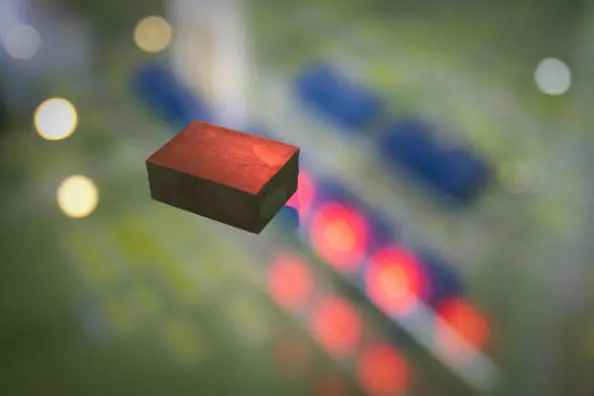
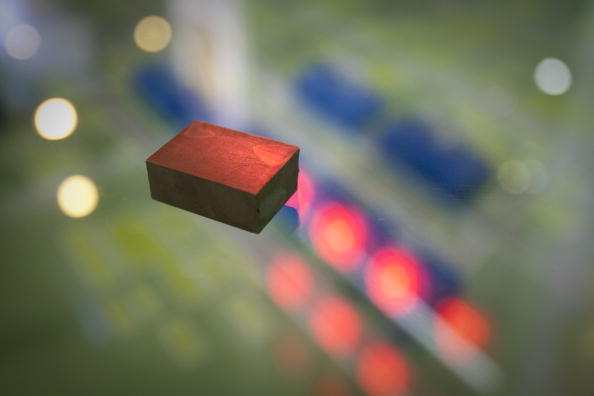
Rare earths are extremely vital components used in many modern technologies, ranging from electronics to medical devices. Misra said that HZL wants to mine and process neodymium, which is used for making very strong, permanent magnets. The silvery-white rare earth is used in electronic devices such as mobile phones, microphones, loudspeakers, musical instruments, car windshield wipers, and wind turbines.
HZL is part of Mumbai-based Vedanta Group, a natural resources conglomerate spanning India, South Africa, Liberia, and Namibia. HZL is one of the world’s leading zinc and silver producers.
However, there are considerable regulatory difficulties in building a robust domestic supply chain.
“[Rare earth] is of strategic interest [to India],” Misra told Nikkei. “The first part is exploration and mining, and that itself could take about three or four years, because we have to evaluate [the quantity and quality] of the reserves.”
The country will benefit if the federal government allows for private-sector mining of monazite—a mineral source of neodymium—in beaches of certain Indian states, he said. HZL recently secured a national bid for a rare-earth element block.
India is the fifth-largest in terms of rare-earth resources in the world, according to the country’s Department of Atomic Energy. Analysts have called for collaboration efforts with the United States to reduce global reliance on China.
Following China, other countries with major rare-earth reserves are Vietnam, Russia, and Brazil, according to Statista.
“What is known is the [monazite content] in sea beaches, because rare-earth mining has happened there for the last so many years,” Misra said. “If monazite is decontrolled and allowed to be mined with private participation, and companies like ours participate, it will help India make magnets.”
Loosening China’s Stronghold
China already produces well more than 90 percent of the world’s rare-earth permanent magnets, and every high-temperature version needs “just a little bit of dysprosium or terbium” that only Beijing supplies, said Mark Smith, a 30-year industry veteran and CEO of U.S. miner NioCorp Developments. China also dominates in refining rare earths.
On April 4, Beijing issued new export-control rules requiring special permits for magnets and seven heavy rare-earth elements that it monopolizes: samarium, gadolinium, terbium, dysprosium, lutetium, scandium, and yttrium.
The controls cover every form of those elements—oxides, metals, alloys, mixtures, and finished magnets—vital to electric-vehicle motors, wind-turbine generators, industrial robots, precision-guided missiles, and more.
While speaking to The Epoch Times on June 23 before another round of closed-door meetings in Washington, Smith warned that the situation could “get very serious, very quickly.”
“We’re talking about shutting down automobile production lines and defense-contractor production lines,” he said.
On June 26, Washington and Beijing appeared to have finalized a deal meant to unblock rare-earth exports from China.
Two months earlier, on April 25, President Donald Trump signed an executive order launching an investigation into the national security risks posed by U.S. reliance on imported processed critical minerals.
The fact sheet said that the United States remained heavily dependent on foreign sources such as China for these essential materials, which exposes the nation to economic coercion.
On June 27, the United States negotiated a peace agreement between the Democratic Republic of Congo and Rwanda, where conflict had been going on since 2022.
The agreement included extending access to the critical minerals and precious metals of the African countries. China is a major player in Congolese mining. However, the Congolese have been unhappy in recent times with their Chinese association, particularly over mining agreements, and have sought to establish links with the United States.
Trump’s deal is expected to be a stability boon for Congo while also ensuring a steady mineral supply for the United States.
Sean Tseng contributed to this report.
 Friends Read Free
Copy
Facebook
Tweet
Friends Read Free
Copy
Facebook
Tweet