
Indian police have confirmed that Sajid Akram, the man killed after opening fire with his son at a Hanukkah celebration at Sydney’s Bondi Beach on Dec. 14, hailed from the southern Indian state of Telangana.
Telangana Police issued a statement on Dec. 16 to Reuters confirming that Akram left India nearly three decades ago and had minimal contact with his family after migrating to Australia.
Authorities said there was no evidence linking his radicalisation to India or any local influence in the state.
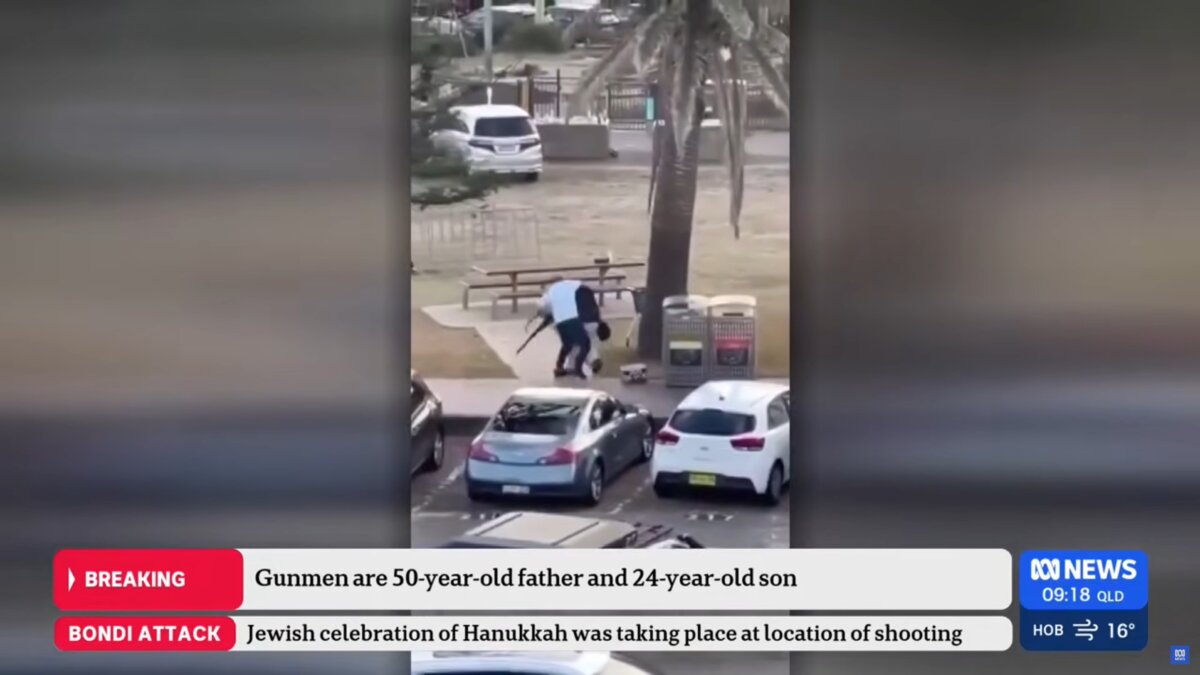
Akram, 50, and his son Naveed Akram, 24, are accused of killing 15 people and injuring dozens more in what Australian authorities have classified as a terrorist attack.
Sajid Akram was shot dead by police at the scene, while Naveed has just woken up from a coma.
Telangana Police Response
In a statement widely reported across Indian media, Telangana Police said Sajid Akram migrated to Australia in November 1998 after completing a Bachelor of Commerce degree in Hyderabad.
He later married an Australian woman of European origin and settled permanently in Australia. Sajid Akram continued to hold an Indian passport, while his children were born in Australia and are Australian citizens.
Authorities said Akram maintained “limited contact” with family members in Hyderabad over the past 27 years. He returned to India on six occasions, mainly for family-related matters.
Police said Akram did not travel to India at the time of his father’s death.
Relatives told investigators they had no knowledge of any extremist views or activities.
“There is no adverse record against Sajid Akram during his stay in India prior to his departure in 1998,” police said.
Telangana Police also said they would cooperate with central agencies and international counterparts as required. They urged the public and media to avoid speculation.
India Condemns Attack
India’s Ministry of External Affairs has not issued a formal statement. However, External Affairs Minister S. Jaishankar condemned the attack while on an official visit to Israel.
Jaishankar met Israeli President Isaac Herzog and held discussions with Foreign Minister Gideon Sa’ar and Economy and Industry Minister Nir Barkat.
“Let me first of all convey our very, very sincere, deep condolences at the loss of life due to the terror attack at Hanukkah celebrations in Bondi Beach. I want to say that we condemn it in the strongest possible terms,” Jaishankar said while addressing the press.
He said India and Israel both follow a policy of “zero tolerance” against terrorism.
IS Ideology Probed
Australian authorities say the Bondi Beach attackers were inspired by ISIS ideology.
The attack, which targeted a Jewish celebration, was quickly categorised as a terrorist incident.
Investigators found two Islamic State flags inside the vehicle used by the attackers at Bondi Beach. Police believe the father and son had sworn allegiance to the terrorist group.
Authorities are also examining the pair’s overseas travel.
According to the Philippine Bureau of Immigration, Naveed Akram and his father travelled to Davao City in the Mindanao region and remained there from Nov. 1 to Nov. 28.
As The Epoch Times previously reported, Naveed Akram had links dating back to 2019 with members of Australia’s pro–Islamic State network, including jihadist preacher Wisam Haddad and convicted IS youth recruiter Youssef Uweinat.
Beach to Reopen Amid Police Presence
Meanwhile, Bondi Beach is expected to reopen to the public three days after the attack.
The park where the Hanukkah event was being held, along with the adjoining pavilion, has remained closed since Dec. 14 as investigators conducted forensic and ballistic examinations.
Lanyon said that police had largely completed their work at the site and were preparing to return the area to public use once it was deemed appropriate.
“We have been facilitating access to some vehicles and other possessions that are within the crime scene, but I expect that we’ll formally return that to the public this afternoon,” he told ABC radio.
Despite the reopening, Lanyon said police would maintain a heightened presence across Sydney’s eastern suburbs, particularly around places of worship.
He confirmed that around 330 officers are being deployed around the area.
 Friends Read Free
Copy
Facebook
Tweet
Friends Read Free
Copy
Facebook
Tweet