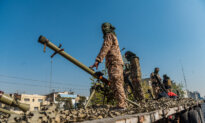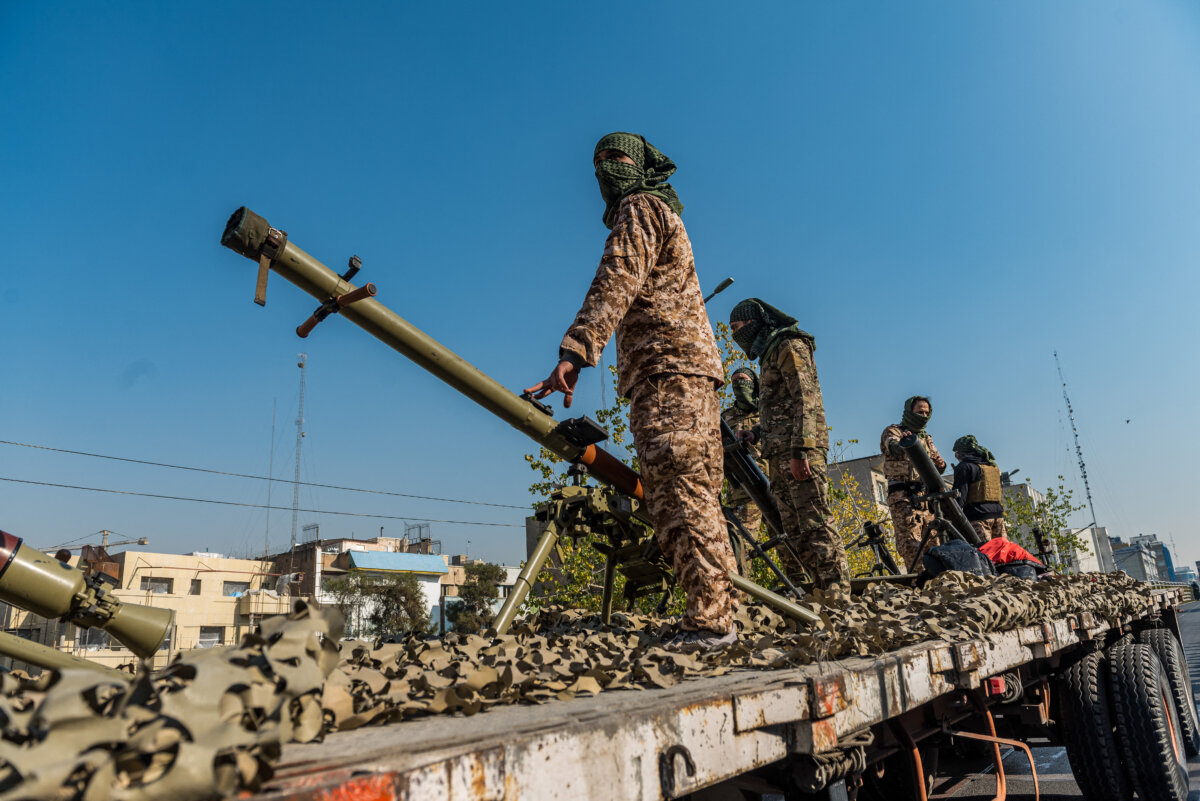


Iranian forces fired on two commercial vessels near the Strait of Hormuz on April 22, UK maritime authorities said, hours after U.S. President Donald Trump announced an extension of a fragile ceasefire with Tehran.
UK Maritime Trade Operations said in an April 22 incident report that a container ship was attacked by an Islamic Revolutionary Guard Corps (IRGC) gunboat about 15 nautical miles northeast of Oman, causing “heavy damage” to the vessel’s bridge. The crew was reported safe, and there were no fires or environmental impact.
In a separate incident, another cargo vessel was fired upon about eight nautical miles west of Iran and forced to stop, UK Maritime Trade Operations said. No damage or injuries were reported.
Iran’s state-run Tasnim News Agency, in a post on X, described the first incident as an enforcement action against a ship that had ignored warnings, characterizing the attack as part of Tehran’s maritime control measures in the region.
Tasnim later reported that the IRGC had seized two vessels—the MSC Francesca and the Epaminondas—and escorted them to Iranian shores, the first time Iran had seized ships since the start of the war.
The two vessels were confirmed as “seized” by maritime traffic monitoring service TankerTrackers, which said in a post on X that a third ship—the Euphoria—also came under fire on April 22 and may also have been seized.
Ship Seizures Don’t Violate Ceasefire: White House
The ship seizure incidents come during an ongoing ceasefire between Iran and the forces of the United States and Israel. On Tuesday, Trump extended the ceasefire beyond its original two-week period, saying he wanted to provide additional time for Pakistani mediators to work with Iran’s internally divided leadership to formulate a plan for further peace talks.
In an interview with Fox News on Wednesday, White House press secretary Karoline Leavitt said Trump didn’t view the IRGC’s decision to seize the vessels as a violation of the current ceasefire, because the vessels did not belong to the United States or Israel.
“These were not U.S. ships. These were not Israeli ships. These were two international vessels,” she said.
Leavitt said American media organizations had exaggerated the severity of the incident to discredit Trump’s claims that U.S. forces had significantly degraded Iran’s naval power in recent military operations.
“These two ships were taken by speedy gunboats,” Leavitt said. “Iran has gone from having the most lethal Navy in the Middle East to now acting like a bunch of pirates.”
Partway through the initial two-week ceasefire period, Trump ordered U.S. forces to begin enforcing a blockade of Iranian ports, to stifle Tehran’s access to revenues from international trade.
As he announced the ceasefire extension on Tuesday, Trump said the U.S. blockade of Iranian ports would remain in effect.
U.S. forces have conducted several interdictions of vessels suspected of carrying sanctioned Iranian cargo.
The U.S. Central Command said in an April 21 post on X that 28 vessels have been ordered to turn around or return to port since the blockade began.
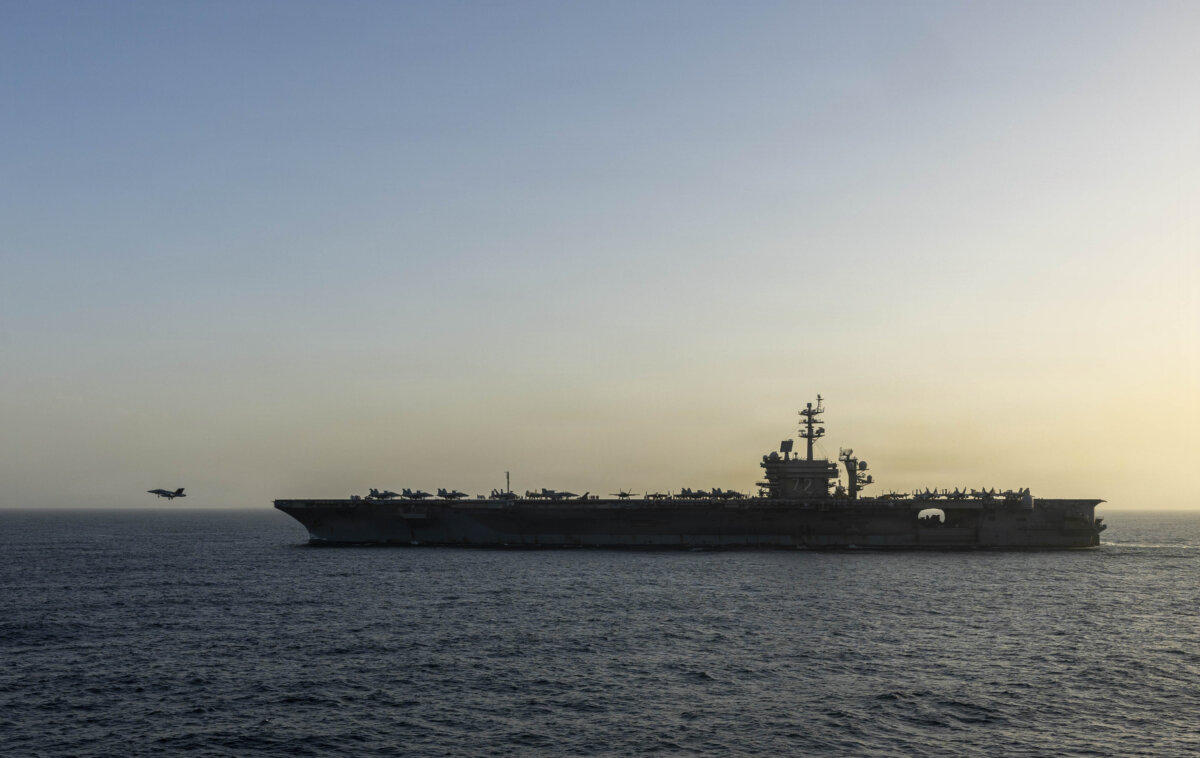
Gen. Dan Caine, chairman of the Joint Chiefs of Staff, said last week that the blockade would extend beyond Iranian waters and that U.S. forces in other theaters such as the Pacific were poised to “pursue any Iranian-flagged vessel or any vessel attempting to provide material support to Iran.”
Iran Denounces Blockade, Threatens Retaliation
Iran has condemned the U.S. blockade as a violation of the truce and an act of war, and it has warned of retaliation.
“Blockading Iranian ports is an act of war and thus a violation of the ceasefire,” Iranian Foreign Minister Abbas Araghchi said in an April 21 post on X.
He also criticized a recent move by U.S. forces to fire at an Iran-flagged ship’s engine room and seize it during its enforcement of the naval blockade.
“Striking a commercial vessel and taking its crew hostage is an even greater violation,” Araghchi said. “Iran knows how to neutralize restrictions, how to defend its interests, and how to resist bullying.”
The IRGC has also warned that it is prepared to respond forcefully to any renewed hostilities.
Diplomatic efforts to settle the conflict have hit a roadblock. Iran’s U.N. ambassador told Tasnim that Tehran is prepared to resume negotiations with the United States only after Washington ends its naval blockade.
Iran has also argued that, under maritime law, the narrow geography of the Strait of Hormuz—less than 24 nautical miles across at its narrowest point—places much of the waterway within overlapping territorial seas of Iran and Oman, bolstering Tehran’s claim to impose navigation rules, including tolls.
The United States and various other nations have called for freedom of navigation through the strait, through which about one-fifth of global seaborne oil and gas normally travel.
 Friends Read Free
Copy
Facebook
Tweet
Friends Read Free
Copy
Facebook
Tweet