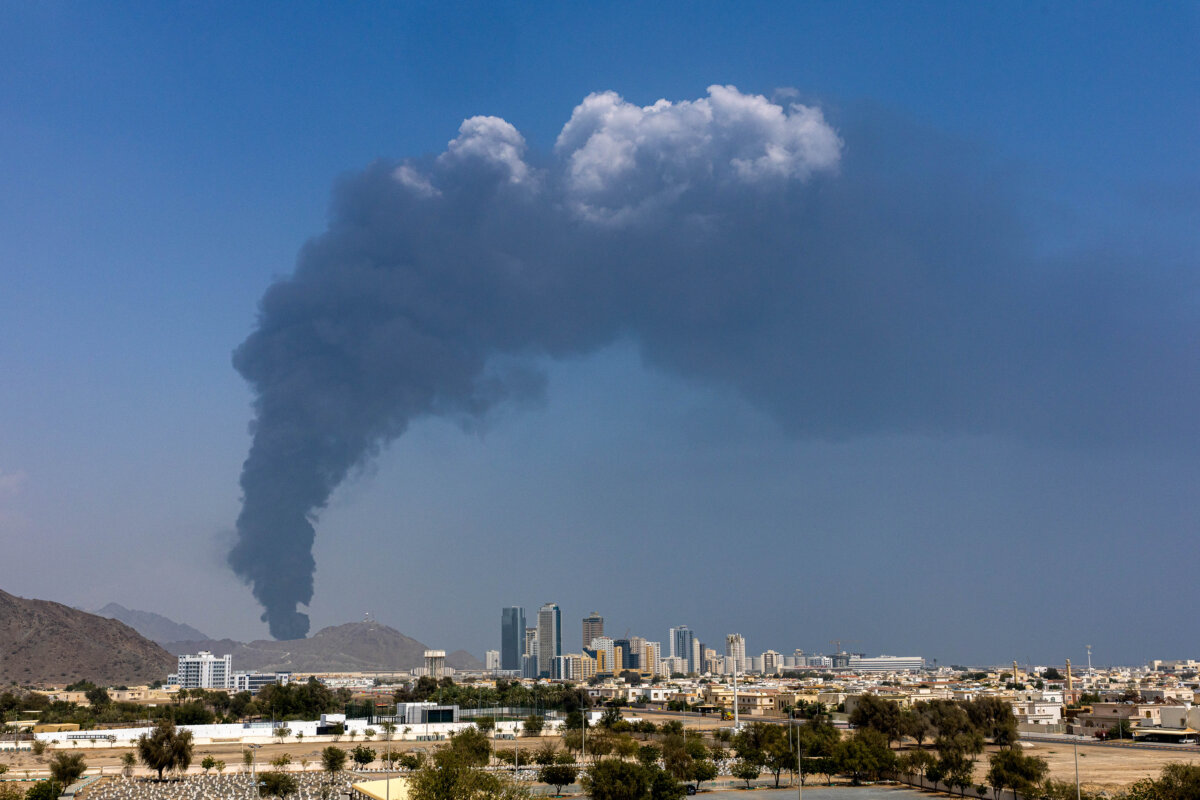

Iran launched a new wave of missile and drone attacks on Israel and several Gulf Arab countries on March 10.
Air defense systems were activated across the Gulf as authorities in the United Arab Emirates, Bahrain, Saudi Arabia, and Kuwait reported intercepting incoming threats from Iran.
The UAE’s Ministry of Defence said in a March 10 post on X that its air defenses were responding to incoming missiles and drones. The ministry urged the public to follow safety instructions.
Authorities in Bahrain also sounded emergency sirens as potential threats approached.
“Citizens and residents are urged to remain calm and head to the nearest safe place,” Bahrain’s Ministry of Interior said in a March 10 statement on X.
Saudi Arabia reported intercepting several Iranian drones over its territory. The kingdom’s Ministry of Defense said in posts on X that air defenses destroyed two drones in the eastern region and another east of Al-Kharj governorate.
Kuwait’s National Guard said its forces shot down six drones near sites north and south of the country. Brig. Gen. Jadaan Fadel Jadaan, spokesperson for the National Guard, said in a post on X that National Guard forces, working with the army, police, and the General Fire Force, were on high alert to safeguard the country’s sovereignty and stability.
Israel also reported missile launches from Iran early on March 10.
The Israeli Air Force (IAF) said in a post on X that Israeli defense systems were working to intercept the threat. Authorities instructed residents in affected areas to seek shelter and remain there until further notice.
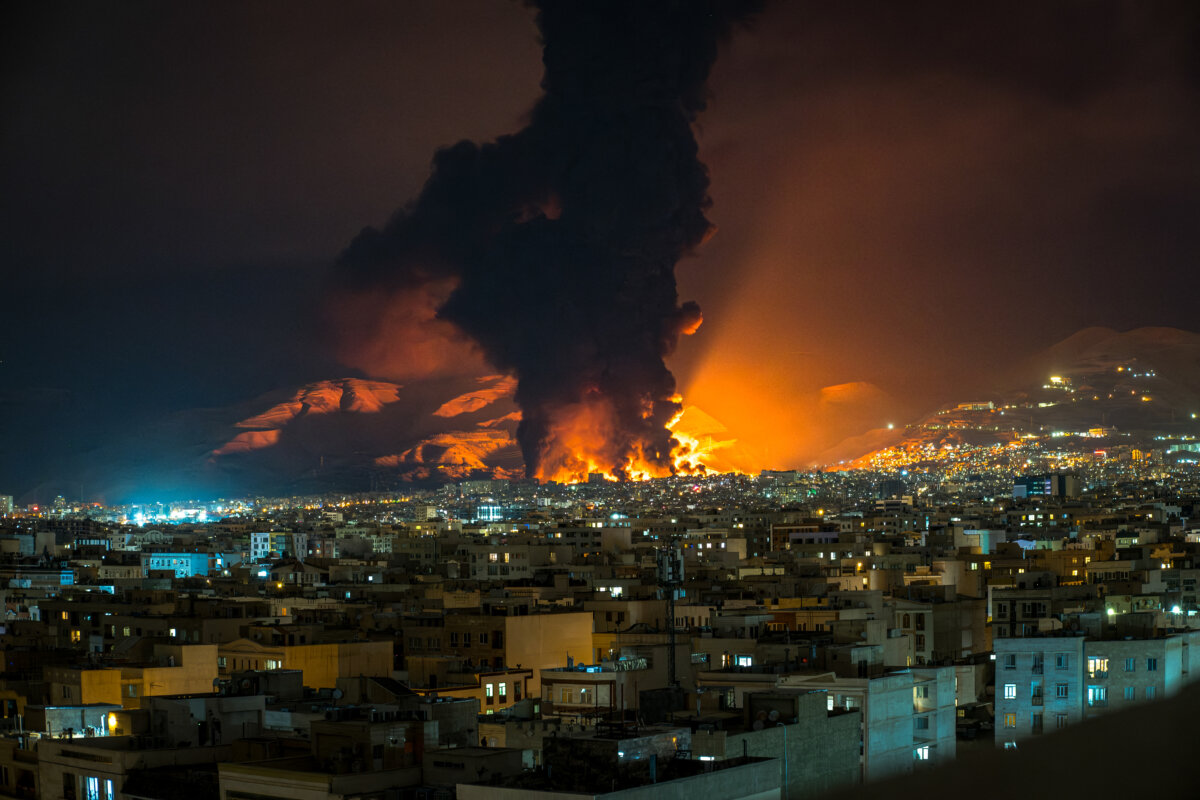
Israel’s military said it had hit a weapons research-and-development target in Tehran, among a wave of overnight strikes on the capital, and launched more strikes later on March 10.
Tehran residents reached by Reuters described intense U.S.–Israeli bombardment of the capital overnight as the fiercest of the war.
The IAF said on March 10 that it launched a wave of strikes targeting assets of the Iranian regime in Tehran.
During a meeting with Israel’s hospital and health system leaders on March 10, Israeli Prime Minister Benjamin Netanyahu said it is up to the Iranian people to decide their future.
“Our aspiration is to enable the Iranian people to cast off the yoke of tyranny; ultimately, it is up to them,” he said. “But there is no doubt that through the actions taken so far, we are breaking their bones and we are still active.”
U.S. Central Command said in a March 10 post X, “Day and NIGHT, U.S. forces continue to deliver overwhelming firepower.”
Conflict Nearing End, Trump Says
The Middle East conflict has driven oil prices higher, rattled financial markets, and threatened global energy supplies.
Brent crude briefly surged to nearly $120 per barrel on March 9, then eased. It was trading around $91 on March 10.
U.S. President Donald Trump sought to reassure markets and the public that the conflict would not become a long-term regional war.
Speaking to CBS on March 9, Trump said the U.S.–Israeli military operation against Iran had largely achieved its objectives.
“I think the war is very complete, pretty much,” Trump told CBS correspondent Weijia Jiang in remarks reported on March 9. “They have no navy, no communications, they’ve got no Air Force.”
Trump has previously suggested the conflict could last for about a month but indicated on March 9 that it might end sooner than expected, describing it as likely to be a “short-term excursion.”
Late on March 9, Iran’s Islamic Revolutionary Guard Corps (IRGC) said Tehran would decide when the war ends.
“We are the ones who will determine the end of the war,” IRGC spokesperson Gen. Ali Mohammad Naeini said on March 9, according to Iran’s state-aligned Tasnim News Agency.
“The Armed Forces of the Islamic Republic will not allow a single liter of oil to be exported from the region until further notice due to ongoing aggressions by the US army and the Zionist regime against the Iranian people and service infrastructure,” he said.
Iranian Parliament Speaker Mohammad Bagher Ghalibaf said in a March 10 post on X that Iran is not seeking a cease-fire.
“We believe we must strike the aggressor in the mouth so that he will never think of attacking our beloved Iran again,” he said. “The Zionist regime sees its ignoble existence in perpetuating the cycle of ‘war-negotiation-ceasefire and then war again’ in order to consolidate its dominance. We will break this cycle.”
Washington has warned Iran against disrupting shipping in the Strait of Hormuz, a narrow waterway through which roughly a fifth of the world’s oil supply passes.
Trump said on March 9 that U.S. forces would escalate strikes if Iran attempted to block the route with missiles, drones, or naval mines.
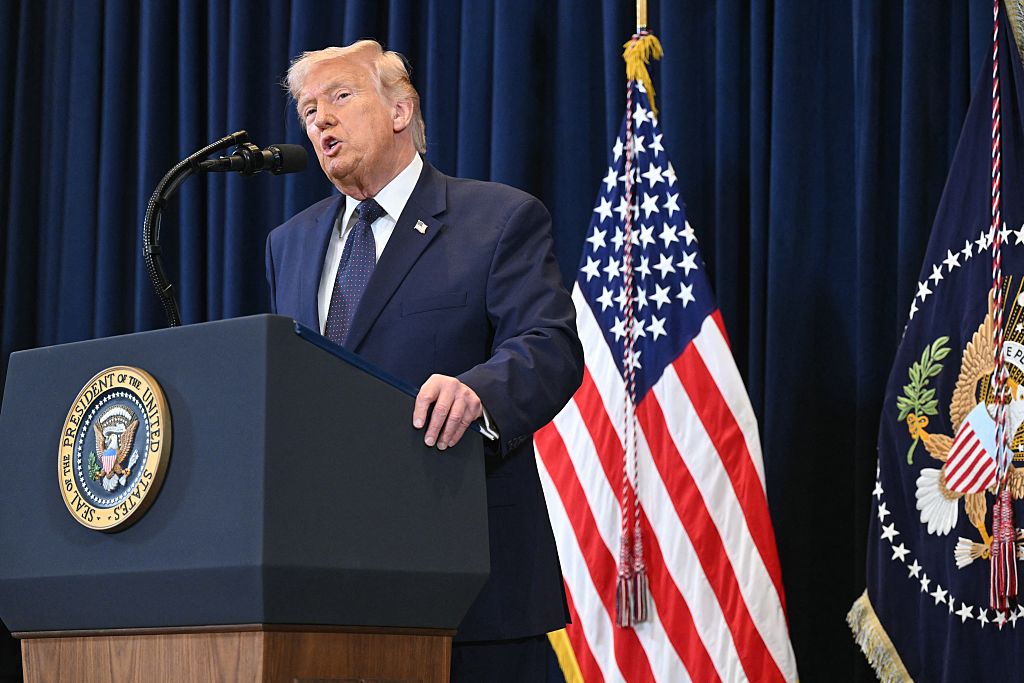
“I will not allow a terrorist regime to hold the world hostage and attempt to stop the globe’s oil supply,” Trump told reporters during a press conference at his golf resort near Miami.
He said the United States had so far avoided targeting Iran’s energy infrastructure but warned that policy could change.
“If Iran does anything to [block the strait], they’ll get hit at a much, much harder level,” Trump said. Hours later, he repeated the warning on social media.
“If Iran does anything that stops the flow of Oil within the Strait of Hormuz, they will be hit by the United States of America TWENTY TIMES HARDER than they have been hit thus far,” he wrote.
The Trump administration has also authorized a $20 billion reinsurance program through the U.S. International Development Finance Corporation to encourage tanker traffic through the strait.
Former U.S. Secretary of State Antony Blinken said markets and military stockpiles would likely shape the outcome of the war.
“Two forces will ultimately shape how and when this ends: markets and munitions,” Blinken said in a March 9 post on X, adding that observers should monitor “the oil, stock, and bond markets” as well as missile supplies among the United States and its regional partners.
Saudi Arabia Signals Possible Response
Saudi Arabia has sharply condemned the Iranian attacks and signaled it could respond if its territory or regional partners are targeted again.
In a March 9 statement posted on X, the Saudi Foreign Ministry said such attacks “cannot be accepted or justified under any circumstances.”
The ministry also warned that Saudi Arabia “retains its full right to take all necessary measures to safeguard its security, sovereignty, and the safety of its citizens and residents, and to deter aggression.”
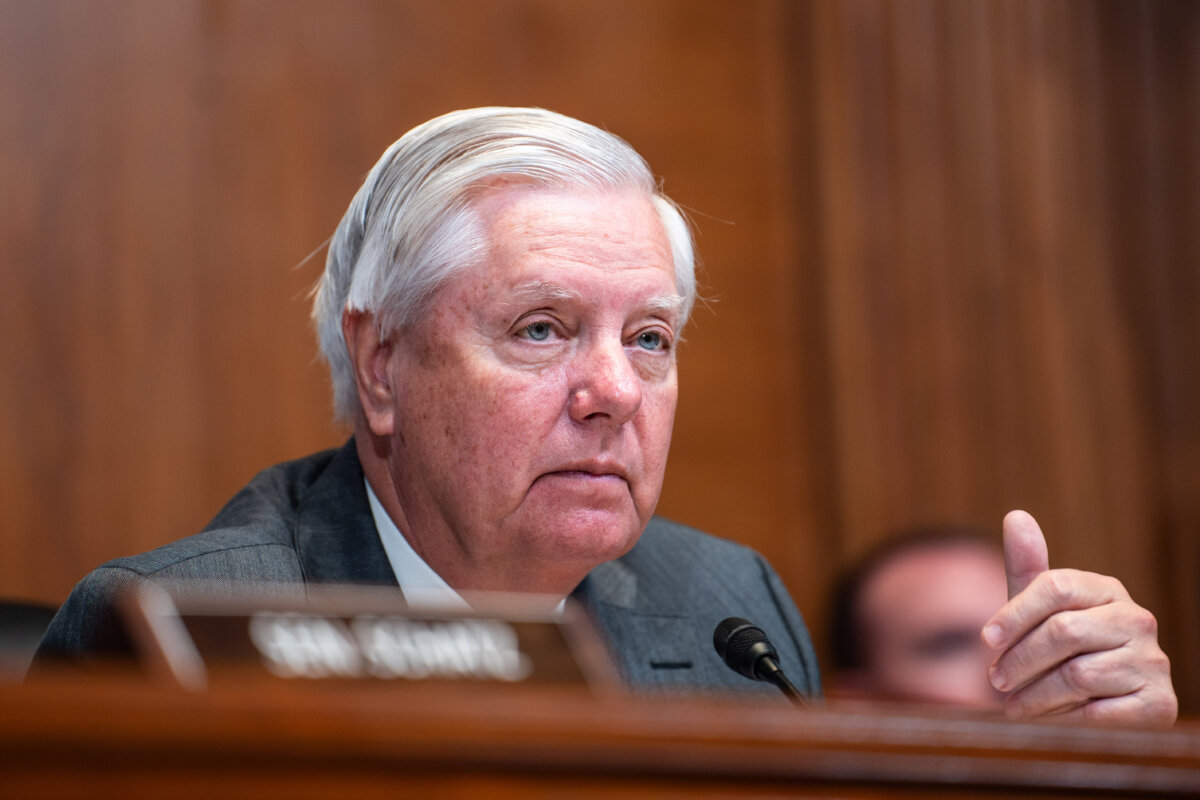
On March 9, Sen. Lindsey Graham (R-S.C.) urged Saudi Arabia to take a more direct role in confronting Iran.
In a statement posted on X, Graham said he hoped the kingdom would join efforts to counter Tehran’s actions in the region.
“Americans are dying and the U.S. is spending billions to dislodge the terrorist Iranian regime that threatens the region,” he said. “Meanwhile, Saudi Arabia seems to be issuing statements and doing things in the background that are marginally helpful, but unwilling to participate in military operations to end the reign of terror coming out of Iran.”
He expressed hope that the Gulf Cooperation Council countries would become more involved in the conflict.
“If you are not willing to use your military now, when are you willing to use it? Hopefully this changes soon,” he said. “If not, consequences will follow.”
Reuters contributed to this report.
 Friends Read Free
Copy
Facebook
Tweet
Friends Read Free
Copy
Facebook
Tweet