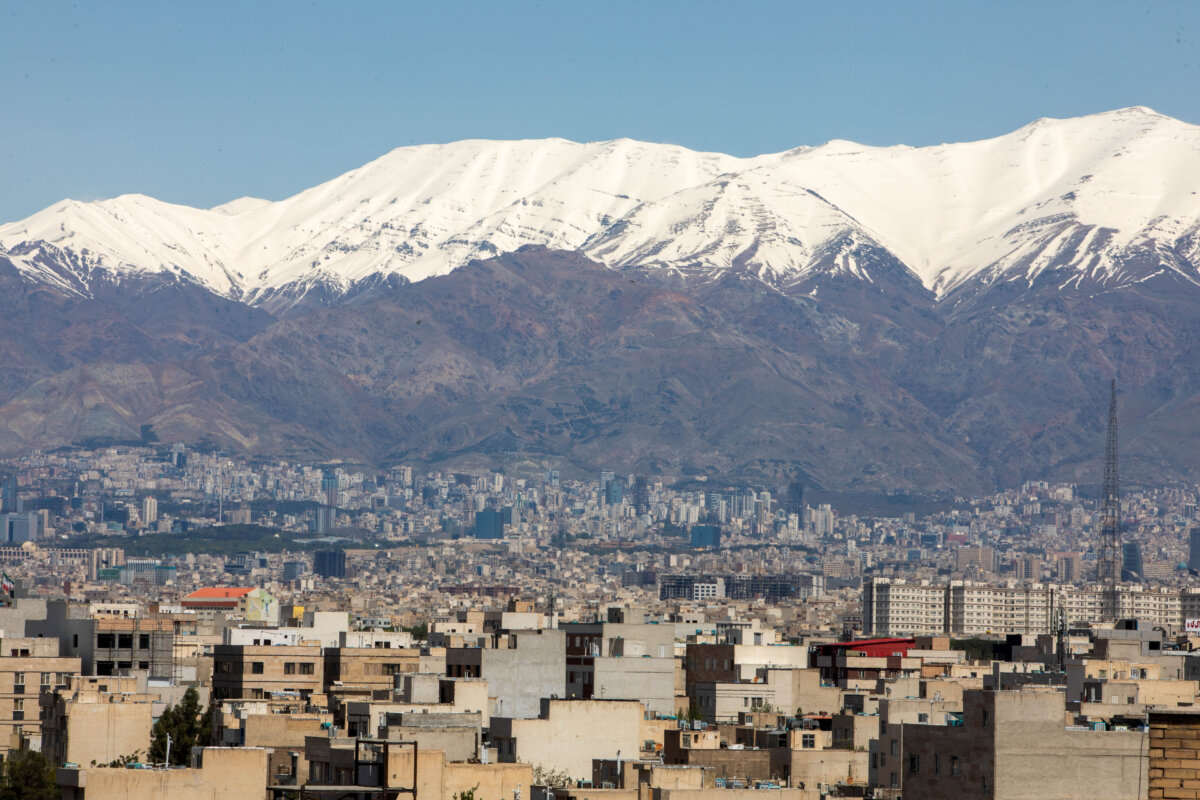

An Iranian official on Wednesday said Tehran has the right to enrich uranium, a key point of contention that led the United States and Israel to launch strikes against the country several weeks ago.
Iranian foreign ministry spokesman Esmaeil Baqaei said the country will not back down on its rights to enrich uranium and that it should be able to pursue nuclear energy, according state-run news agency Tasnim News.
Iran is open to having more discussions about the “level and type of enrichment” but “must be able to continue enrichment based on its needs,” reported Tasnim News, paraphrasing a comment from Baqaei.
U.S., Israeli, and European officials have long said that Iran is working to enrich uranium to weapons-grade potential with its program, while U.N. officials have said the country has not complied with their requests to inspect the country’s nuclear facilities. Iran has long denied such assertions.
On Wednesday, the head of the United Nations’ nuclear watchdog said that “very detailed” measures to verify Iran’s nuclear activities must be included in a potential U.S.–Iran agreement to end their war in the Middle East.
International Atomic Energy Agency (IAEA) Director General Rafael Grossi said in Seoul on Wednesday that “Iran has a very ambitious, wide nuclear program, so all of that will require the presence of IAEA inspectors.”
Iran’s Permanent Mission to the International Organizations in Vienna wrote in a post on X on Wednesday that claims Tehran is seeking to produce a nuclear weapon are false.
It’s a lie that “Iran is only a few weeks away from developing nuclear weapons,” the organization said, adding that the assertions have been made for decades.
It has “not changed the reality that essentially Iran never opted for a nuclear weapon but insisted on its inalienable rights for peaceful uses of nuclear energy,” the account posted.
U.S. President Donald Trump has said that the war with Iran was initiated because the country cannot obtain nuclear weapons, building on last summer’s brief war with the country that included strikes on nuclear facilities.
Over the weekend, a U.S. delegation led by Vice President JD Vance met with Iranian officials, but no agreement resulted from the peace talks, leading to a U.S. naval blockade of Iranian ports that went into effect on Monday.
Vance told Fox News that if Iran adheres to “red lines” set up by the United States on the country’s nuclear program, “then this can be a very, very good deal for both countries.”
“Whether we have further conversations, whether we ultimately get to a deal, I really think the ball is in the Iranian court, because we put a lot on the table,” he also said, adding that the delegation made it clear to the top Iranian officials that the nuclear material “come out of the country.”
U.S. Central Command (CENTCOM) said it has achieved “maritime superiority” and that the blockade on Iranian ports had been “fully implemented” within 36 hours of its launch, according to a statement on social media late Tuesday.
Last week, Trump announced a two-week ceasefire between the United States and Iran in a bid to launch negotiations between the two parties. So far, there have been no public indicators that the ceasefire hasn’t held up.
In an interview that aired on Wednesday on Fox Business, Trump said the war in Iran was “very close to being over.”
“If I pulled up stakes right now, it would take them 20 years to rebuild that country, and we’re not finished,” he said.
“We’ll see what happens, I think they want to make a deal very badly.”
The Associated Press contributed to this report.
 Friends Read Free
Copy
Facebook
Tweet
Friends Read Free
Copy
Facebook
Tweet