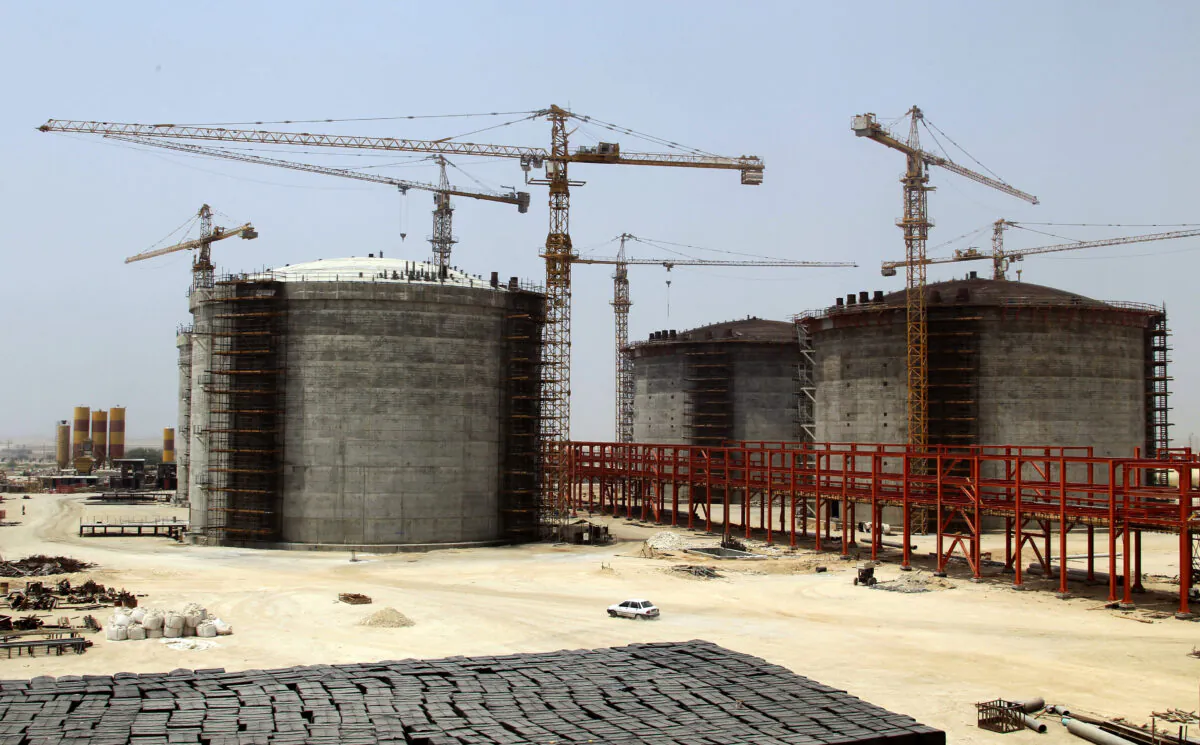
Iran said it would retaliate after reported strikes on its South Pars gas field, the world’s largest natural gas field, and urged people to stay away from key oil and gas sites across the Persian Gulf.
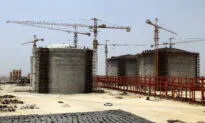
On March 18, explosions were reported at Iran’s South Pars gas field, which is shared by Iran and Qatar.
Iran International, a London-based, privately owned Persian-language news outlet not affiliated with the Iranian state, showed a video of the strike in a March 18 post on X.
Israeli news publications including The Times of Israel, Haaretz, and The Jerusalem Post have reported that the site was struck by the Israel Defense Forces (IDF).
The IDF and the United States have not yet issued an official statement, and The Epoch Times has not been able to independently confirm the reports.
South Pars lies in Iranian waters. The North Dome, also referred to as North Field, is in Qatari waters.
After the explosion, Iran’s Islamic Revolutionary Guard Corps warned that everyone should stay away from oil facilities in Saudi Arabia, the UAE, and Qatar, in a statement to the Tasnim News Agency.
The Tasnim News Agency is a semi-official news agency in Iran associated with the Islamic Revolutionary Guard Corps.
The threatened sites include the Samref Refinery and Jubail Petrochemical Complex in Saudi Arabia; the Al Hosn gas field in the United Arab Emirates; and Qatar’s Mesaieed Petrochemical Complex, Mesaieed Petrochemical Holding Company (linked to Chevron), and the Ras Laffan Refinery (Phases 1 and 2).
“These centers have become direct and legitimate targets and will be targeted in the coming hours, so all citizens, residents, and employees are asked to immediately leave these areas and move to a safe distance without any delay,” it stated.
“Previously, clear and repeated warnings had been given to your rulers about entering this dangerous path and gambling with the fate of your nations.”
According to a March 5 statement by Mark Ireland, senior lecturer in Energy Geoscience at Newcastle University, South Pars’ “extraordinary share” between Qatar and Iran has yielded oil and gas accounting for about 80 percent of Qatar’s government revenues.
“On the Iranian side, daily production at South Pars, operated by Petropars (a subsidiary of the National Iranian Oil Company) is estimated at around 2 billion cubic feet per day,” Ireland said.
Majed Al Ansari, adviser to the Prime Minister of Qatar and official spokesperson for the Ministry of Foreign Affairs, said in a March 18 post on X that Israel had targeted the facilities, without mentioning any U.S. role.
“The Israeli targeting of facilities linked to Iran’s South Pars field, an extension of Qatar’s North Field, is a dangerous and irresponsible step amid the current military escalation in the region,” he said.
Al Ansari said that “targeting energy infrastructure constitutes a threat to global energy security, as well as to the peoples of the region and its environment.”
“We reiterate, as we have repeatedly emphasized, the necessity of avoiding the targeting of vital facilities,” he said.
Oil prices jumped on the news, with Brent crude futures rising by 6 percent to nearly $110 per barrel.
QatarEnergy, a state-owned company and the world’s largest single liquefied natural gas producer, said in a March 4 post on X that it had declared “force majeure,” meaning that it can’t guarantee deliveries amid the Iran War.
Force majeure is a legal term that means an unexpected event beyond someone’s control, such as war, natural disaster, or government action, that prevents them from fulfilling a contract.
Qatari Energy Minister Saad Al Kaabi has said that the conflict in the Middle East could “bring down the economies of the world.”
Al Kaabi, who is also the CEO of QatarEnergy, told the Financial Times on March 6 that oil prices could soar to $150 a barrel if tankers and other merchant vessels are unable to pass through the Strait of Hormuz.
In normal conditions, roughly 100 ships, including about 50 oil tankers, pass through the Strait of Hormuz each day, according to Lloyd’s List.
Since the conflict began, about 90 ships, including oil tankers, have crossed, but these are linked to so-called “dark” transits that evade Western government sanctions and oversight and are likely to have ties to Iran.
The U.S. Department of War and the IDF did not respond to requests for comment by publication time.
Reuters contributed to this report.
 Friends Read Free
Copy
Facebook
Tweet
Friends Read Free
Copy
Facebook
Tweet