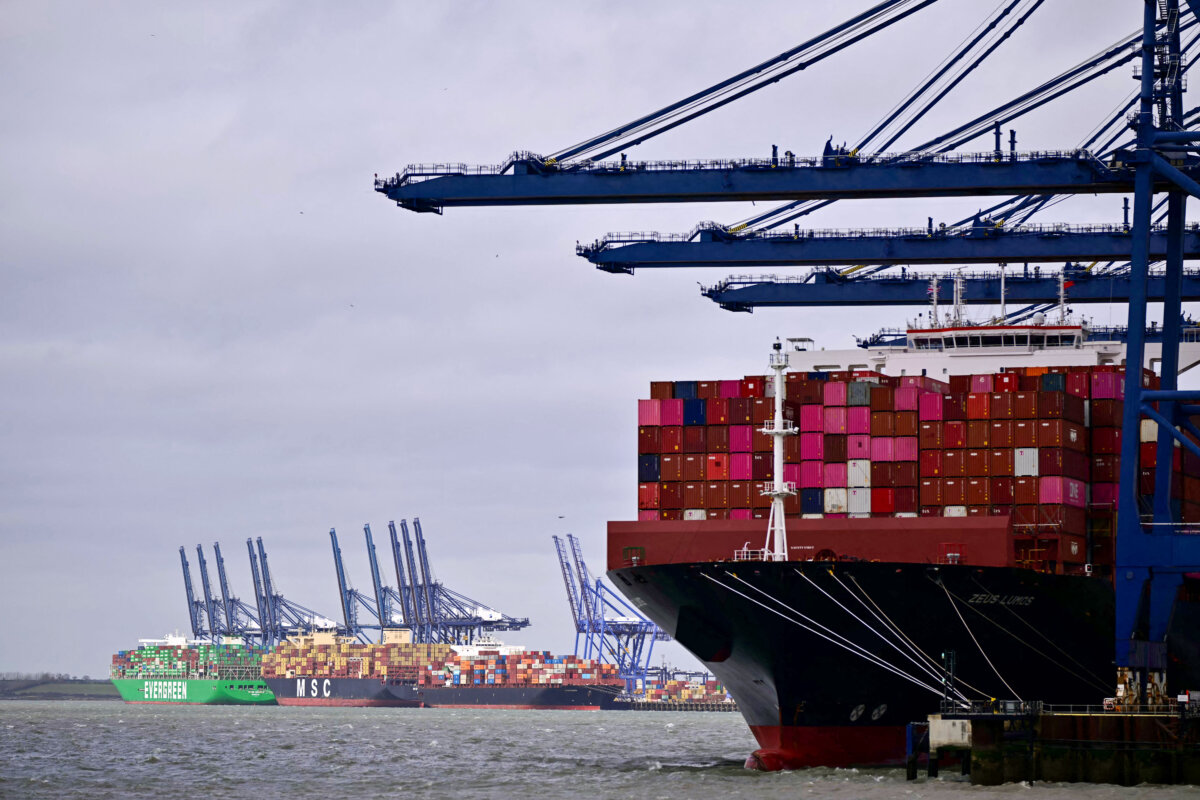

As oil tankers halt operations in the Middle East to avoid risks amid the ongoing Iran war, crude oil and chemical raw material prices have risen sharply, putting significant pressure on China’s industrial chain.
Approximately 20 million barrels of crude oil passed through the Strait of Hormuz daily before the war broke out on Feb. 28, accounting for about one-fifth of global oil consumption. The Iranian regime has been attacking ships traveling through the Strait of Hormuz, bringing this vital maritime energy route to a near standstill.
China depends on crude oil imports for approximately 72 percent of its domestic crude oil consumption, and 44 percent of that amount originates in the Middle East. The vast majority of those imports pass through the Strait of Hormuz.
The Chinese regime’s National Development and Reform Commission increased domestic retail prices for gasoline and diesel on March 10: Gasoline prices rose by 695 yuan ($100.8) per ton, and diesel prices rose by 670 yuan ($97.2) per ton, one of the largest single price adjustments in recent years. One Chinese resident told The Epoch Times that the daily price hikes have resulted in long lines at gas stations in many areas, making it impossible to even get into the stations.
Iran is not only an oil producer, but also a major supplier of chemical raw materials, especially methanol, and is an important source for many Asian markets. The Strait of Hormuz carries approximately 35 percent of global maritime methanol trade, and the Iran war cuts off this vital channel for Middle Eastern supplies to Asia.
Since the Iran war broke out, prices have been driven up in China’s raw chemical and oil markets and are rapidly spreading to the chemical industry chain.
The sectors heavily reliant on these upstream raw materials, such as plastics, synthetic fibers, and fertilizers, have been affected the most. Rising polyethylene prices will directly increase the cost of packaging products.
Prices for chemical commodities in China’s domestic futures market have continued to rise, according to mainland Chinese media. On March 12, crude oil prices surged by more than 18 percent and purified terephthalic acid prices rose by more than 13 percent, while commodities such as paraxylene and propylene each posted price rises exceeding 10 percent. Meanwhile, the price of dichloromethane has skyrocketed from approximately 1,630 yuan ($236) per ton to about 2,800 yuan ($406) per ton—an increase of roughly 70 percent.
Correspondingly, the midstream polyolefin sector in China is experiencing losses due to rising raw material prices, while downstream product manufacturers face the additional predicament of grappling with the pass-through of these cost pressures.
Chemical raw material costs account for approximately 10 percent to 20 percent of the costs in the home appliance and automotive industries. As upstream costs continue to be passed on, the prices of end products may gradually rise.
Driving Up Plastics Prices
This has a particular impact on plastics in the Chinese market.
The Zhangmutou Plastics Trading Market in Dongguan, Guangdong Province, has an annual transaction volume of nearly 100 billion yuan ($16 billion), accounting for about one-tenth of China’s plastics materials market, and is regarded as an important indicator of industry trends.
Qian Fucheng, who used a pseudonym because of safety concerns, is head of a polymer technology company in Guangdong Province. He told The Epoch Times that there has been a period of panic in the Zhangmutou Plastics Trading Market since the war broke out.
“At the beginning, many manufacturers had insufficient inventory, and the demand for restocking was concentrated,” he said. “The warehouse shipments suddenly increased, and a large number of trucks lined up to wait for loading, which once caused traffic congestion.”
Qian said the price surge has had a significant impact on downstream enterprises.
“The prices of common raw materials have now nearly doubled, which has a great impact on downstream production costs, and some enterprises may face the risk of losses,” he said. “This round of price increases is mainly driven by the rise in petrochemical product prices.”
Since the war started, as of March 12, the price of ABS plastic raw materials has soared from 8,000 yuan ($1,160) per ton to more than 13,000 yuan ($1,885) per ton—an increase of more than 60 percent.
The price of PC plastic raw materials has surged from 11,000 yuan ($1,595) per ton to more than 16,000 yuan ($2,329) per ton—an increase of more than 40 percent.
These materials are widely used in the manufacture of consumer products such as toys, keyboards, packaging, vacuum cleaners, safety shields, mobile phone and laptop casings, security windows and soundproof walls, food storage and drinking water containers, and automotive interior parts such as dashboards.

Wu Tiexing, who used a pseudonym because of safety concerns, is head of a packaging materials company in Zhengzhou, Henan Province.
“The price increase of upstream manufacturers is relatively big, and the cost is passed down to the downstream layer by layer,” he told The Epoch Times. “Mid-range processing enterprises like ours have almost no profit margin, and many enterprises feel that it is not very meaningful to do it.”
He said that raw material prices are currently fluctuating wildly.
“Raw material prices are changing almost daily, and many companies are afraid to stockpile goods, or even suspend raw material purchases to wait and see,” he said.
Methanol
Besides plastics, other chemical raw materials are also under pressure in the Chinese market.
Methanol prices rose to 2,811 yuan ($408) per ton on March 13, an increase of 6.08 percent from the previous day. Over the past month, the price of methanol has risen by 25.04 percent.
Although China has a methanol production capacity of approximately 118 million tons, it still relies on imports for 12 percent to 15 percent of its consumption, and about 60 percent of those imports come from Iran.
Cheng Mulan and Gu Xiaohua contributed to this report.
 Friends Read Free
Copy
Facebook
Tweet
Friends Read Free
Copy
Facebook
Tweet