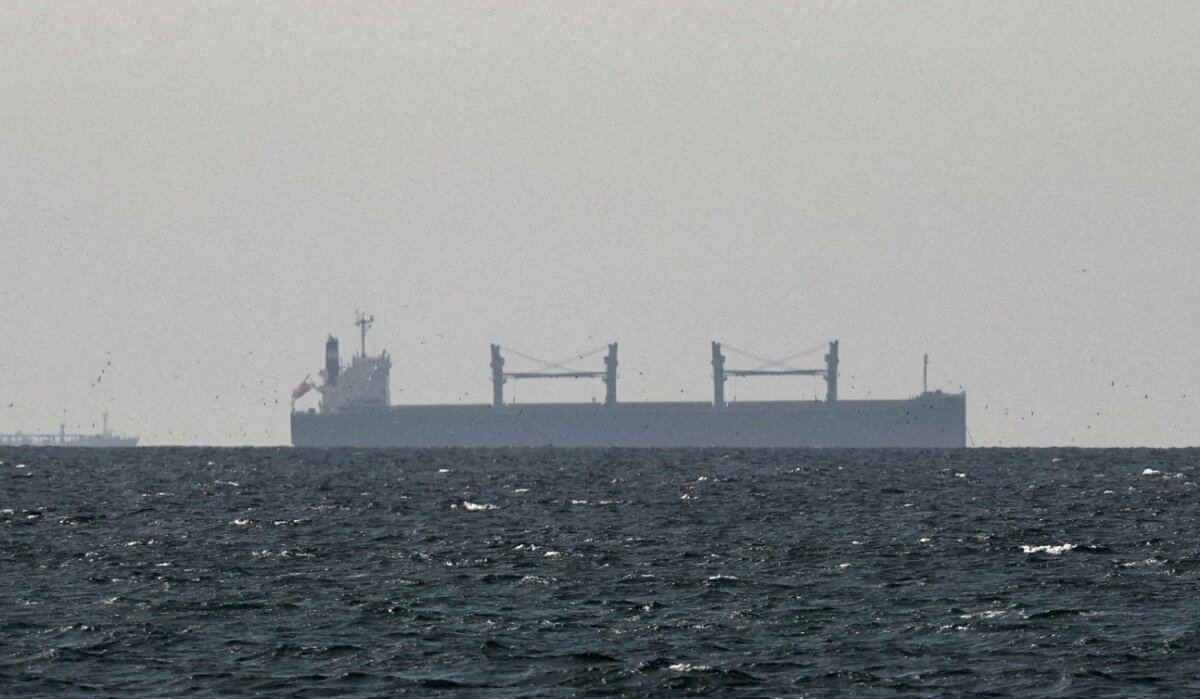

Iran’s Islamic Revolutionary Guards Corps (IRGC) on Sunday warned that military vessels should avoid the disputed Strait of Hormuz after peace talks between Tehran and the United States fell through.
In a statement released through state-run media outlets, the IRGC said that military vessels will be subject to a “firm response” if they try to pass through the strait, which Iran has blocked since the U.S.–Iran war started in late February.
“Permission to transit, in accordance with specific regulations, is granted exclusively to non-military vessels,” the IRGC said. The statement did not say whether this applied to just the U.S. military or to other countries.
The warning was issued after President Donald Trump said in a Truth Social post on Sunday that he has “instructed our Navy to seek and interdict every vessel in International Waters that has paid a toll to Iran. No one who pays an illegal toll will have safe passage on the high seas.”
Other nations would assist the United States in the blockade, Trump said, but did not name them.
“Their Navy is gone, their Air Force is gone, their Anti Aircraft and Radar are useless, [Ayatollah Ali] Khamenei, and most of their ‘Leaders,’ are dead, all because of their Nuclear ambition,” Trump wrote, referring to the Iranian regime. “The Blockade will begin shortly. Other Countries will be involved with this Blockade. Iran will not be allowed to profit off this Illegal Act of EXTORTION. They want money and, more importantly, they want Nuclear.”
During Iran–U.S. talks mediated by Pakistan on Saturday, the U.S. military said two of its destroyers transited the strait ahead of mine-clearing work, a first since the war began. Iran’s state media said its joint military command denied that.
Trump announced last week that the United States and Iran would engage in a two-week ceasefire after around five weeks of conflict, although traffic through the strait has remained mostly stalled. Since the conflict’s start, oil and gas prices have surged.
Negotiations between Israel and Lebanon are expected next week in Washington. Israeli Prime Minister Benjamin Netanyahu said on April 9 that he had approved direct talks, while Lebanese President Joseph Aoun’s office said April 10 that negotiations between Israel and Lebanon are expected to begin Tuesday.
After Trump announced the ceasefire with Iran, Israel last week said it launched 100 strikes in Lebanon against the Hezbollah terrorist group in around 10 minutes. Hezbollah also attacked Israeli assets, and its leader, Naim Qassem, said last week that it would continue to fight.
Prior to the ceasefire, Trump had warned that the U.S. military would attack Iranian power plants and bridges, threatening to effectively end the country’s civilization, if no progress was made on reopening the Strait of Hormuz.
Iran’s nuclear program had been at the center of tensions long before the United States and Israel launched strikes on Feb. 28. U.S. and Israeli officials have long asserted that Tehran is working to enrich uranium to weapons-grade potential, while Trump has repeatedly said that Iran cannot possess a nuclear weapon.
Tehran has long denied seeking nuclear weapons but insisted on its right to a civilian nuclear program. Inspectors with the United Nations’ atomic agency, however, have said on several separate occasions that Iran has blocked them from evaluating the country’s facilities.
The Associated Press contributed to this report.
 Friends Read Free
Copy
Facebook
Tweet
Friends Read Free
Copy
Facebook
Tweet