
Israel has received the remains of one of the last two deceased hostages held by the terrorist group Hamas in Gaza, Israeli Prime Minister Benjamin Netanyahu’s office said on Dec. 4.
Israeli authorities confirmed that they had taken possession of the body of Sudthisak Rinthalak, a 42-year-old Thai agricultural worker killed on Oct. 7, 2023, when Hamas attacked southern Israel.
His family was notified of the return of his remains after a formal identification process by the National Center of Forensic Medicine in Tel Aviv, Israel.
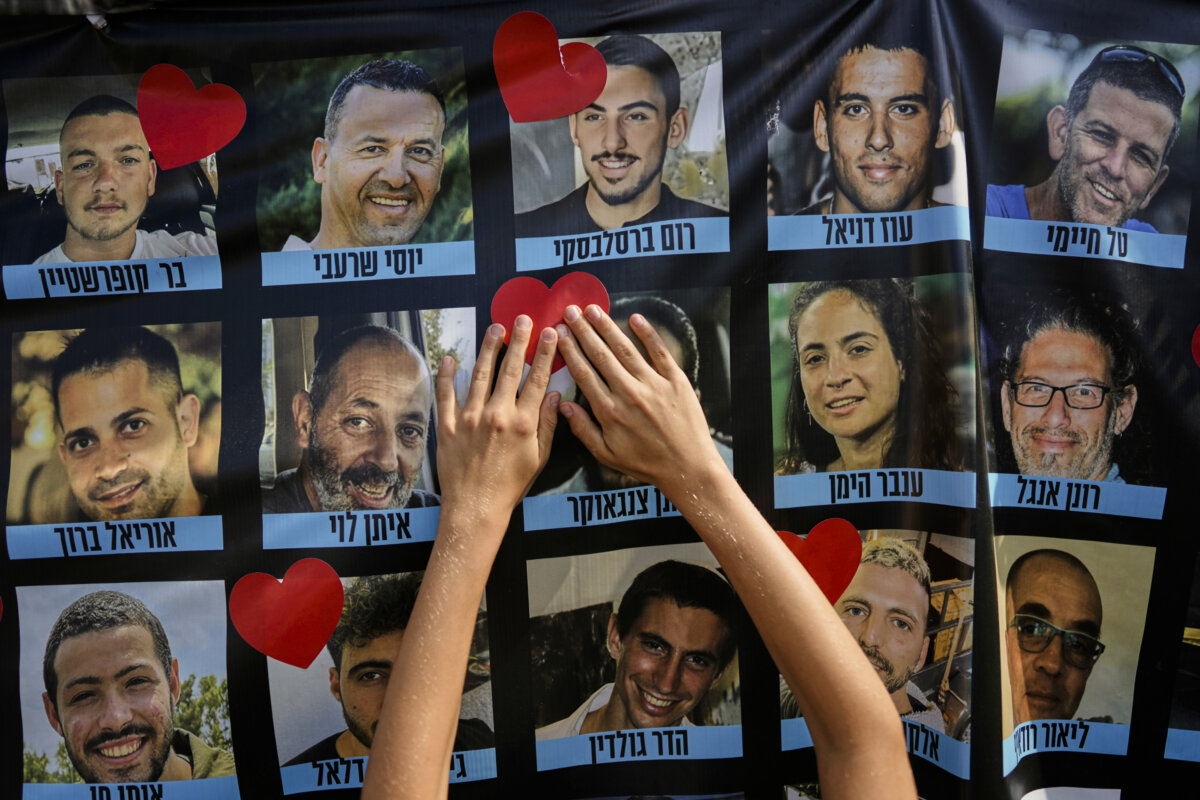
Rinthalak was one of the last two remaining deceased hostages held by Hamas in Gaza, following the Oct. 7, 2023, attack in which the terrorists killed about 1,200 people and seized 251 hostages.
Netanyahu’s office said coordination for returning Rinthalak to Thailand for burial would take place through the Thai Embassy in Israel.
“The Government of Israel shares in the deep sorrow of the Rinthalak family, the Thai people and all of fallen hostages’ families,” it said in a Dec. 4 statement.
The Thai Embassy in Tel Aviv stated that the repatriation would be arranged “at the first opportunity.”
Last Hostage
Rinthalak is now one of 27 deceased hostages whose remains have been returned since the U.S.-brokered peace plan came into effect in October. All 20 living hostages have also been released under the agreement, which requires Hamas to hand over all captives—living or dead—before the plan can advance to the next phase.
One deceased hostage remains unreturned. Ran Gvili, a police officer and member of the National Anti-Terrorism Unit, was killed defending Kibbutz Alumim on Oct. 7, 2023.
Netanyahu’s office called Gvili a “hero” and said Israeli authorities were “working tirelessly” to retrieve his remains for burial.
The Israeli Foreign Ministry stated on Dec. 4 that Gvili had been held for 790 days.
“Hamas’ failure to return him is a ceasefire violation and a cruel denial of dignity,” the ministry stated. “Ran Gvili is entitled to a dignified funeral. His family is waiting. Ran must come home. Now.”
Cease-Fire Implementation
Since the U.S.-brokered cease-fire took effect in October, Israel and Hamas have repeatedly accused each other of breaching its terms, although both say they remain committed to implementing the first phase of the peace plan.
The Israeli military stated on Dec. 3 that its forces had encountered armed militants emerging from underground infrastructure in eastern Rafah, injuring five IDF soldiers in the exchange. It stated that it later struck a Hamas fighter in southern Gaza in response.
Defense Minister Israel Katz said on Dec. 4 that Israel would “continue to act forcefully against any violation and against Hamas’s terror infrastructure in Gaza—until the return of the last hostage and the destruction of all of Hamas’s capabilities.”
Hamas, through its Al-Aqsa TV Telegram channel, stated on Dec. 3 that the Israeli strike represented a “disregard to the cease-fire agreement,” saying that Israel bore “full responsibility” for any escalation.
On Dec. 4, Hamas spokesman Hazem Qassem said the group continued to abide by the agreement, citing the handover of the Israeli captive’s body the previous day.
Qassem said that Hamas intended to “fully resolve the prisoner-exchange file” and urged mediators and guarantor states to pressure Israel to “stop its violations” and fulfill its obligations, especially the reopening of the Rafah crossing in both directions.
The Coordinator of Government Activities in the Territories (COGAT), the Israeli agency responsible for implementing government policy in Gaza and the West Bank, stated on Dec. 3 that the Rafah crossing would open “in the coming days” as part of the agreement, but only for the exit of residents.
Once all hostages are recovered, the second phase of the U.S.-brokered deal is expected to begin, including the disarmament of Hamas and the dismantling of its military infrastructure.
The plan also calls for the creation of an International Stabilization Force (ISF) to deploy to Gaza during its transition from wartime control to civilian governance.
The plan also calls for the creation of an interim technocratic government consisting of Palestinian and international experts and overseen by a Board of Peace chaired by U.S. President Donald Trump.
Last month, the U.N. Security Council approved a U.S.-drafted resolution that endorses Trump’s Gaza cease-fire plan.
 Friends Read Free
Copy
Facebook
Tweet
Friends Read Free
Copy
Facebook
Tweet