
Israel deployed Iron Dome missile defense batteries and personnel to the United Arab Emirates during the Iran war, according to remarks by U.S. Ambassador to Israel Mike Huckabee.
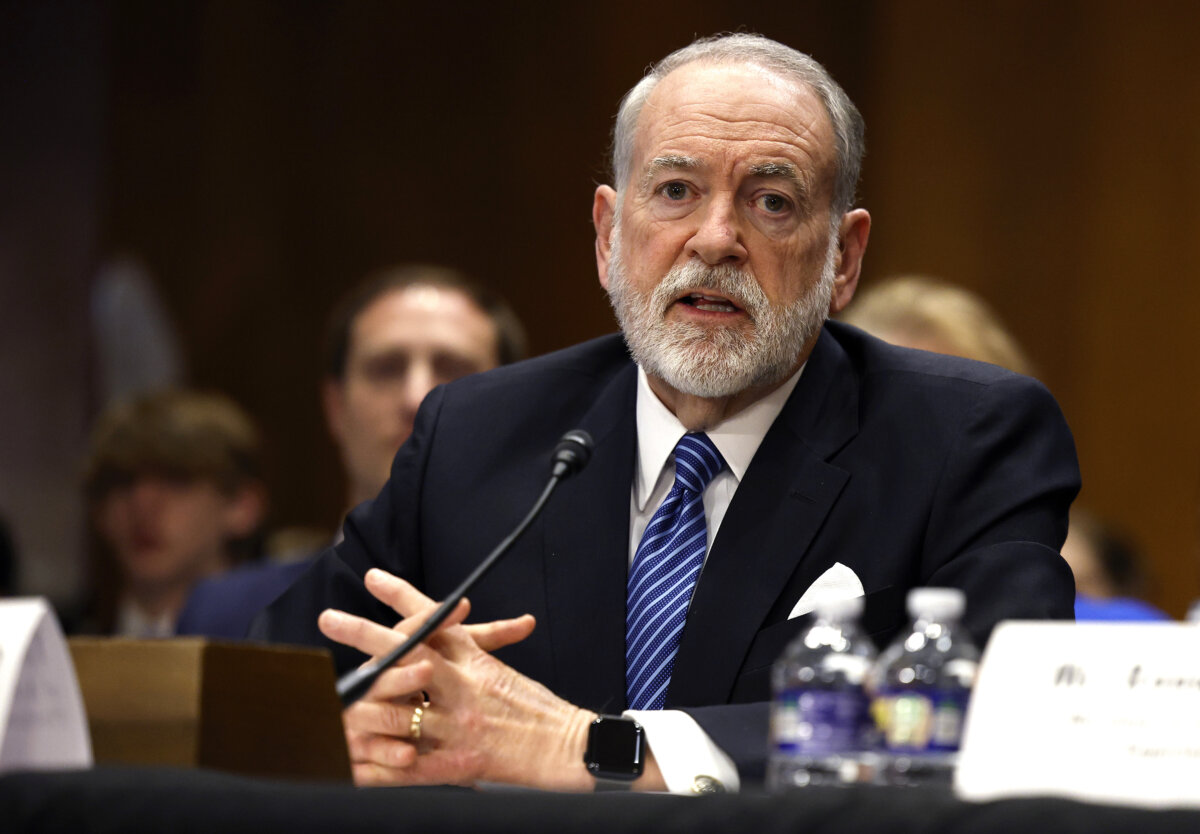
Huckabee made the comments on May 12 during the Tel Aviv Conference hosted by Tel Aviv University and the Kadar Family Foundation.
“I’d like to say a word of appreciation for United Arab Emirates, the first Abraham Accord member,” Huckabee said at the event. “Just look at the benefits. Israel just sent them Iron Dome batteries and personnel to help operate them.”
Huckabee said the deployment reflected what he described as an “extraordinary relationship” between the UAE and Israel under the Abraham Accords.
The remarks came as an Iran war ceasefire continued to hold and as Gulf countries assess regional security arrangements after months of Iranian missile and drone attacks.
The comments also highlighted growing military cooperation between Israel and the UAE, which formally normalized relations under the 2020 Abraham Accords brokered by the United States.
Huckabee’s remarks followed similar comments made a day earlier by U.S. Ambassador to the United Nations Mike Waltz, during an Israeli Independence Day event hosted by Israel’s mission to the U.N. in New York.
Citing Israel Hayom, The Times of Israel reported on May 12 that Waltz said, “We saw the UAE make use of the Iron Dome provided to it by Israel.”
The Epoch Times reached out to the Israeli and UAE foreign ministries for comment but did not receive a response by publication time.
The UAE has faced missile and drone attacks during and after the Iran war, despite the ceasefire. The UAE Defense Ministry said in a May 10 post on X that the country’s air defenses intercepted two drones launched from Iran.
The ministry said that since the start of what it described as “blatant Iranian attacks,” UAE air defense systems had intercepted 551 ballistic missiles, 29 cruise missiles, and 2,265 drones.
Abraham Accords
The UAE became the first Gulf Arab state in decades to establish formal diplomatic relations with Israel under the Abraham Accords in 2020. Bahrain, Morocco, and Sudan have also joined as signatories.
Iran sharply criticized the normalization agreement in August 2020, describing it as a betrayal of the Palestinian cause and a threat to regional stability.
Huckabee said he remained “very optimistic” that more countries in the region would eventually join the Abraham Accords and normalize relations with Israel.
Broader normalization efforts across the Arab world remain complicated by the war in Gaza and Israel’s military operations across the region following the Oct. 7, 2023, attack on Israel by terrorist group Hamas.
Israel has also expanded military operations into parts of Lebanon and Syria, increasing tensions across the Middle East.
During his remarks in Tel Aviv, Huckabee said that Gulf states increasingly view Israel as a strategic partner against Iran.
“The Gulf states now understood they will have to make a choice—is it more likely they will be attacked by Iran or Israel?” Huckabee said.
“They see that Israel helped us, and Iran attacked us. Israel is not trying to take over your land, and is not sending missiles to you.”
Huckabee also said the recent conflict was part of a broader threat posed by Iran’s leadership.
“Israel is the appetizer, America has always been the entrée,” he said, referring to Iran’s theocratic government’s view of the United States.
Israeli Ambassador to the United States Yechiel Leiter had previously hinted at expanding regional defense cooperation, during a March 17 video statement posted on X.
“Iran continues to shoot missiles and one-way suicide drones into all of its neighbors, shopping centers, airports, residential neighborhoods, hotels,” Leiter said. “We’ve extended our help to all the Gulf countries interested in receiving it.”
He added that “there are those who are enjoying our expertise in these areas right now.”
The Associated Press and Reuters contributed to this report.
 Friends Read Free
Copy
Facebook
Tweet
Friends Read Free
Copy
Facebook
Tweet