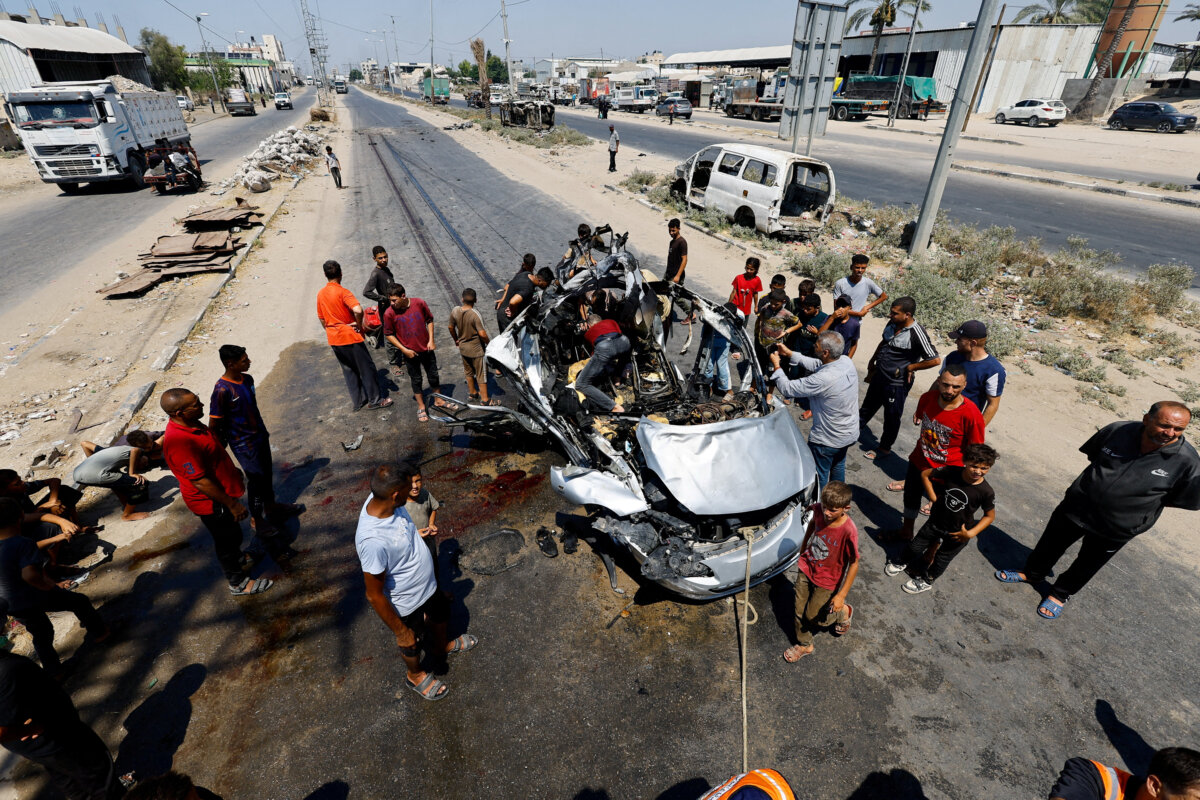

Israeli officials have said Gaza military operations will continue until Hamas fully disarms, as fresh airstrikes killed at least 18 people, according to Palestinian authorities, days after the announcement of a U.S.-backed agreement for the terrorist group’s disarmament.
Palestinian health officials said Israel targeted medicine warehouses at Al-Aqsa Martyrs Hospital in Deir al-Balah during the Aug. 1 strikes.
In an Aug. 1 statement, the Hamas-run Gaza Health Ministry said two of the hospital’s four medicine warehouses were completely destroyed while the remaining two suffered severe damage.
It said the strike also damaged the hospital’s outpatient clinic and destroyed medical supplies intended for patients and the wounded.
The ministry called on the international community, U.N. agencies, and humanitarian organizations to intervene to protect medical facilities and healthcare workers.
The Epoch Times couldn’t independently verify the ministry’s statements or the death toll figures.
Israel disputed the characterization of the strike. The Israel Defense Forces (IDF) said in a post on X on Aug. 1 that it had dismantled five Hamas weapons storage facilities, including one located adjacent to Al-Aqsa Martyrs Hospital.
The military said the facility was used by Hamas terrorists to store Kalashnikov rifles, explosive devices, anti-tank launchers, ammunition, and other military equipment.
The IDF also said that its Aug. 2 airstrike in the southern Gaza Strip killed Salem Jamal Abd al-Rahman Abu Labad, whom the military identified as a Hamas terrorist involved in the Oct. 7, 2023, attack on Kibbutz Nir Oz.
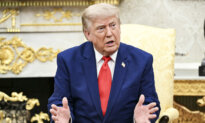
The strikes came days after President Donald Trump announced what he described as a breakthrough agreement under which Hamas and other armed groups in Gaza would surrender their weapons in phases as part of a broader transition plan.
The proposal envisages a ceasefire, the dismantling of Hamas’s military infrastructure, and the establishment of a technocratic Palestinian administration to govern the enclave.
Despite the announcement, Israeli officials indicated that the military campaign would continue until Israel’s security demands are met.
Speaking to Army Radio on Aug. 2, Israeli Energy Minister Eli Cohen said Israel would give Hamas an opportunity to disarm but remained “very skeptical” that it would do so.
“There has not been a cabinet discussion [on the Gaza plan] in the past 72 hours,” Cohen said. “In the deal we signed with the United States, our stance is that Hamas must be dismantled. This is the first thing that must happen.”
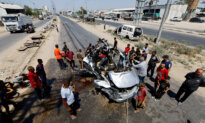
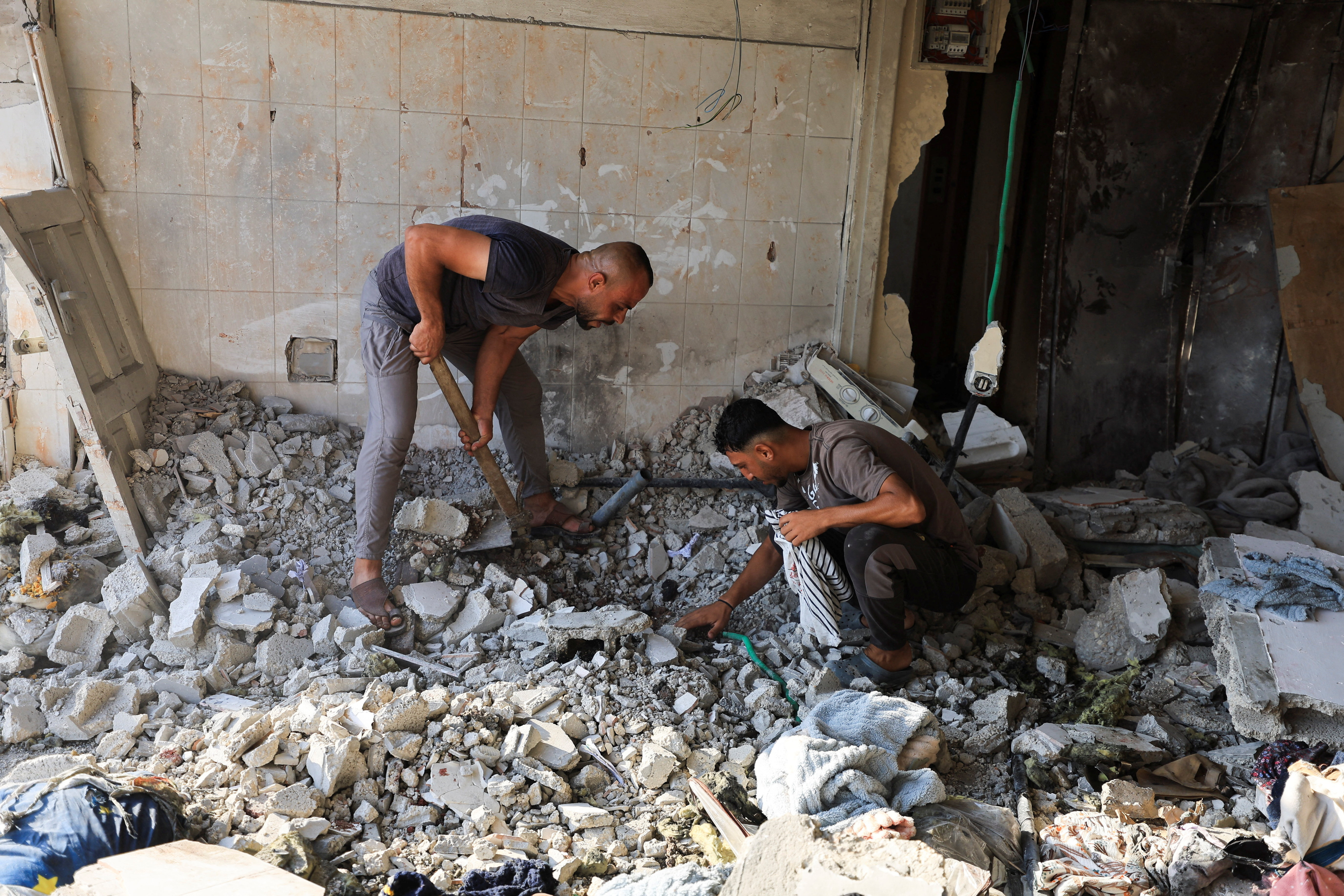 Palestinians inspect the site of an Israeli strike on a residential apartment, according to medics, in Gaza City, Aug. 2, 2026. (Dawoud Abu Alkas/Reuters)
Israeli Prime Minister Benjamin Netanyahu has not publicly commented on the reported agreement. However, his office has indicated that Israel wants changes before supporting any final arrangement.
Netanyahu’s office spokesman, Doron Spielman, said in a post on X on Aug. 2 that Israel had shared “serious concerns” about the proposed Hamas disarmament deal.
Speaking on Fox News on July 31, Spielman said the publicly released proposal did not include the changes Israel had requested.
“The plan has to be bulletproof so that Hamas cannot come over the border and threaten Israeli people. Again, that boils down to getting rid of those guns. There must be no guns in Gaza,” Spielaman said.
Peace Plan Implementation
Under the U.S.-backed proposal, Hamas would transfer civilian governing responsibilities to the National Committee for the Administration of Gaza (NCAG), a body composed of Palestinian technocrats.
The committee welcomed the announcement that Hamas had agreed to disarm.
“This development represents an important milestone for our people in the Gaza Strip,” the NCAG said in a July 31 post on X.
“After years of conflict, destruction, and uncertainty, the priority today is to translate this progress into practical steps that have a tangible impact on citizens’ daily lives.
Board of Peace Gaza envoy Nickolay Mladenov said on X on Aug. 2 that two days of Israeli strikes had killed civilians and destroyed medical supplies despite intensive diplomatic efforts to implement the agreement.
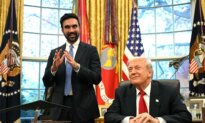
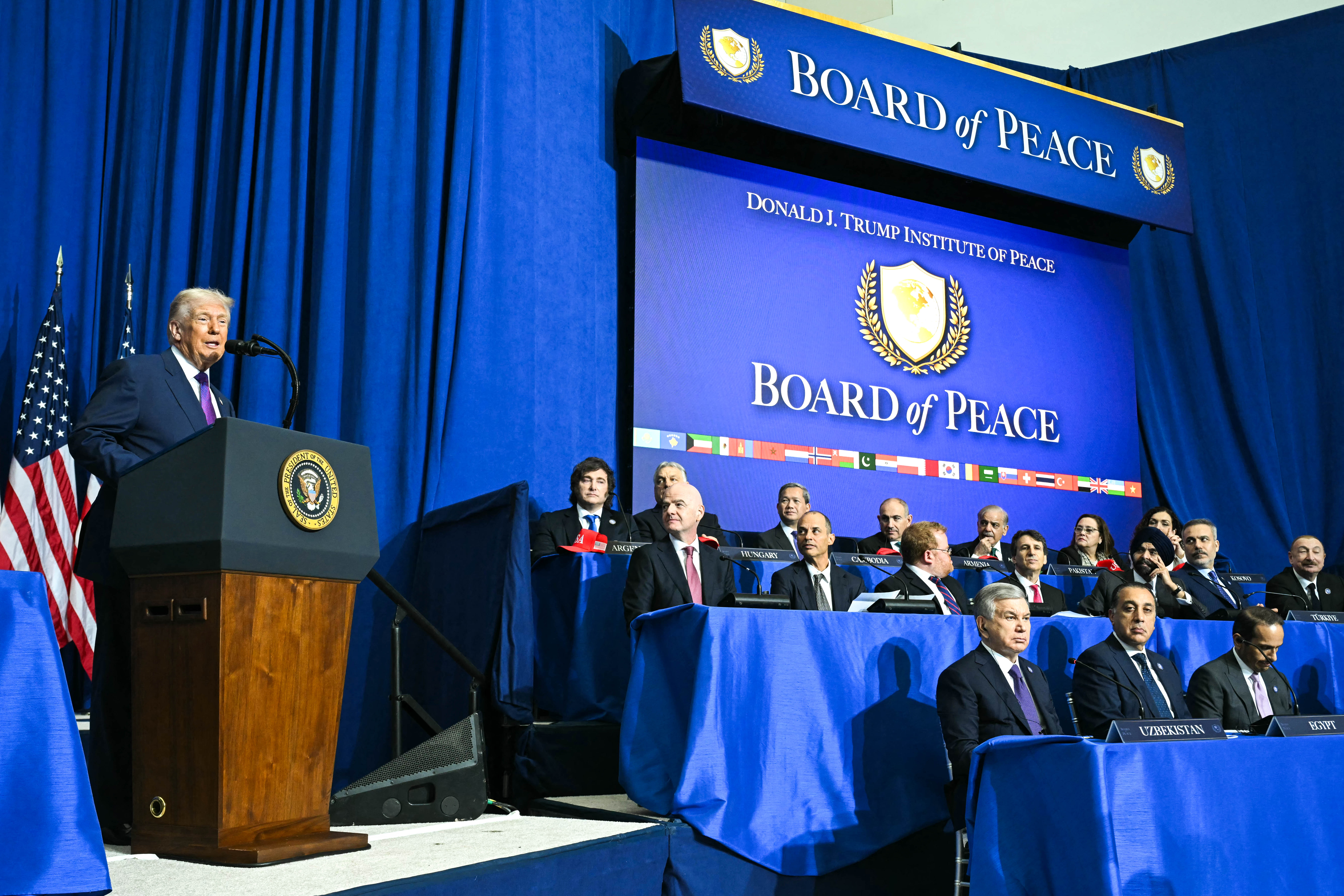 President Donald Trump delivers remarks during the inaugural meeting of the “Board of Peace” at the US Institute of Peace in Washington on Feb. 19, 2026. (Saul Loeb/AFP via Getty Images)
He said both parties had obligations under the Comprehensive Plan and the Sharm El-Sheikh agreement that secured the release of all hostages.
“My team and I are working around the clock with the parties, the mediators, and regional partners to de-escalate and create the space for the full implementation of the President’s plan,” Mladenov wrote. “Achieving a lasting peace is hard but achievable if everyone make their best efforts.”
Reuters contributed to this report.
 Friends Read Free
Copy
Facebook
Tweet
Friends Read Free
Copy
Facebook
Tweet