
The Italian cabinet has approved a decree banning face coverings such as burqas and niqabs during school activities and limiting the share of foreign students with limited Italian-language skills in first-year classes to 30 percent.
The package, outlined in a Sept. 24 announcement by Italy’s Council of Ministers, combines restrictions with language instruction for students and some parents, with fines for noncompliance.
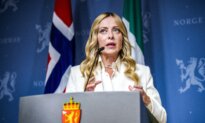
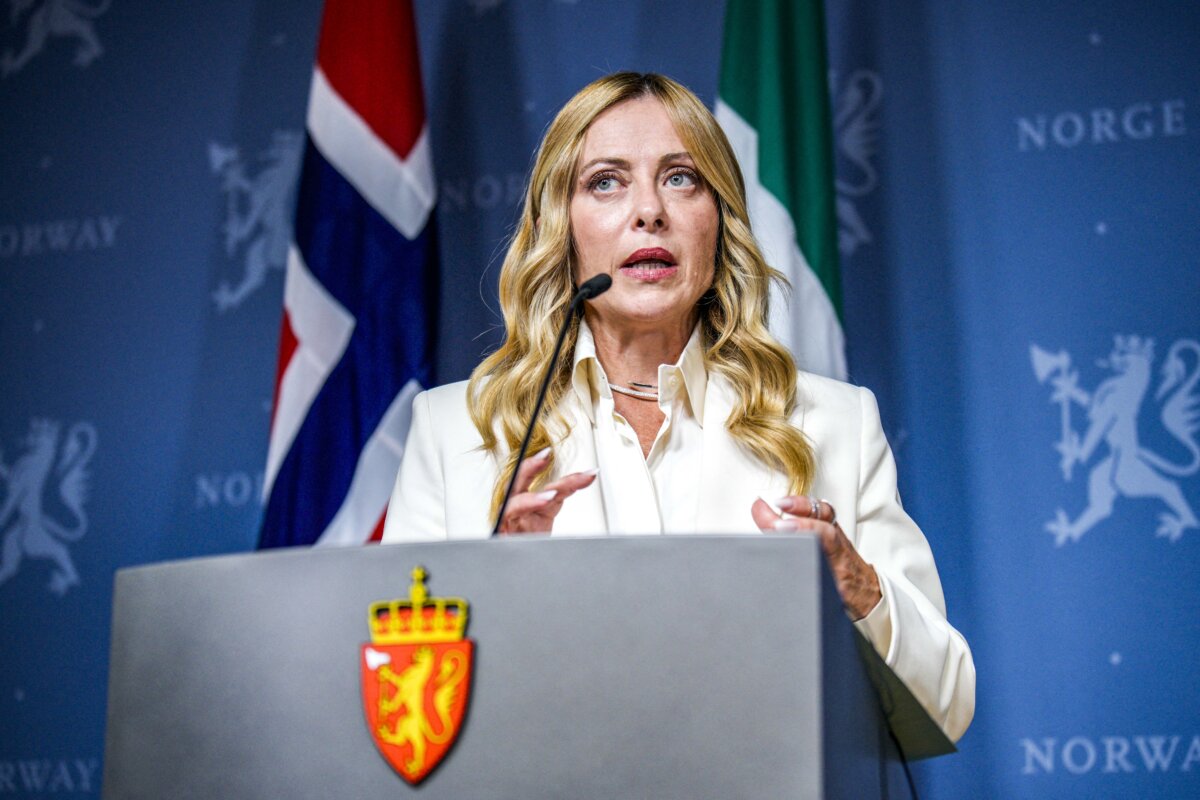
Italian Prime Minister Giorgia Meloni, who last week revealed plans for the burqa ban and other school reforms, said the measures would prevent the formation of “ghetto” classrooms in which large concentrations of students who cannot speak Italian hinder integration.
“Tools of common sense that do not divide, but truly help to integrate, avoiding ghetto classes and giving all students the same opportunities,” Meloni wrote on social media after the cabinet meeting.
The decree takes effect immediately but needs to be endorsed by Italy’s parliament within 60 days, where Meloni’s coalition holds a majority.
Facial coverings that prevent student recognition are prohibited during school activities, except for health or training purposes. The restriction would apply to coverings such as veils, burqas, and niqabs, while allowing hijabs that leave the face visible.
Meloni outlined the proposal at a gathering of her Brothers of Italy party’s youth wing ahead of the cabinet vote.
“You must go to school with your face uncovered, and in Italy no one, in the name of a real or supposed tradition, can decide that a young woman must hide herself,” she said on Sept. 19.
Meloni added that if there are only a few children in a class who don’t understand Italian, they will have little trouble integrating quickly, but when that number grows, it becomes a problem.
“If the number of children who don’t understand the language becomes large—or even the majority—that is no longer integration; it is neglect,” Meloni said.
For elementary schools, the 30 percent cap applies to first-year students who are non-Italian citizens and were not born in Italy or have not attended at least two years of preschool.
For middle and high schools, the limit applies to non-Italian students who have not successfully attended the national education system for at least three years.
If more non-Italian speakers seek admission than the 30 percent cap allows, local education officials will be required to redistribute those students among nearby schools to prevent overconcentration.
Antonello Giannelli, president of the National Association of Principals, questioned how redistribution would work in neighborhoods with large immigrant populations and few schools.
“From an educational perspective, the issue is well-founded and valid, but it’s difficult to turn it into a practical solution,” he said.
Schools unable to comply with the 30 percent cap would be eligible for exemptions and additional language-support funding, according to Italian Education Minister Giuseppe Valditara.
Under the decree, schools would refer families to social services when parents’ limited Italian prevents effective cooperation with teachers. Social services could then direct parents to free language courses at adult education centers.
Failure to attend could result in a fine after a formal warning, with exemptions possible.
Some opposition politicians accused Meloni of failing to prioritize students’ interests while playing culture-war politics.
“It is a shameful decree that seeks to hide the government’s inability to address the real problems of the public school system behind a new ideological banner,” said Elly Schlein, the leader of the center-left Democratic Party.
Reuters and The Associated Press contributed to this report.
 Friends Read Free
Copy
Facebook
Tweet
Friends Read Free
Copy
Facebook
Tweet