
A number of factors are at play in B.C.’s election campaign, including whether the BC Conservatives can maintain their newly reformed unity, how “orphan” voters who don’t have a side cast their votes, and how the electorate may react to the NDP’s snap election call, as the governing party enjoyed a comfortable lead in the polls leading up to the election call.
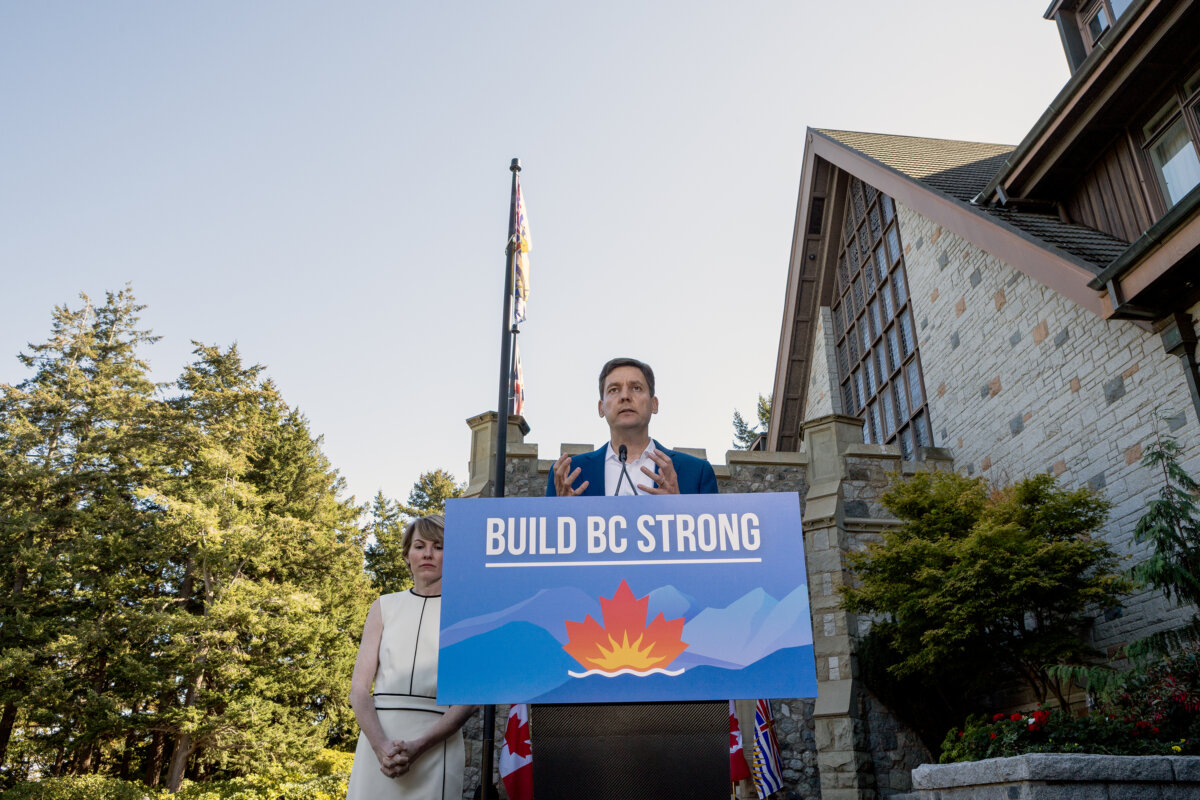
The election was called for Oct. 24 after NDP Leader David Eby met with B.C. Lt.-Gov. Wendy Cocchia at Government House in Victoria on Sept. 22 and requested the dissolution of the legislature, triggering the provincial election.
Election Timing
Municipal officials, who are in the middle of an election campaign, as well as opposition parties have criticized Eby’s early election call, with some calling it opportunistic. The NDP government, which holds a one-seat majority, was just under two years in its mandate before calling the election.
Eby said during his Sept. 22 election announcement in Victoria that he is seeking a new mandate amid U.S. tariffs and in response to U.S. President Donald Trump.
“By the hour, we are seeing new threats from the White House targeting core Canadian industries, banning products from Canada,” Eby said.
The BC Conservatives’ newly minted leader Lorne Doerkson accused Eby of calling a “cynical snap election.”
“It’s a cheap, opportunistic political move, and it could cost tens of millions of dollars,” he said at his first post-election-call press conference on Sept. 22.
Michael MacKenzie, professor of political studies at Vancouver Island University, said that Eby’s early election call goes against established political norms, which could backlash.
He said these norm violations include timing an election to take advantage of an opposition party in disarray and overlapping with other ongoing campaigns.
Kimberly Speers, a political scientist and associate teaching professor at the School of Public Administration at the University of Victoria, offered a different view, saying Eby’s electoral strategy may pay off given his campaign is focused on Trump.
“That’s not a bad stat to be going in, in terms of an election, and especially when there are really no other parties that are as organized in terms of just election capacity.”
Jason Morris, a senior instructor in political science at the University of Northern British Columbia, echoed this point, saying that the NDP has a number of advantages over its opposition.
“The NDP has the advantage of incumbency not to mention the opposition being in disarray,” he said in an interview.
However, Morris added that the advantages currently enjoyed by the NDP may not be enough to carry the day.
“The B.C. NDP will be on the defensive while the need for a mandate is more clearly articulated,” he said, adding that the party will have to make a case that shows why it was necessary to call the election “beyond political opportunism.”
Kathryn Harrison, a professor of political science at the University of British Columbia, also said that Eby may have put himself at a disadvantage if the election centres around why there needs to be an election in the first place.
“I anticipate that initially the issue will be what the right-of-centre parties will do,” Harrison told The Epoch Times. “Thereafter, I wouldn’t be surprised if the central issue in this election is whether we should be having an election.”
Eby has rejected suggestions that the election call is opportunistic, saying it’s “never a bad time to go to British Columbians to ask the right direction,” and that it’s about getting a mandate amid U.S. tensions.
Can the Right Unite?
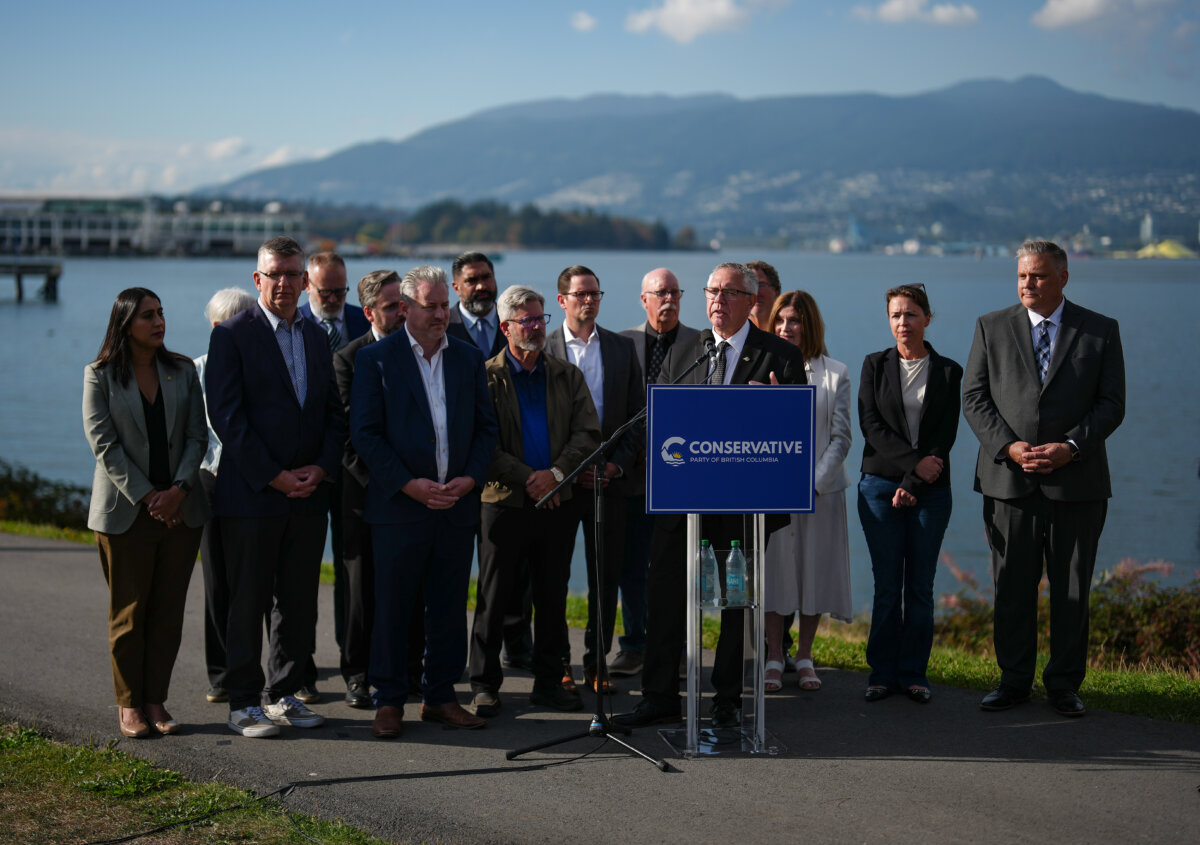
Kerry-Lynne Findlay stepped down as BC Conservative leader on Sept. 20, ending a tenure of less than four months, with Doerkson heading the party since then. He was the third MLA to join the BC Conservatives in 2024, crossing the floor from BC United after it failed to unite with the BC Conservatives.
Findlay’s resignation followed months of party turmoil, including three caucus removals and 10 MLAs who resigned. Seven of the recent defectors became members of CentreBC, which was led by former BC Conservative leadership candidate Peter Milobar.
Milobar and six other CentreBC MLAs rejoined the Conservative caucus on Sept. 22, while former BC Conservative MLA Elenore Sturko remained with CentreBC, becoming its leader. Additionally, several of the other legislators who had quit, including former leader John Rustad and former interim leader Trevor Halford, returned to the party.
But putting a caucus back together won’t necessarily heal the divisions that led to its breakup, according to MacKenzie.
“There are people on the centre-right who have very different aims and objectives and views from those on the farther right, and that’s what’s pulling this conservative movement apart,” MacKenzie said.
Although MacKenzie said there will be a “strong incentive” for people with past differences to work together during an election, he said that will not necessarily resolve the underlying policy disagreements or the “bad blood that has been produced over the last couple of years.”
Hamish Telford, an associate professor of political science at the University of the Fraser Valley, said the ability of the right to remain together is at the core of how the election will turn out.
“If they remain divided, the NDP should cruise to victory,” Telford told The Epoch Times.
“But if the Conservatives manage to get their act together and come together united, then they could give the NDP a run for its money, like they did last time,” he added, referring to the B.C. Conservatives’ 2024 rise from a marginal party to Official Opposition.
“I think that Eby calling this election has galvanized the right to reunite, and, in that sense, it already has backfired,” he said.
He pointed to Ontario’s 1990 provincial election, when Liberal Premier David Peterson called an early election and lost to the NDP under Bob Rae due to what many analysts saw as voters punishing what they felt was an unnecessary election.
At the same time, Ontario Premier Doug Ford’s Progressive Conservatives won an early election he called in 2025 less than three years into his mandate, winning a third consecutive majority government while campaigning heavily on responding to Trump.
‘Political Orphans’
Another major factor in the outcome of the election is the large number of British Columbians who don’t currently associate with any party, according to Speers.
An Angus Reid poll carried out Sept. 8 to 15 suggested that 51 percent of British Columbians describe themselves as “political orphans” who don’t strongly support any provincial party.
“Where are those votes going to go, if they even do vote?” Speers said.
Morris also emphasized the rapid changes taking place in B.C. politics and how support for candidates or parties could change unpredictably in the leadup to Oct. 24.
“Think of how much has changed in the past few months with respect to the opposition parties,” he said.
A five-week “election campaign intensifies and focuses not just internal party maneuvering, but policies and positions, and as well, image and personalities impact outcomes,” Morris added.
Main Issues
As the initial focus on the election being called and the right’s reorganization efforts fades away, affordability, health care, housing, provincial finances, indigenous and land rights issues, and trade relations with the United States are likely to take centre stage, political observers said.
An Ipsos poll conducted Sept. 8 to 14 found cost of living and inflation to be the top issue for 56 percent of respondents in the province, followed by healthcare at 40 percent and housing at 34 percent.
Speers said the BC Conservatives’ focus on repealing B.C.’s Declaration on the Rights of Indigenous Peoples Act (DRIPA) is likely to still figure prominently in the campaign.
“There are some people that just feel so strongly about it, and so I think that will be a wedge issue,” she said, adding that she expects the right to focus on the NDP government’s fiscal record as well.
In his first post-election call press conference, Doerkson confirmed that DRIPA will be a top campaign focus for his party, while also mentioning the issue of taxes, cost of living, budget deficits, and diversifying trade.
Paul Kershaw, an associate professor at UBC’s School of Population and Public Health, said that healthcare will feature prominently in the campaign.
“Citizens are frustrated about timely access, despite provincial spending for medical care routinely growing faster than any other line item in the budget,” he told The Epoch Times, adding that an aging population adds to the urgency of the issue.
NDP’s Advantage and Conservatives’ Challenge
Even if the BC Conservatives have brought back a large part of their caucus, it’s another matter to turn that into a working election-winning machine in a five-week campaign, according to Speers.
“It’s not a long time to get organized and present candidates as well,” she said, adding there are many “practical political organization tasks they have to undertake” from fielding candidates to ordering signs and getting local campaigns up and running.
Some party supporters have also said they are dismayed by the caucus’s ouster of Findlay, who won a leadership contest by party members on May 30. Some have said they will shift their support to OneBC, co-founded by former BC Conservative MLA Dallas Brodie, who was ousted from the party in 2025. Just ahead of the election call on Sept. 22, the party’s MLA count went up by one as Findlay’s husband, Brent Chapman, left the BC Conservatives to join OneBC.
Morris said the presence of the smaller parties such as OneBC, CentreBC, and the Green Party will also factor in the election outcome.
“These new and smaller parties likely need to consolidate or find ways to not contest each other, riding-by-riding. It will be a supreme challenge for each of them to nominate a full slate of candidates,” he said.
Recent polls show the B.C. NDP with varying leads on the B.C. Conservatives, including an Ipsos survey carried out Sept. 8 to 14 with the NDP at 45 percent and the Tories at 35 percent, and a poll by Research Co. Aug. 18 putting the NDP at 44 percent and the Conservatives at 39 percent. Angus Reid’s latest survey done Sept. 8 to 15 showed the NDP ahead at 41 percent compared to 37 percent for the Conservatives among decided and leaning voters. The poll was conducted while Findlay was still leader.
Despite their current lead, MacKenzie said it can’t be assumed that the NDP will remain ahead through the campaign.
“I don’t think the NDP are a sure thing,” he said. “They are trying to deal with a lot of very difficult situations, in particular the large budget deficit, but they are not widely popular among the population right now, and I think that this is a real gamble.”
Kershaw also said that the race could be unpredictable, noting that “B.C. politics has a reputation for delivering unexpected results.”
 Friends Read Free
Copy
Facebook
Tweet
Friends Read Free
Copy
Facebook
Tweet