
News Analysis
Canadians and interested parties have been in the dark about the country’s fiscal posture given the lack of a budget presented in the spring, but the budget watchdog sounded the alarm with his own projections released this week.
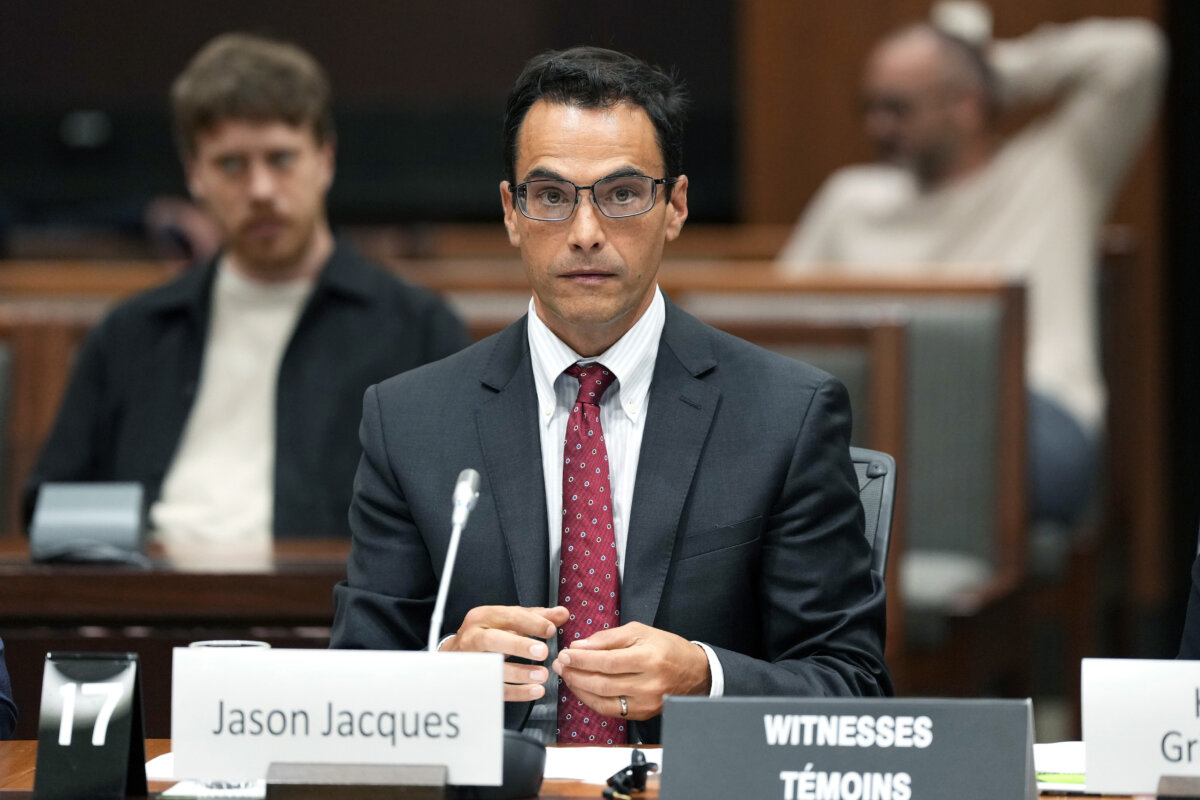
The Parliamentary Budget Officer (PBO) published his economic and fiscal outlook and testified before the House of Commons government operations committee on Sept. 25.
“It’s not a funny fiscal outlook. It’s a really serious fiscal outlook,” interim PBO Jason Jacques told MPs on the committee. He said his office doesn’t lightly use the word “unsustainable” to describe the fiscal trajectory of the country.
“Unsustainable means you don’t have the option of saying ‘maybe wait a couple of years, I’ll see how things go.’ It means, if you don’t change, this is done.”
Jacques, who replaced Yves Giroux in the job in early September, used other words to describe Canada’s fiscal outlook, such as “alarming,” “stupefying,” and “shocking.”
Here are some takeaways from the latest PBO release and testimony.
Larger Deficit
Estimating the size of the deficit in the upcoming Nov. 4 federal budget has been a popular activity for fiscal watchers and think tanks of late.
In June, then-PBO Giroux had predicted that the deficit would reach between $60 billion and $70 billion for this fiscal year. Meanwhile, the C.D. Howe Institute was less conservative and advanced the figure of $92 billion.
The PBO in its latest release estimates that there was a budgetary deficit of $51.7 billion in fiscal 2024–25, which it projects will climb to $68.5 billion in 2025–26. The higher deficit is attributed to weaker economic growth as well as measures impacting revenues and expenses.
Expenditures to reach NATO’s new guideline of 5 percent of GDP spending on defence and related items were left out of the projection, as well as Liberal Party election pledges for which no formal announcement has been made to date. The PBO said about $20 billion from the Liberal platform was not included in the outlook.
The outlook also doesn’t include the expenditure review launched by Ottawa, with most departments, agencies, and Crown corporations being asked to find savings of up to 15 percent over three years, with 7.5 percent cuts in fiscal 2026–27, rising to 10 percent by year two and 15 percent by year three.
Trajectory
What has apparently alarmed the PBO is not necessarily the size of the projected deficit. It was expected, with plans of increased spending amid economic turmoil. The projected deficit is also far from the eye-watering $314 billion hole of the 2020–21 fiscal year when governments shuttered the economy over COVID-19 and Ottawa liberally distributed handouts.
A key concern expressed by PBO Jacques relates to the debt-to-GDP ratio. He said that probably the most important fiscal anchor for a government is to see this indicator declining or remaining stable.
Jacques said it’s the first time in 30 years the PBO has released a fiscal outlook in which the debt-to-GDP ratio is climbing over time. “That’s definitely a cause for concern,” he said.
A previous PBO prediction in March saw the debt-to-GDP ratio decline over time. In this week’s release, the budget officer says the projected ratio of 41.7 percent in 2024–25 will rise above 43 percent over the medium term.
The interim PBO says the deficit could go lower in the coming years but will “remain close to $60 billion through the medium term as growth in revenues only slightly outpaces growth in expenses.”
Conservative MP Adam Chambers asked Jacques whether Canada is closer fiscally to where it was in the mid-1990s than it was 10 years ago.
Jacques said the numbers in the mid-1990s were more “alarming.”
“With the federal debt-to-GDP ratio forecast to increase, if we don’t change things, we’re going to end up there again,” he said.
Canada’s dire fiscal situation in those years led to a downgrading by a credit ratings agency, which makes borrowing more expensive.
The debt-to-GDP ratio had peaked at 68.4 percent in fiscal 1995–96, and the Liberal government under Prime Minister Jean Chrétien had embarked on the monumental task of balancing the budget. The Chrétien government made massive spending cuts and was able to post a surplus in fiscal 1997–98, the first since 1969–70.
Comparison
Liberal MPs on the government operations committee defended the need for increased spending amid economic turmoil, and sought to compare Canada’s fiscal position to other countries of the G7.
“I struggle to imagine an alternative in which we were not making the investments that we are making in Canadians right now,” said Liberal MP Jenna Sudds. “There is a cost to that reflected in the projected deficit.”
“I would challenge, and I guess I would question what the alternative is at this moment in time when we know that Canadians need us,” she added.
Jacques responded that in his capacity as budget officer he is not in the position to provide fiscal advice.
Liberal MP Vince Gasparro said Canada’s situation cannot be assessed “in a vacuum” and should be compared to peer countries.
Jacques said that Canada is in a more favourable situation at this time. “We’re relatively in a more advantageous position,” he said, adding that the country has the space and time to “move quickly to rectify the situation.”
The Fitch Ratings agency gives a credit rating of AA+ to Canada, a notch below the top rating of AAA. The agency downgraded Canada in July 2020 amid the COVID pandemic. Fitch warned after the Liberals’ electoral win in April that “increased structural deficits would pressure its credit profile.” Other ratings agencies like Moody’s have kept Canada’s credit rating at the highest ranking of triple-A.
Premising his question with Canada being in a better position than other G7 countries, with a projected deficit staying under 2 percent of GDP and a debt-to-GDP ratio in the “low 40 percent range,” Gasparro asked Jacques whether “these kinds of thresholds are really, in practice, fiscal anchors that signal some discipline?”
Jacques answered he’s been in the budget office for 17 years and that “the current path we’re on in terms of federal debt as a share of the economy is unsustainable.”
No Recession
With slowing growth and higher unemployment numbers, talk of a recession has been in the air of late. The PBO said, however, that he does not project a recession to take place. A recession is typically defined by two consecutive quarters of negative GDP growth.
“We’re not projecting a recession, just very moderate growth,” Diarra Sourang, director of economic analysis with the the office of the PBO, told the committee.
The PBO has projected a real GDP growth of 1.2 percent in 2025 and 1.3 percent in 2026. Growth is expected to remain subdued due to firms adapting to the changing trade environment and exports beginning to recover from lower levels.
In this context, the PBO said he expects the Bank of Canada to maintain its policy rate at 2.5 percent before rising it again to its “neutral level” of 2.75 percent in late 2026. The Bank lowered its key interest rate from 2.75 percent to 2.5 percent on Sept. 17, the first cut since March, citing a softening labour market and diminishing pressures on inflation.
Alluding to comments by Bank of Canada governor Tiff Macklem at the latest rate announcement, PBO Jacques said Canada will see positive growth but it’s “not going to feel good for most Canadians across the country.”
Canadians have been dealing with affordability issues for some years, with heightened food and housing prices.
 Friends Read Free
Copy
Facebook
Tweet
Friends Read Free
Copy
Facebook
Tweet