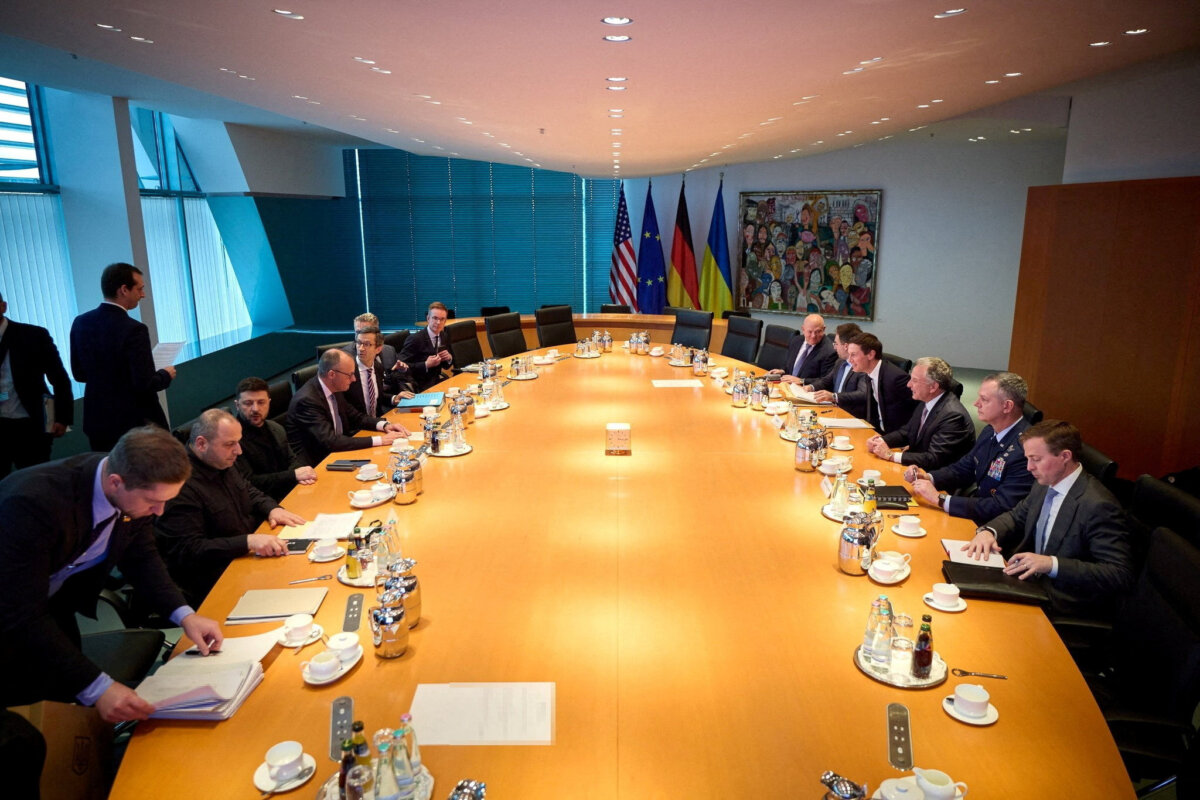
Real progress was made with the U.S. delegation in Berlin during the second round of peace talks to end the war between Ukraine and Russia, Kyiv’s top negotiator Rustem Umerov said Dec. 15.
“Over the past two days, Ukrainian–US negotiations have been constructive and productive, with real progress achieved. We hope we will reach an agreement that will bring us closer to peace by the end of the day,” he said in a post on X.
Umerov said observers should ignore “rumors and provocations,” adding that the “American team led by [U.S. special envoy] Steve Witkoff and [U.S. President Donald Trump’s son-in-law] Jared Kushner are working extremely constructively to help Ukraine find a way to a peace agreement that lasts.”
Ukrainian President Volodymyr Zelenskyy was among those continuing talks in the German capital, resuming discussions in the wake of five hours of talks on Dec. 14, during which the U.S. contingent said a lot of progress had been made.
Other European leaders are also holding meetings in the German capital throughout the day.
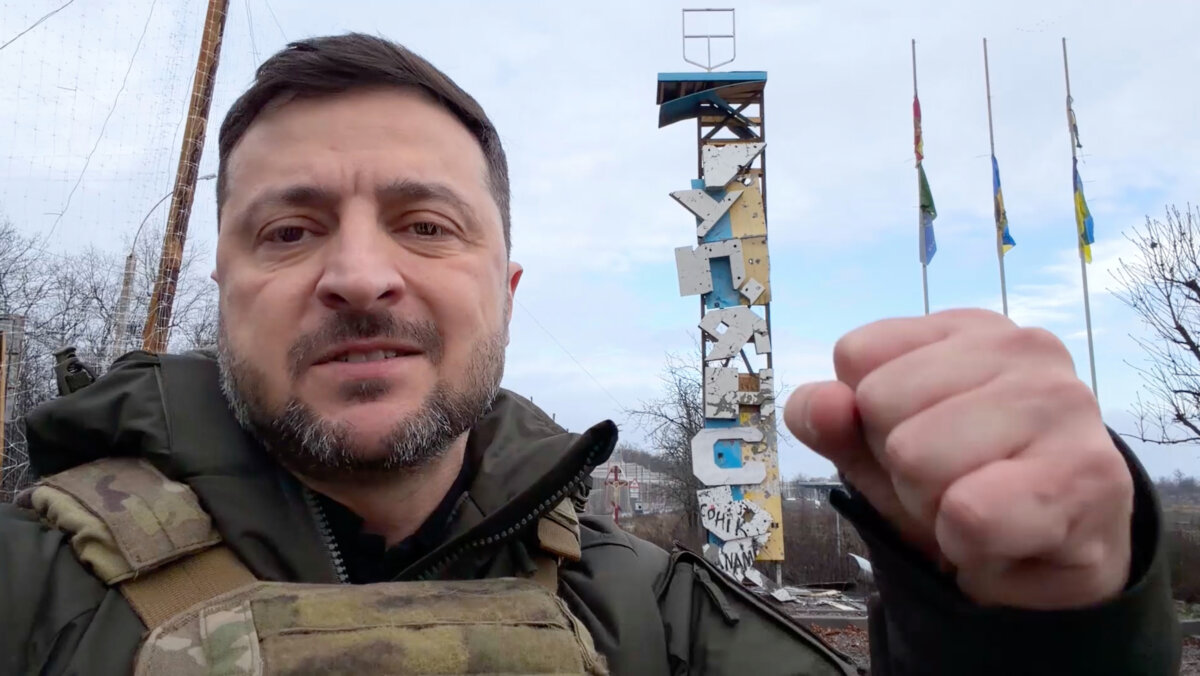
Ahead of the first meeting, Zelenskyy said on Dec. 14 that Kyiv is open to dropping its NATO ambitions in exchange for Western security guarantees.
“Thus, today, bilateral security guarantees between Ukraine and the US, Article 5-like guarantees for us from the US, and security guarantees from European colleagues, as well as other countries — Canada, Japan — are an opportunity to prevent another Russian invasion,” Zelenskyy said in a WhatsApp chat with reporters.
It remains unclear how discussions have progressed on that and other issues, such as territorial concessions, which have been key sticking points in the process.
The Kremlin said on Dec. 15 that Ukraine agreeing not to join NATO was fundamental to the peace settlement.
“Naturally, this issue is a key one, and it deserves special consideration compared to the others,” Kremlin spokesman Dmitry Peskov said, according to Russian state media outlet TASS.
He added that “this is precisely what the negotiation process is all about,” but reiterated Moscow’s previous statement that it did not wish to engage in megaphone diplomacy.
Peskov went on to say that the Russians were not being kept abreast of the progress made in the Berlin discussions in real time, saying that, “once they complete their part of the work, we will expect to receive the vision being discussed today from our US counterparts.”
Separately from his meeting with Witkoff and Kushner on Dec. 15, Zelenskyy also met with Finnish President Alexander Stubb, German President Frank-Walter Steinmeier, and the president of the Bundestag (German parliament), Julia Klöckner.
European Commission President Ursula von der Leyen and the leaders of the UK, Italy, the Netherlands, Poland, and Sweden are also among those expected in the German capital on Dec. 15.
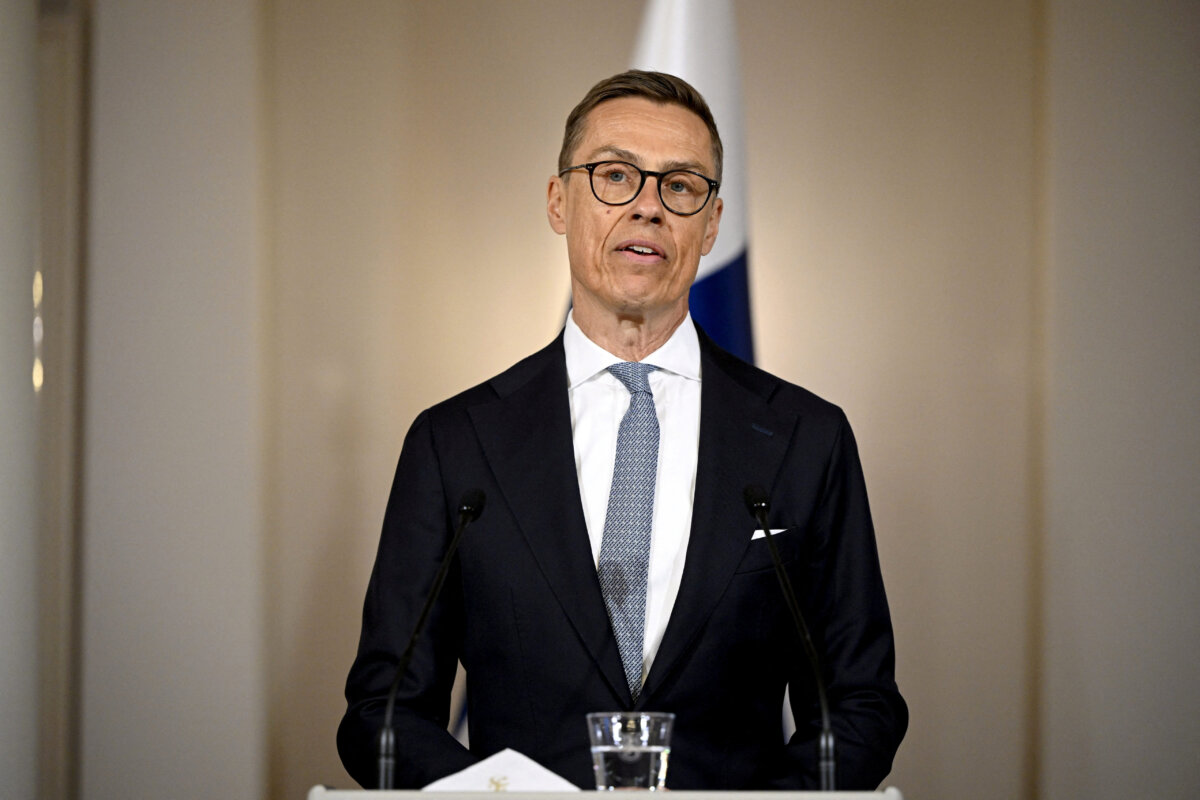
Stubb, who has been closely involved in the Ukraine peace talks, told Dutch political show Buitenhof on Dec. 14 that he felt the world was “at a critical moment in negotiations for peace.”
“We’re probably closer to a peace agreement than we have been at any time during these four years,” he said.
He said that the respective sides were working on three main documents.
“One is a framework document of a 20-point peace plan. Second one is security guarantees for Ukraine, and the third one is the reconstruction of Ukraine,” Stubb said, adding that the details of these were being looked at together with the Americans, Europeans, and the Ukrainians.
Asked why he felt that now, in particular, felt like a significant stage of the peace plan, he said there were many reasons, but one was that there was momentum behind them, and the second was because there is now “something on paper.”
“We, of course, reacted quite strongly to the 28-point plan because it had elements in it which we simply didn’t like. But after that, the Americans, together with the Ukrainians, have done a lot of work, and of course, we want to find a landing zone which preserves the independence and sovereignty and territorial integrity of Ukraine,” Stubb added.
Reuters contributed to this report.
 Friends Read Free
Copy
Facebook
Tweet
Friends Read Free
Copy
Facebook
Tweet